How Much Should You Put Down on a Car? The 2026 Guide
Why 20% down is the standard, when less is acceptable, and the situations where rolling negative equity actually makes sense.
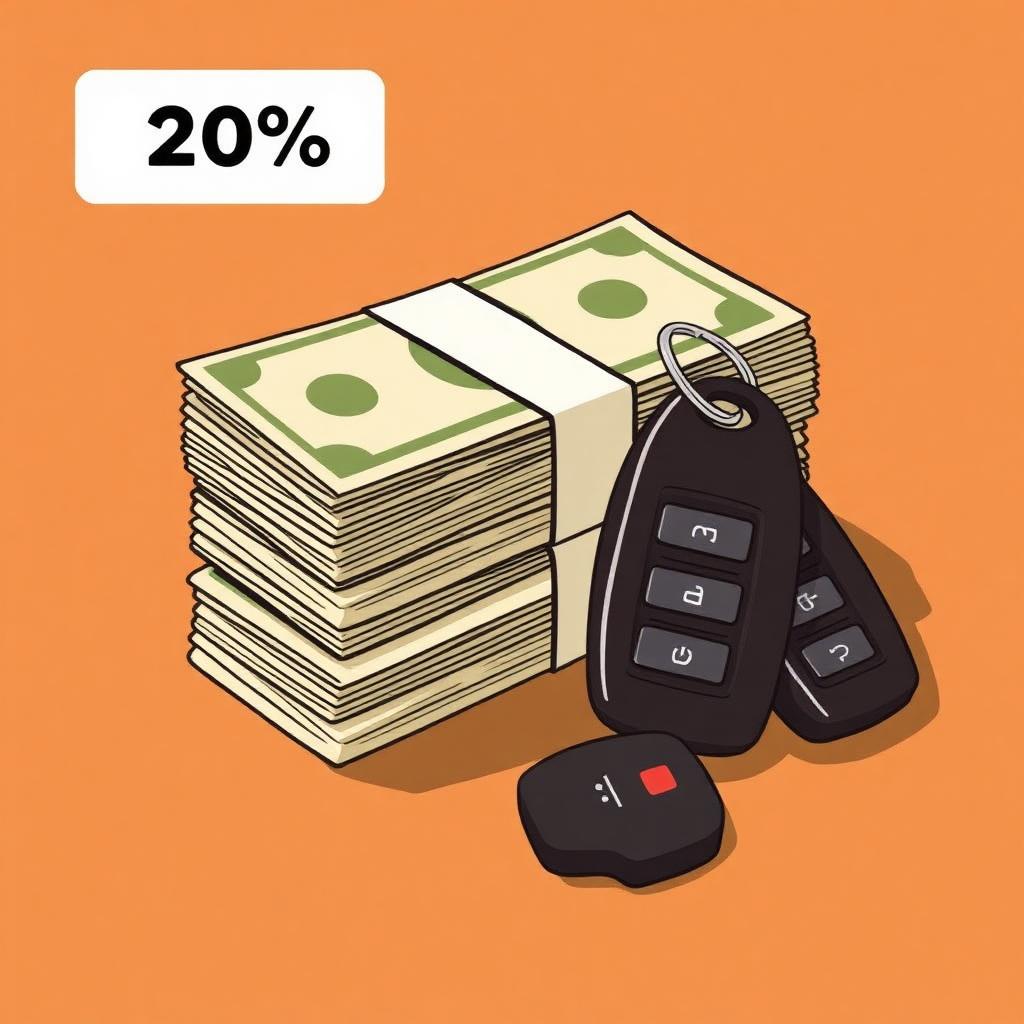
Down payment is the most underrated lever in a car purchase. Every dollar down lowers your monthly payment, reduces total interest, shrinks your insurance premiums (slightly), and keeps you from going underwater on the loan.
The 20% standard
20% down on a new car keeps you above water through the worst of first-year depreciation. On a used car, 10–15% is usually enough because the depreciation curve has already flattened. Anything less and you're carrying a loan worth more than the car for the first 12–24 months.
What happens with too little down
- You go underwater immediately — the loan exceeds the car's value
- If the car is totaled or stolen, insurance pays the value, not the loan — you owe the gap out of pocket (unless you have GAP insurance)
- Refinancing becomes hard because lenders won't go above 110–120% LTV
- Trading in early means rolling negative equity into the next loan — the death spiral starts here
Run any vehicle through the 20/4/10 rule, payment-to-income, and DTI checks — and see your true max affordable price in seconds.
Try the Car Affordability CalculatorReal-money payment impact
On a $30,000 car at 7.5% APR for 60 months: $0 down → $602/mo. $3,000 (10%) down → $542/mo. $6,000 (20%) down → $481/mo. $9,000 (30%) down → $421/mo. Each $1,000 down knocks ~$20/mo off the payment.
When less than 20% is OK
- Used car (depreciation is less steep)
- Manufacturer promotional 0% APR — the math leans toward keeping cash invested
- You have GAP insurance through the loan (acceptable for 12–24 months while you catch up)
When MORE than 20% wins
If you have idle cash earning 4% in savings while your auto loan would be 7.5%+, every extra dollar down is a guaranteed 7.5% return. As long as you keep 3 months of expenses in emergency savings, putting 30–40% down can beat the alternative.
What NEVER counts as down payment
Rebates from the manufacturer, manufacturer cash back, and dealer 'discounts' that get applied to the financed amount. Those reduce the loan but don't represent your own equity in the vehicle. Lenders and your underwater risk only care about cash + trade-in equity.
Get more guidance like this in your inbox
Weekly emergency-fund tactics, milestone checklists, and the next article — delivered free.
Run your own number
Get a personalized emergency fund target based on your income, expenses, and job stability.
Open the calculator