9 Cheap Flooring Options That Don't Look Cheap in 2026
Budget flooring under $3 per sq ft that still delivers a designer look — with brand picks.
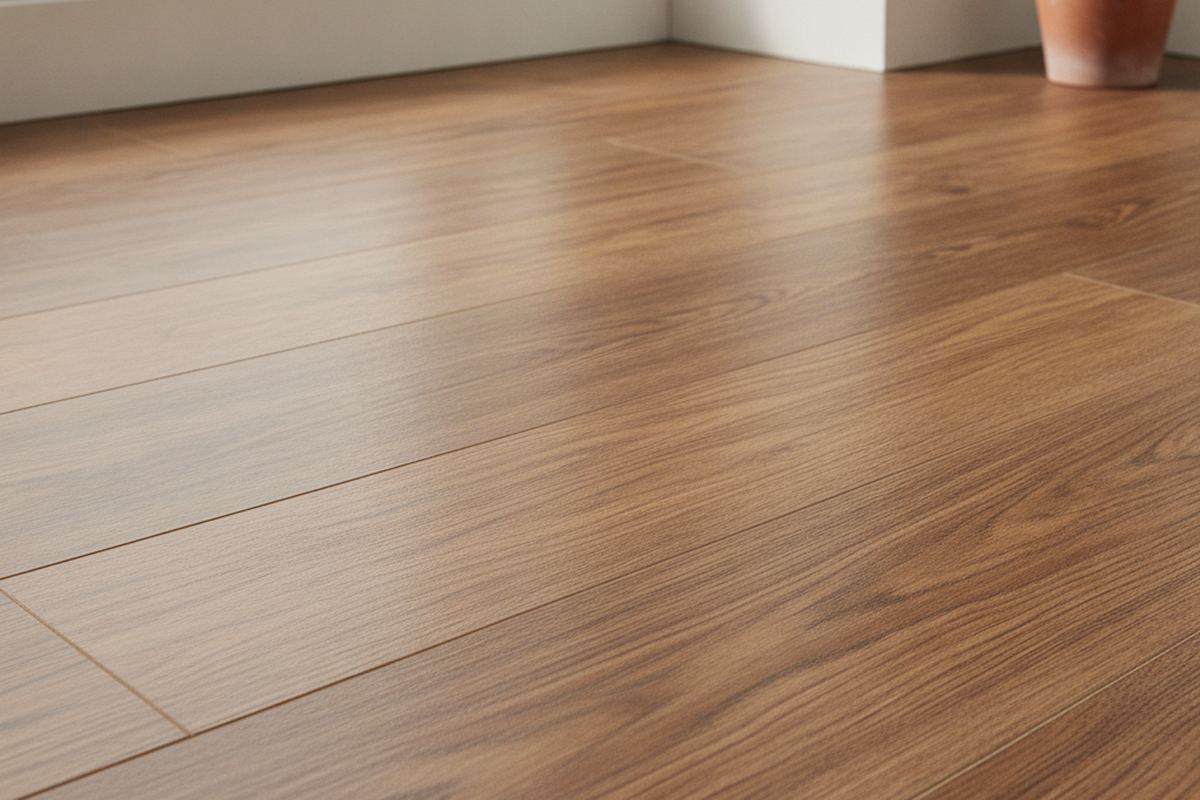
Replacing flooring is a significant investment, but achieving a stylish look doesn't always require a premium budget. Many homeowners seek durable, attractive options that won't break the bank, especially when renovating multiple rooms or an entire house. The good news is that advancements in manufacturing have made a variety of affordable flooring materials available that mimic more expensive choices. This guide explores several cost-effective flooring options for 2026 that offer both aesthetic appeal and practical benefits, allowing you to upgrade your home without overspending.
Luxury Vinyl Plank (LVP) and Tile (LVT) for Versatility
Luxury Vinyl Plank (LVP) and Luxury Vinyl Tile (LVT) have become incredibly popular for their ability to replicate the look of natural wood and stone at a fraction of the cost. These products are constructed with multiple layers, including a photographic layer that gives them their realistic appearance and a durable wear layer for protection. In 2026, you can find high-quality LVP/LVT for around $1.50 to $4.00 per square foot for materials, with installation costs adding another $2.00 to $5.00 per square foot, depending on complexity.
Beyond aesthetics, LVP and LVT offer excellent practical benefits. They are highly water-resistant, making them ideal for kitchens, bathrooms, and basements. Their resilience makes them comfortable underfoot and relatively quiet, and they are also easy to clean and maintain. Brands like Coretec, Shaw, and Mohawk offer extensive collections that provide a wide range of styles, from rustic wood grains to modern concrete looks, ensuring there's an option to suit almost any interior design preference.
Laminate Flooring: Durable Wood Look-Alike
Laminate flooring continues to be a strong contender for budget-conscious homeowners seeking the appearance of hardwood. Modern laminates are far superior to their predecessors, featuring improved imaging technology and textured surfaces that closely mimic real wood. Material costs for quality laminate in 2026 typically range from $1.00 to $3.50 per square foot, with professional installation averaging $2.00 to $4.00 per square foot. It's a cost-effective solution for living areas, bedrooms, and hallways.
One of the key advantages of laminate is its durability; its tough wear layer makes it resistant to scratches, dents, and fading, which is excellent for homes with pets or high traffic. Installation is often straightforward, as many laminates feature a click-lock system that allows for DIY projects, saving on labor costs. While not fully waterproof like LVP, many newer laminate products offer enhanced water resistance for everyday spills, provided they are cleaned up promptly.
Ceramic and Porcelain Tile for High-Traffic Areas
Ceramic and porcelain tiles are classic choices for areas demanding high durability and moisture resistance, such as kitchens, bathrooms, entryways, and laundry rooms. In 2026, basic ceramic tiles can be found for as little as $0.75 to $2.50 per square foot, while porcelain, known for its greater density and strength, typically ranges from $1.50 to $4.00 per square foot. Installation, however, can be more labor-intensive, often costing $5.00 to $10.00 per square foot due to subfloor preparation, cutting, and grouting.
The aesthetic versatility of tile is immense. You can find options that mimic natural stone, wood, or even fabric, available in a vast array of colors, patterns, and sizes. Both ceramic and porcelain are incredibly easy to clean, resistant to stains, and do not harbor allergens. Their longevity means they can last for decades with proper care, making them a wise long-term investment despite potentially higher initial installation costs compared to some other budget options.
Estimate flooring cost by square footage and material — with waste factor and install labor baked in.
Open the Flooring Cost CalculatorSheet Vinyl: The Ultimate Budget-Friendly Option
When budget is the absolute top priority, sheet vinyl remains an excellent choice. This material comes in large rolls, allowing for seamless installation over broad areas, which can significantly reduce labor time and costs. In 2026, sheet vinyl materials typically cost between $0.50 and $2.00 per square foot, with installation often ranging from $1.00 to $3.00 per square foot. It's particularly well-suited for utility rooms, basements, and rental properties where maximum cost efficiency is desired.
Modern sheet vinyl offers more than just affordability; it also provides good water resistance and is soft underfoot, making it comfortable to walk on. While historically known for less sophisticated designs, contemporary sheet vinyl patterns have improved considerably, offering options that mimic wood, stone, or abstract designs. Its ease of cleaning and low maintenance make it a practical solution for busy households, although it can be more susceptible to tears or punctures than LVP or tile.
Engineered Hardwood: Real Wood Within Reach
For those who desire the warmth and authenticity of real wood but find solid hardwood too expensive, engineered hardwood presents a compelling alternative. It features a top layer of real wood veneer over a core of plywood or high-density fiberboard, making it more stable and less prone to expansion and contraction than solid wood. In 2026, engineered hardwood materials typically range from $2.50 to $6.00 per square foot, with installation adding $3.00 to $8.00 per square foot.
Engineered hardwood can be installed in areas where solid hardwood might not be suitable, such as basements, due to its increased moisture resistance. It can also be refinished, though usually fewer times than solid hardwood, extending its lifespan. Brands like Bruce, Armstrong, and Kahrs offer diverse collections, allowing homeowners to achieve the classic look of oak, maple, or hickory without the premium price tag of solid wood, offering a balance of luxury and affordability.
Concrete Flooring: Modern Industrial Chic
While often overlooked as a finished flooring material, concrete can be an incredibly stylish and cost-effective option, particularly for modern or industrial aesthetics. If you already have a concrete subfloor, polishing, staining, or sealing it can be remarkably affordable, often ranging from $2.00 to $6.00 per square foot for basic treatments in 2026. This transforms an existing structural element into a durable, contemporary floor.
Finished concrete is exceptionally durable, resistant to heavy traffic, and very easy to clean. It's also an excellent thermal mass, which can help with energy efficiency if you have radiant heating. Design possibilities are broad, from a simple polished look to complex stained patterns or even stamped textures. While it can be hard and cold underfoot, these characteristics can be mitigated with area rugs and radiant heating, making it a unique and budget-friendly choice for certain design preferences.
Carpet Tiles: Flexible and Replaceable
Carpet tiles offer a practical and customizable alternative to broadloom carpeting, especially for areas where warmth and sound absorption are desired. In 2026, carpet tiles typically cost between $1.50 and $4.00 per square foot for materials, making them competitive with other budget options. Installation can often be a DIY project, as most tiles feature peel-and-stick backings or simple adhesive requirements, further reducing overall expenses.
The main advantage of carpet tiles is their modularity. If a section becomes stained or damaged, you can simply replace the individual tile rather than the entire floor, saving significant repair costs over time. They are available in a vast array of colors, patterns, and textures, allowing for creative designs and easy customization. Brands like Flor and Interface specialize in stylish carpet tiles that can elevate a room's aesthetic while providing comfort and acoustic benefits.
The bottom line
Choosing the right flooring involves balancing cost, durability, and aesthetic appeal. The options reviewed demonstrate that a limited budget does not mean compromising on style or quality. By carefully considering your needs and exploring these materials, you can achieve a beautiful and long-lasting floor that enhances your home's value without overextending your finances. Researching specific brands and comparing prices will help you find the best fit for your renovation project.
Get more guidance like this in your inbox
Weekly emergency-fund tactics, milestone checklists, and the next article — delivered free.
Run your own number
Get a personalized emergency fund target based on your income, expenses, and job stability.
Open the calculator