Compound Interest By Age: What Your Money Should Look Like at 25, 35, 45, and 55
Age-by-age targets for invested assets and contribution rates, plus the catch-up tactics if you're behind on any of them.
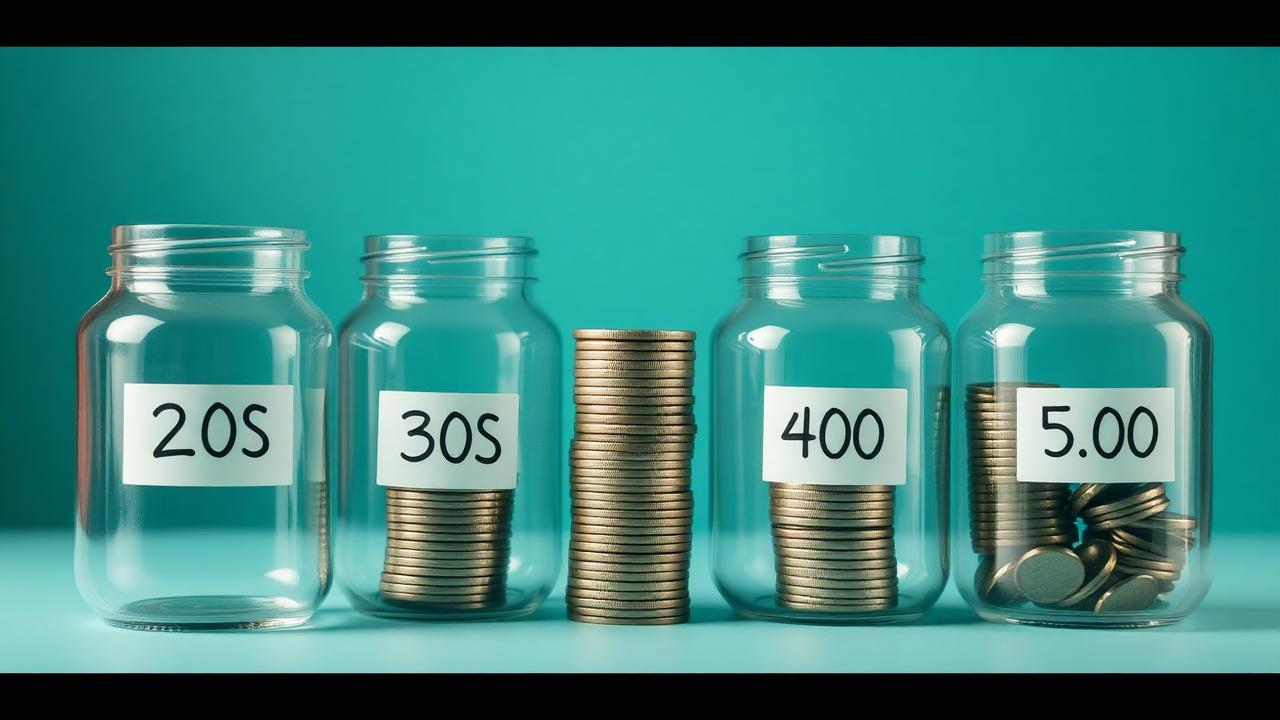
Age-based investing benchmarks are useful precisely because compounding works on a timeline. Knowing where you should be at 25, 35, 45, and 55 lets you self-diagnose without comparing yourself to friends, social media, or imaginary peers.
By age 25
Target: 0.25–0.5× your current annual salary in invested assets. For a $55,000 earner, that's $14K–$28K. Most 25-year-olds are at $0 — that's fine, but the next decade is the most valuable of your investing life. Contribute 10–15% of gross income to retirement accounts. Capture every dollar of employer match.
By age 35
Target: 1–2× your annual salary. Compounding has had 10 years to work. If you started at 25 with $300/month at 8%, you now have about $55K. Bumping contributions to 15–20% in your thirties is the single highest-leverage habit.
By age 45
Target: 3–4× your annual salary. This is the inflection point in your compounding curve — the growth is now visibly outpacing your contributions. If you're behind, the catch-up tactics are: max IRAs ($7K), max 401(k) ($23.5K), and consider HSA contributions if eligible.
By age 55
Target: 6–8× your annual salary. Catch-up contributions become available at 50 ($7,500 extra to 401(k), $1,000 extra to IRA). The last decade before retirement is when sequence-of-returns risk starts to matter — start dialing back equity risk into a 70/30 or 60/40 allocation if you're within 10 years of drawing down.
Match your age, current balance, and contribution rate against the projected path. The calculator shows where you'll land at 65 — and what to change if it's not enough.
Open the Compound Interest CalculatorWhy these targets work
They're back-solved from a typical retirement income goal (80% of working income), assuming a 4% safe withdrawal rate at 65. They're calibrated for the median worker — adjust upward if you want early retirement, or downward if you'll have pension income.
Behind on every one?
Don't panic. Don't quit. The catch-up math is real — even a 45-year-old with $20K can reach $500K+ by 65 with disciplined contributions of $1,200/month at 7%. The calculator will quantify exactly what it takes.
Ahead of every one?
Consider whether you should also build up taxable brokerage assets for early retirement flexibility. Tax-advantaged accounts are best for the long compounding game, but a taxable account gives you optionality before age 59½.
Get more guidance like this in your inbox
Weekly emergency-fund tactics, milestone checklists, and the next article — delivered free.
See compounding work on your numbers
Project the future value of your savings with year-by-year growth, monthly contributions, and personalized coaching insights.
Open the Compound Interest Calculator