Compound vs. Simple Interest: Why One Builds Millionaires and the Other Doesn't
Both pay interest. Only one creates wealth. Here's exactly how compound and simple interest differ, with side-by-side examples that show the gap exploding over time.
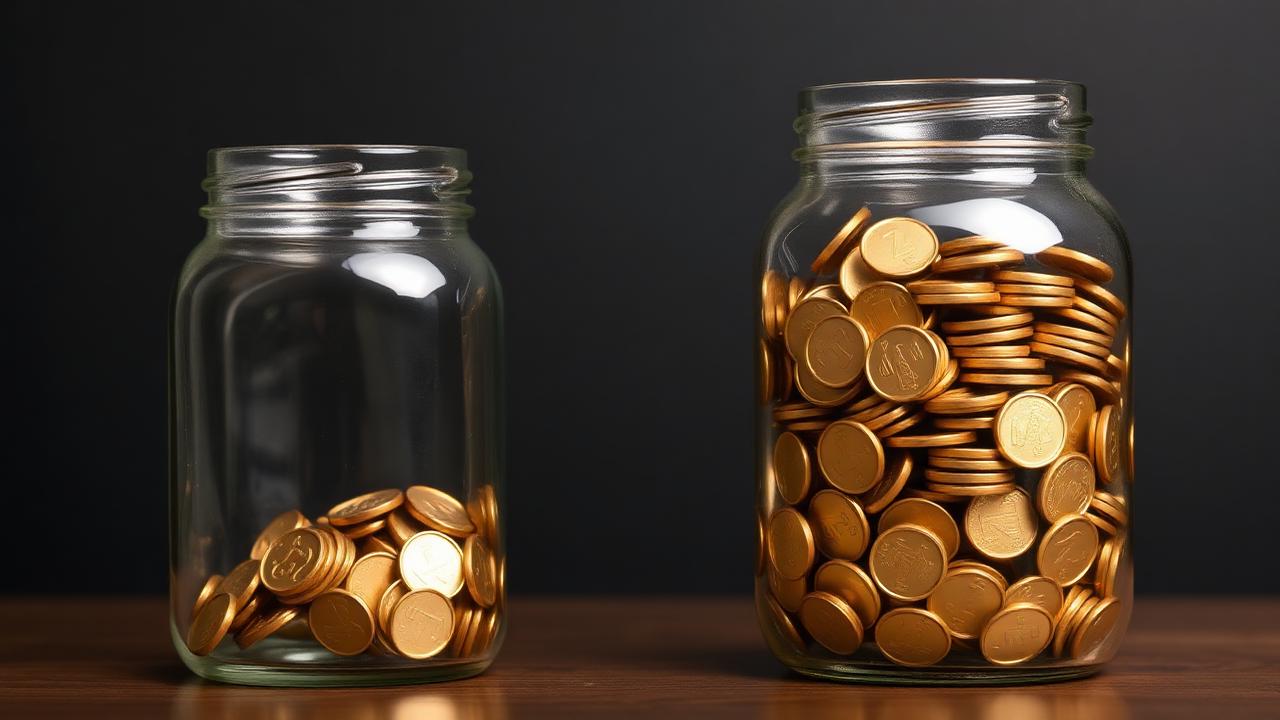
Simple interest and compound interest are the two ways money can grow. They sound similar. They produce wildly different outcomes. Understanding which one applies to your accounts is the difference between a comfortable retirement and an extraordinary one.
Simple interest in one sentence
Simple interest pays you a fixed amount each year, calculated only on the original principal. Formula: Interest = P × r × t. A $10,000 deposit at 5% simple interest pays you $500 every year, forever. Total after 30 years: $25,000.
Compound interest in one sentence
Compound interest pays you on principal plus previously earned interest, so the base keeps growing. Formula: FV = P × (1 + r)^t. That same $10,000 at 5% compound annual interest becomes $43,219 after 30 years — 73% more than simple interest.
Where each one lives
- Simple interest: Most auto loans, mortgages, personal loans, and some short-term CDs. Bonds also typically pay simple coupon interest (though you can reinvest the coupons to manufacture compounding).
- Compound interest: Savings accounts, money market accounts, 401(k)s, IRAs, brokerage accounts with reinvested dividends, and most modern investment vehicles.
A 40-year side-by-side
$10,000 at 7%. Simple interest: $38,000 final balance (interest of $700/year × 40 years + principal). Compound interest: $149,745. The compound balance is nearly 4× larger. After 50 years, the gap widens to 6×. After 60 years, it's 10×. This is why financial planners are obsessed with the time axis.
See your own compound vs. simple comparison instantly. The calculator graphs both lines side by side so the gap is visible at a glance.
Open the Compound Interest CalculatorThe hidden form of compounding: reinvestment
Even simple-interest products can be made to compound if you reinvest the interest. A bond paying $500/year in coupon interest doesn't compound automatically — but if you immediately buy another bond with each coupon, you've manufactured compounding. This is how DRIPs (dividend reinvestment plans) work in stock portfolios.
Which loans use which?
Most modern consumer loans use simple interest calculated daily on the outstanding balance — meaning extra principal payments reduce future interest immediately. Credit cards are the major exception: they compound daily on the unpaid balance, which is why they're so destructive. Always read the loan terms.
The practical takeaway
When you're saving or investing, choose products that compound. When you're borrowing, choose simple-interest loans and pay them down aggressively. The same mathematical principle — interest on interest — works for you in one direction and against you in the other.
Get more guidance like this in your inbox
Weekly emergency-fund tactics, milestone checklists, and the next article — delivered free.
See compounding work on your numbers
Project the future value of your savings with year-by-year growth, monthly contributions, and personalized coaching insights.
Open the Compound Interest Calculator