Compost and Cover Crops: The Free Garden Upgrade
How compost and cover crops cut your soil bill and boost yields.
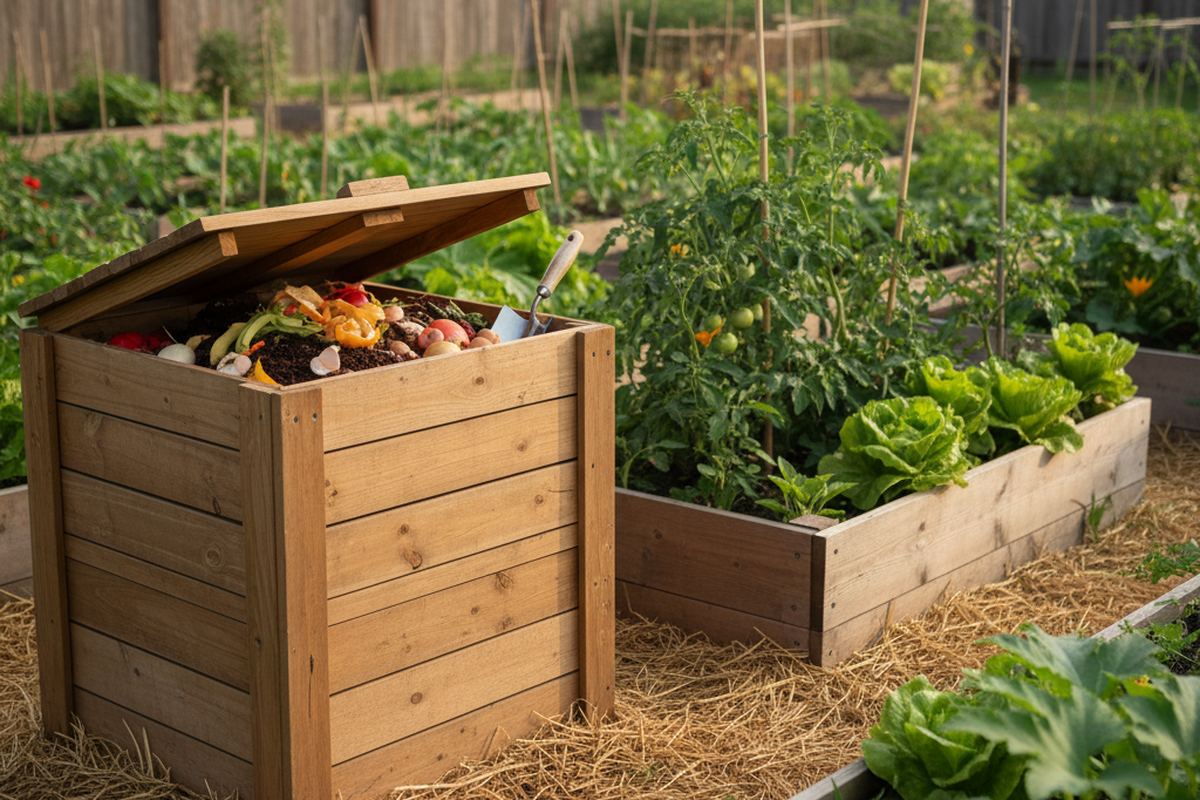
Cultivating a thriving garden doesn't require a constant influx of expensive amendments. Many successful gardeners understand that building healthy soil is the foundation for abundant yields, and two often-overlooked strategies can achieve this affordably: composting and cover cropping. These natural methods improve soil structure, nutrient availability, and water retention, making your garden more resilient and productive. By harnessing these free resources, you can significantly reduce your reliance on store-bought fertilizers and soil conditioners.
Unlock Soil Health with Homegrown Compost
Composting transforms kitchen scraps and yard waste into a rich, dark material known as humus. This process diverts organic matter from landfills while creating a powerful soil amendment. Humus improves soil aeration, water-holding capacity, and introduces beneficial microorganisms. For instance, adding a 2-inch layer of compost to your garden beds before planting can significantly boost nutrient availability over the growing season, feeding your plants naturally.
Starting a compost pile is straightforward. A balanced mix of 'greens' (nitrogen-rich materials like food scraps and fresh grass clippings) and 'browns' (carbon-rich materials like dry leaves, wood chips, and shredded paper) is key. Aim for roughly a 2:1 ratio of browns to greens by volume. Regular turning helps aerate the pile and speeds decomposition, turning your waste into a valuable resource in a matter of months.
The Many Benefits of Cover Cropping
Cover crops are plants grown specifically to protect and enrich the soil, not for harvest. Sown in empty beds during off-seasons, they prevent erosion, suppress weeds, and add organic matter. Leguminous cover crops, such as clover or vetch, have the added benefit of fixing atmospheric nitrogen into the soil, reducing the need for synthetic nitrogen fertilizers for subsequent crops. This natural nitrogen boost can be particularly beneficial for heavy feeders like corn or tomatoes.
Choosing the right cover crop depends on your climate and gardening goals. For winter protection and soil building, hairy vetch or crimson clover are excellent choices for many regions. For summer weed suppression and organic matter, buckwheat or sunn hemp can be effective. Generally, cover crops are tilled or chopped into the soil before they set seed, typically a few weeks before you plan to plant your main vegetable crops. This allows time for decomposition and nutrient release.
How Compost Boosts Nutrient Availability
Compost acts as a slow-release fertilizer, providing a steady supply of micronutrients and macronutrients essential for plant growth. Unlike synthetic fertilizers that can leach away quickly, compost holds nutrients in the soil structure, making them available to plant roots over an extended period. This steady supply minimizes nutrient deficiencies and promotes vigorous, healthy plant development throughout the season.
Beyond direct nutrient provision, compost enhances the soil's cation exchange capacity (CEC). CEC is the soil's ability to hold onto positively charged nutrient ions, preventing them from washing away. Soils rich in organic matter, like compost, have a higher CEC, meaning they can retain more vital nutrients such as calcium, magnesium, and potassium, ensuring your plants have consistent access to the building blocks they need.
Plan a real garden — bed size, soil, mulch, and grocery-equivalent yield.
Open the Garden PlannerCover Crops: Nature's Weed and Erosion Control
Bare soil is an open invitation for weeds and is vulnerable to erosion by wind and rain. Cover crops act as a living mulch, shading out weed seeds and competing for light and resources, significantly reducing weed pressure. This natural weed suppression can save considerable time and effort spent on manual weeding, allowing your main crops to thrive without competition.
The dense root systems of cover crops bind soil particles together, forming a protective mat that prevents soil loss. This is especially crucial during heavy rainfalls or strong winds, preserving the valuable topsoil that contains most of your garden's nutrients and organic matter. By preventing erosion, cover crops help maintain the long-term fertility and structure of your garden beds.
Improving Soil Structure and Water Retention
Both compost and cover crops are instrumental in improving soil structure. Compost adds organic matter that binds sandy soils to improve water retention and loosens clay soils to enhance drainage and aeration. This creates an optimal environment for root growth, allowing plants to access water and nutrients more efficiently and making them more resilient to drought conditions.
Cover crops contribute to better soil structure through their root systems. As roots grow, they create channels in the soil, improving water infiltration and air circulation. When the cover crop is terminated and its roots decompose, these channels remain, further enhancing soil porosity. This improved structure means less compacted soil, easier root penetration, and a healthier microbial ecosystem.
Practical Application for Your 2026 Garden
For your 2026 garden plan, consider integrating these practices. If you're starting a new bed, incorporate 2-4 inches of well-rotted compost into the top 6-8 inches of soil. For established beds, a top-dressing of 1-2 inches of compost annually can maintain soil health. Start your compost pile now to have finished material ready for next year's planting.
Plan to sow cover crops in beds that will be empty after your main harvest. For example, after harvesting summer tomatoes, sow winter rye or hairy vetch in late fall. These can grow through the winter and be tilled under in early spring, a few weeks before you plant your spring vegetables. This cycle ensures continuous soil improvement with minimal cost, leading to more robust and productive harvests.
Cost Savings and Sustainable Gardening
The most immediate benefit of using compost and cover crops is the significant reduction in expenses. You can virtually eliminate the need to purchase synthetic fertilizers, soil amendments, and even some pesticides, as healthy soil produces healthier, more disease-resistant plants. The cost savings on these inputs can range from dozens to hundreds of dollars annually, depending on the size of your garden.
Beyond financial savings, these practices embody sustainable gardening. They reduce your environmental footprint by minimizing chemical use, diverting waste from landfills, and sequestering carbon in the soil. Embracing compost and cover crops creates a self-sustaining garden ecosystem, fostering long-term fertility and productivity without external reliance.
The bottom line
By consistently applying compost and cover crops, you can transform your garden's soil into a living, fertile medium. These methods require a shift in perspective, viewing garden waste as a resource and empty beds as opportunities for enrichment. The investment of time and effort will yield healthier plants, more abundant harvests, and a more sustainable gardening practice for years to come.
Get more guidance like this in your inbox
Weekly emergency-fund tactics, milestone checklists, and the next article — delivered free.
Run your own number
Get a personalized emergency fund target based on your income, expenses, and job stability.
Open the calculator