Cracked Driveway: Repair or Replace? The Decision Guide
When to patch a cracked driveway and when the repair is throwing money away.
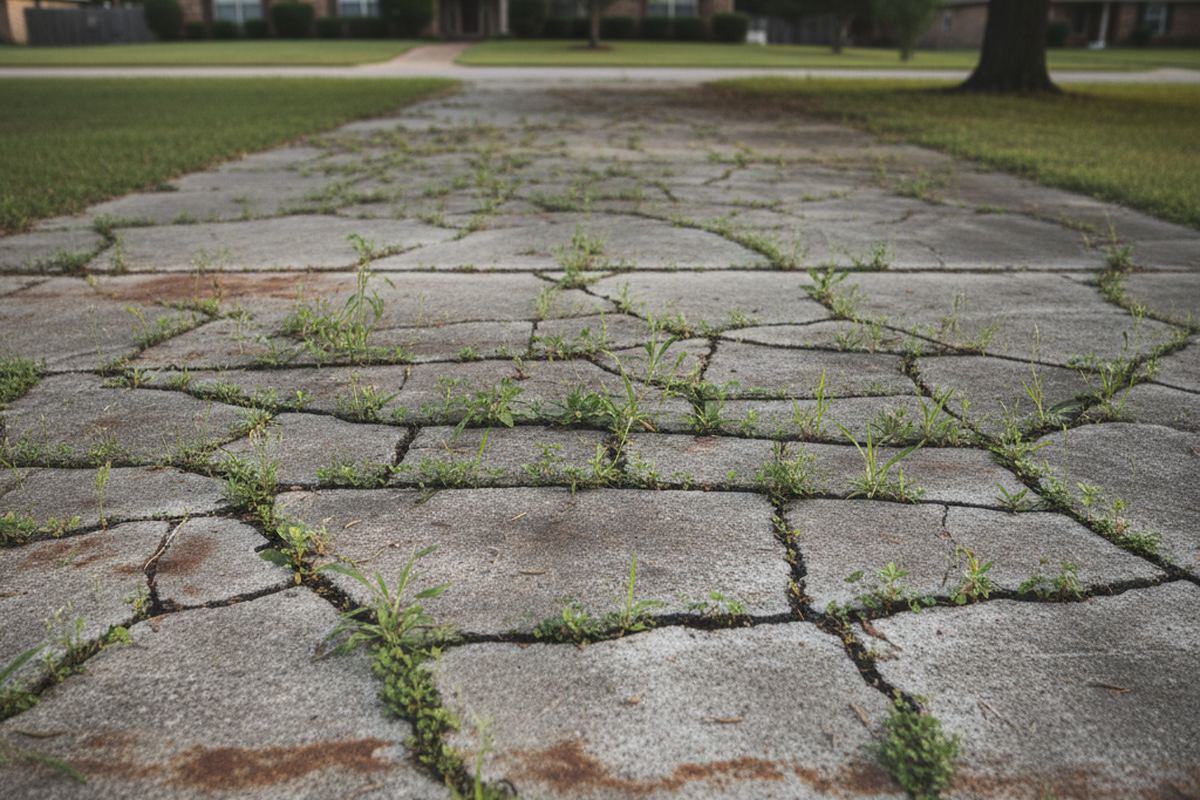
A cracked driveway can be more than just an eyesore; it can signal underlying issues and even pose a safety hazard. Deciding whether to repair a few cracks or opt for a full replacement involves weighing several factors, including the extent of the damage, your budget, and the long-term prognosis for your driveway's integrity. This guide will help you assess your situation and make an informed decision that saves you money and hassle in the long run.
Understanding Driveway Damage: When Repairs Are Sufficient
Minor cracks, often less than a quarter-inch wide, and small potholes are typically good candidates for repair. These issues are often superficial and can be addressed with appropriate sealants, crack fillers, or patching materials. Addressing minor damage promptly can prevent water penetration, which is a primary cause of more extensive deterioration, especially during freeze-thaw cycles.
The cost of these repairs is relatively low, ranging from $100 to $500 for DIY solutions or $300 to $1,000 for professional services, depending on the material and extent. For example, filling a few linear feet of asphalt cracks might cost $50 in materials, while a professional could charge $300 for the same job, including labor and specialized tools. These interventions extend the life of a driveway that is otherwise in good structural condition.
Signs Your Driveway Needs a Full Replacement
Extensive cracking, large potholes, significant heaving, or widespread sinking are strong indicators that a simple repair will not suffice. If cracks are widespread, interconnected, or wider than half an inch, the underlying base may be compromised. Alligator cracking, which resembles a reptile's skin, is another clear sign of structural failure in asphalt driveways, usually due to a weakened sub-base.
Similarly, for concrete driveways, multiple large slabs that are significantly uneven, crumbling edges, or deep spalling (surface flaking) across a large area point to issues beyond simple cosmetic fixes. These problems often stem from poor installation, inadequate drainage, or shifting ground beneath the driveway. Patching such extensive damage is usually a temporary solution that will soon require further, more costly interventions.
Assessing the Extent of Damage and Underlying Causes
A thorough inspection is crucial. Walk your driveway and note the type, size, and pattern of cracks. Are they isolated, or do they form a network? Does water pool in certain areas after rain, indicating drainage problems? Are tree roots a factor, causing sections to lift? Understanding the root cause of the damage is key to deciding between repair and replacement. Addressing symptoms without fixing the cause will lead to recurring problems.
Consider the age of your driveway. Asphalt driveways typically last 15-20 years, while concrete can last 25-30 years or more with proper maintenance. If your driveway is nearing or past its expected lifespan and exhibits significant damage, replacement often becomes the more economical choice in the long run. Professional contractors can provide a detailed assessment of the structural integrity and offer recommendations based on their expertise.
Estimate driveway cost by material, size, and demo needs — before the contractor visit.
Open the Driveway Cost EstimatorCost Comparison: Repair vs. Replacement
While repairs are less expensive upfront, it's important to consider the long-term value. A series of repeated repairs on a failing driveway can quickly accumulate costs that approach or even exceed the price of a new installation. For instance, continually patching a deteriorating asphalt driveway might cost $500-$1,000 annually, leading to $5,000-$10,000 over a decade without resolving the core issues.
A full driveway replacement is a significant investment. For a typical 600 sq ft driveway, asphalt replacement might range from $3,000 to $7,000, while concrete could be $4,000 to $12,000, depending on thickness, reinforcement, and local labor rates. Though higher initially, a new driveway, properly installed, offers decades of worry-free service and enhances curb appeal and property value. This makes the higher initial outlay a sound investment for the right circumstances.
Considering Property Value and Curb Appeal
Your driveway is a prominent feature of your home's exterior. A well-maintained or new driveway significantly boosts curb appeal, which can be particularly important if you plan to sell your home in the near future. A cracked, crumbling driveway, conversely, detracts from your home's appearance and can give potential buyers the impression of neglected maintenance, potentially lowering your property's perceived value.
While a minor repair might be sufficient to maintain functionality, a full replacement can offer a fresh, clean look that enhances the overall aesthetic. The investment in a new driveway often yields a good return, with homeowners typically recouping a substantial portion of the cost in increased property value. This makes replacement a strategic choice for homeowners focused on long-term property enhancement.
Making the Final Decision: A Checklist
Before committing to repair or replacement, consider a few key points. First, obtain at least two to three quotes from reputable contractors for both repair and replacement options. Ensure these quotes detail the scope of work, materials, and warranty. This helps you compare costs fairly and understand the value proposition of each approach.
Second, evaluate your long-term plans for the home. If you plan to live there for many years, a full replacement may offer better value and peace of mind. If you anticipate moving within a few years, a cost-effective repair might be sufficient to address immediate concerns. Always prioritize safety and structural integrity over purely aesthetic fixes.
- Damage extent: Is it widespread structural failure or isolated surface issues?
- Age of driveway: Is it past its typical lifespan?
- Budget: What can you realistically afford now and in the long term?
- Future plans: How long do you expect to own the home?
- Professional assessment: What do experts recommend after inspection?
The bottom line
The choice between repairing and replacing a cracked driveway boils down to a careful assessment of the damage, your budget, and your long-term goals for your property. While repairs can offer a temporary fix for minor issues, a full replacement often provides a more durable and aesthetically pleasing solution for extensive damage. By weighing these factors, you can make a decision that ensures your driveway remains safe and functional for years to come.
Get more guidance like this in your inbox
Weekly emergency-fund tactics, milestone checklists, and the next article — delivered free.
Run your own number
Get a personalized emergency fund target based on your income, expenses, and job stability.
Open the calculator