Driveway Demo and Removal Cost: The Line Item Everyone Forgets
The real cost to remove your old driveway before the new one goes down.
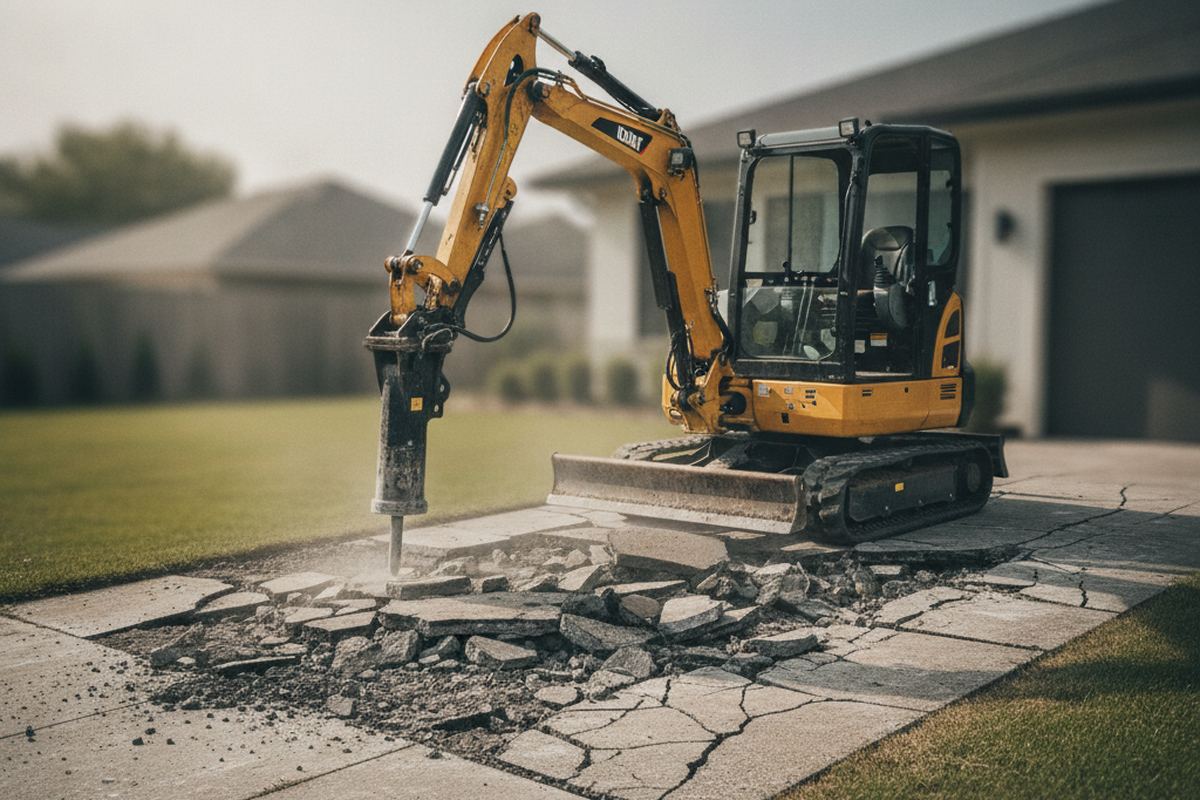
Replacing or installing a new driveway is a significant home improvement project. While much attention often goes to the material and installation costs of the new surface, a crucial preliminary expense frequently gets overlooked: the cost of demolishing and removing the existing driveway. This initial phase can add a substantial amount to your overall budget, varying widely depending on factors like material, size, and accessibility. Understanding these underlying costs is essential for accurate project planning and avoiding unexpected financial surprises.
Understanding the Core Components of Demolition Costs
The primary factors influencing driveway demolition costs include the material of the existing driveway, its total square footage, and the thickness of the slab. Concrete and asphalt are the most common materials requiring removal, each with different labor and disposal requirements. Concrete, being harder and heavier, generally costs more to break up and haul away than asphalt. The larger and thicker your existing driveway, the more time, equipment, and manpower will be needed, directly impacting the final price.
Beyond material and size, the complexity of the demolition plays a role. Driveways with significant cracks, extensive root intrusion, or those poured over rebar or wire mesh will require more effort to break apart. Additionally, the presence of embedded features like drainage systems or integrated landscaping elements can complicate the removal process, adding to labor time and potentially requiring specialized tools. These variables contribute to a wide cost range for even seemingly similar projects.
Material-Specific Removal Costs for Common Driveway Types
Concrete driveway removal typically ranges from $2 to $6 per square foot in 2026. This cost often includes breaking up the concrete, loading it, and hauling it away to a suitable disposal site. Thicker concrete slabs (e.g., 6 inches or more) or those reinforced with rebar will fall on the higher end of this range due to the increased labor and equipment required for their demolition. Access to the site can also influence this, as tight spaces may necessitate smaller equipment and more manual labor.
Asphalt driveway removal is generally less expensive, with costs typically ranging from $1 to $4 per square foot in 2026. Asphalt is easier to break apart and can sometimes be recycled, which may reduce disposal fees in some areas. However, like concrete, the thickness of the asphalt layer and the presence of underlying aggregate can affect the effort and cost involved. For both materials, contractors often have a minimum charge, so smaller driveways might see a higher per-square-foot rate.
Labor, Equipment, and Disposal: The Cost Trio
Labor is a significant portion of demolition costs. Crews often consist of 2-4 workers, and their hourly rates, combined with the estimated time for the project, form a large part of the total. Specialized equipment, such as jackhammers, concrete saws, skid steers, and excavators, incurs rental or operational costs that are factored into your quote. The type and size of equipment needed are dictated by the driveway's material, thickness, and overall dimensions. Efficient equipment use can help keep labor hours down.
Disposal fees are another non-negotiable expense. Demolished concrete and asphalt are heavy, and landfills or recycling centers charge by weight or volume. Hauling costs, which include fuel and vehicle maintenance, are also part of this equation. A typical 1,000 square foot concrete driveway, 4 inches thick, can generate several tons of debris. Some contractors include disposal in their per-square-foot rate, while others itemize it. Always clarify what is included in any quote you receive.
- Labor rates: $50-$100 per hour per worker
- Equipment rental: $200-$500 per day for heavy machinery
- Dumpster rental: $300-$700 per week for a 20-yard container
- Disposal fees: $50-$150 per ton for concrete/asphalt debris
Estimate driveway cost by material, size, and demo needs — before the contractor visit.
Open the Driveway Cost EstimatorAccessibility and Site Conditions: Hidden Cost Factors
The ease of access to your driveway can significantly impact demolition costs. If heavy machinery like skid steers or excavators cannot easily reach the work area, more manual labor might be required, which can increase the project timeline and expense. Obstacles such as fences, landscaping, or narrow pathways can complicate the process, potentially necessitating additional charges for temporary removal or protection of these elements. Always discuss access challenges with your contractor upfront.
Site conditions, including the slope of the land or the presence of underground utilities, also play a role. A very steep driveway may require specialized equipment or safety measures. If there are buried utility lines (water, gas, electrical, internet), these must be clearly marked before any demolition begins to prevent damage, which could incur additional costs for utility location services or repair if an accident occurs. Ensure your contractor verifies utility locations before breaking ground.
Permits and Regulations: Don't Forget the Red Tape
Depending on your municipality, you might need a permit for driveway demolition and replacement, especially if the project involves changes to drainage or affects public right-of-way. Permit fees can range from $50 to $200 or more, and securing them can take several days or weeks. Failing to obtain necessary permits can lead to fines, project delays, or even the requirement to remove newly installed work, making it crucial to check local regulations before starting.
Some areas also have specific regulations regarding debris disposal, particularly for concrete or asphalt. They may require specific recycling facilities or limit what can be placed in general waste bins. Your contractor should be knowledgeable about these local rules, but it's always wise for homeowners to be aware. Non-compliance can result in penalties, so confirm that your contractor plans for proper and legal disposal of all demolition waste.
Estimating and Budgeting for Demolition
When collecting bids for your driveway project, explicitly request a separate line item for demolition and removal. A detailed quote should break down costs for labor, equipment, hauling, and disposal. For a 1,000 square foot concrete driveway, expect demolition and removal to add $2,000 to $6,000 to your total project budget. For asphalt, this might be $1,000 to $4,000 for the same size. These ranges can vary significantly based on the factors discussed previously.
It is prudent to obtain at least three detailed quotes from different contractors to compare pricing and services. Ensure each quote specifies what is included and what might be an additional charge. Allocate an extra 10-15% of your total demolition budget for unforeseen issues, such as discovering unexpected underlying debris or encountering difficult-to-remove sections. This contingency fund helps prevent project stalls due to unexpected expenses.
DIY Demolition: Savings vs. Challenges
Undertaking driveway demolition yourself can save on labor costs, potentially reducing the overall expense by 30% to 50%. However, this is a physically demanding and time-consuming task, requiring significant effort, proper tools, and knowledge of safety procedures. For a typical 1,000 square foot concrete driveway, this could be several days of intense work. You would still need to rent equipment like a jackhammer (around $50-$150 per day) and arrange for debris disposal, which can involve renting a dumpster ($300-$700) and paying disposal fees.
Before considering DIY, assess your physical capability, access to appropriate tools, and your ability to safely transport and dispose of heavy debris. A concrete driveway can weigh many tons, and improper disposal can lead to fines. For most homeowners, hiring professionals for demolition is often the safer, more efficient, and ultimately less stressful option, especially for larger or thicker driveways where specialized equipment and expertise are invaluable.
The bottom line
Factoring in driveway demolition and removal costs from the outset is crucial for a realistic project budget. By understanding the variables involved—material, size, accessibility, and local regulations—homeowners can avoid unexpected expenses and plan more effectively. Always secure detailed quotes and consider a contingency fund to ensure your driveway project proceeds smoothly from start to finish.
Get more guidance like this in your inbox
Weekly emergency-fund tactics, milestone checklists, and the next article — delivered free.
Run your own number
Get a personalized emergency fund target based on your income, expenses, and job stability.
Open the calculator