Driveway Drainage and Grading: The Hidden Cost
The drainage and grading work that quietly doubles a driveway estimate.
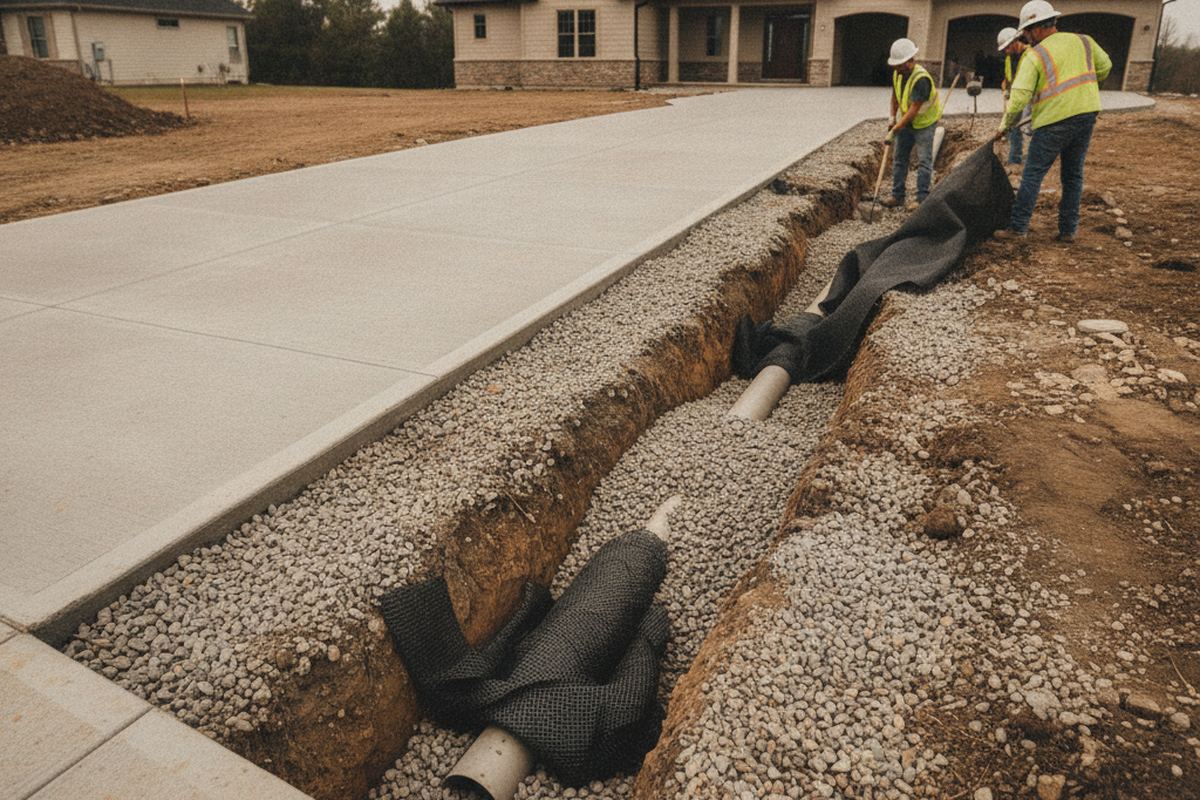
When planning a new driveway, many homeowners focus on the surface material and its immediate cost. However, the true expense often lies beneath the surface, in the critical but frequently overlooked aspects of drainage and grading. These foundational elements are essential for a durable, long-lasting driveway that won't succumb to water damage, cracking, or erosion. Understanding these 'hidden' costs upfront can prevent significant financial surprises and ensure your investment stands the test of time.
Understanding Driveway Grading Basics
Driveway grading refers to shaping the ground to achieve the desired slope and elevation before any material is laid down. Proper grading is fundamental for preventing water pooling on the driveway surface or near the home's foundation. It involves creating a slight incline, typically 1% to 2% away from structures, to direct rainwater runoff effectively. This initial earthwork sets the stage for everything else, influencing both the driveway's functionality and its longevity.
The complexity of grading depends heavily on the existing landscape. A flat, even lot might require minimal grading, primarily for compaction and a slight crown. Conversely, a sloped or uneven property may necessitate significant cut-and-fill operations, where soil is removed from higher areas and added to lower ones. These earthmoving tasks require specialized equipment and skilled operators, directly impacting labor and equipment costs, which can range from $500 to over $5,000 depending on the site's condition and size.
The Role of Sub-Base Preparation
Beneath the visible surface of your driveway lies the sub-base, a layer of compacted aggregate that provides crucial support and additional drainage. A well-prepared sub-base distributes the weight of vehicles evenly, preventing settling and cracking of the surface material. This layer also acts as a filter, allowing water to percolate through while ensuring the structural integrity of the driveway. Skimping on sub-base preparation is a common mistake that leads to premature driveway failure.
The materials and labor involved in sub-base preparation can add a substantial amount to your project's total. This typically includes excavating the existing soil, laying down geotextile fabric (which prevents mixing of sub-base and subgrade), and then adding layers of crushed stone or gravel, compacted in lifts. Costs for sub-base materials and installation can range from $2 to $5 per square foot, depending on depth requirements and material choices. For a typical 500-square-foot driveway, this could be an additional $1,000 to $2,500.
Essential Drainage Systems
Beyond surface grading, strategic drainage systems are often necessary to manage significant water runoff or for driveways in areas with poor natural drainage. These systems prevent water from eroding the driveway's edges, undermining its foundation, or contributing to standing water issues. Common solutions include trench drains, catch basins, and French drains, each designed to collect and divert water away from the driveway and surrounding property.
Installing effective drainage can be a considerable additional expense, but it's an investment that protects your entire property. Trench drains, typically installed across the driveway at low points, can cost between $15 to $50 per linear foot, including excavation and installation. Catch basins, which collect water from specific areas, might range from $300 to $800 each installed. The choice and extent of drainage solutions are determined by the site's specific hydrological challenges and local regulations.
Estimate driveway cost by material, size, and demo needs — before the contractor visit.
Open the Driveway Cost EstimatorPermits and Regulations
Many municipalities have specific regulations regarding driveway construction, particularly concerning grading and drainage. These often stipulate minimum slopes, maximum impervious surface areas, and requirements for managing stormwater runoff. Obtaining the necessary permits is not just a legal formality; it ensures your project adheres to safety and environmental standards, preventing potential issues with local authorities or future property sales.
The cost of permits varies widely by location, from under $100 to several hundred dollars. Beyond the permit fees themselves, there may be associated costs for surveys, engineering plans, or inspections required to secure approval. Failing to obtain the correct permits can lead to fines, project delays, or even the requirement to demolish and rebuild non-compliant sections, making this a critical, albeit often overlooked, part of the initial planning phase.
Impact of Soil Conditions
The existing soil composition of your property significantly influences the complexity and cost of grading and drainage. Clay soils, for instance, retain water and expand when wet, requiring more robust sub-base and drainage solutions to prevent heaving and cracking. Sandy soils drain well but may require more compaction to achieve stability. Rocky terrain presents excavation challenges, potentially increasing labor and equipment costs substantially.
A soil test, while an added upfront cost (typically $200-$500), can provide invaluable information. It helps contractors understand the soil's bearing capacity, drainage characteristics, and compaction needs. This knowledge allows for a more accurate project estimate and ensures the chosen construction methods are appropriate for the site, potentially saving thousands in future repairs due to unforeseen soil-related issues.
Hidden Costs and Unexpected Challenges
Beyond the primary considerations, several less obvious factors can inflate grading and drainage expenses. These include the removal of existing vegetation or trees, relocation of utility lines (gas, water, electrical), and the need for retaining walls on steeply sloped properties. Each of these can add thousands to the project, transforming a seemingly straightforward driveway replacement into a complex construction endeavor.
Unexpected challenges, such as encountering bedrock during excavation or discovering extensive underground water springs, can also lead to significant cost overruns and project delays. It is prudent to allocate a contingency fund, typically 10% to 20% of the initial estimate, to cover such unforeseen circumstances. This financial buffer helps manage the financial impact of discoveries made once work has commenced.
The bottom line
Factoring in the often-overlooked costs of drainage and grading from the outset is crucial for an accurate driveway project budget. These foundational elements, though invisible in the final product, are indispensable for a durable and problem-free driveway. By understanding these components, homeowners can make informed decisions, ensuring their investment in a new driveway is both sound and sustainable.
Get more guidance like this in your inbox
Weekly emergency-fund tactics, milestone checklists, and the next article — delivered free.
Run your own number
Get a personalized emergency fund target based on your income, expenses, and job stability.
Open the calculator