EV Commute Cost: Real 2026 Charging Numbers
The real per-mile cost of an EV commute versus a gas car in 2026.
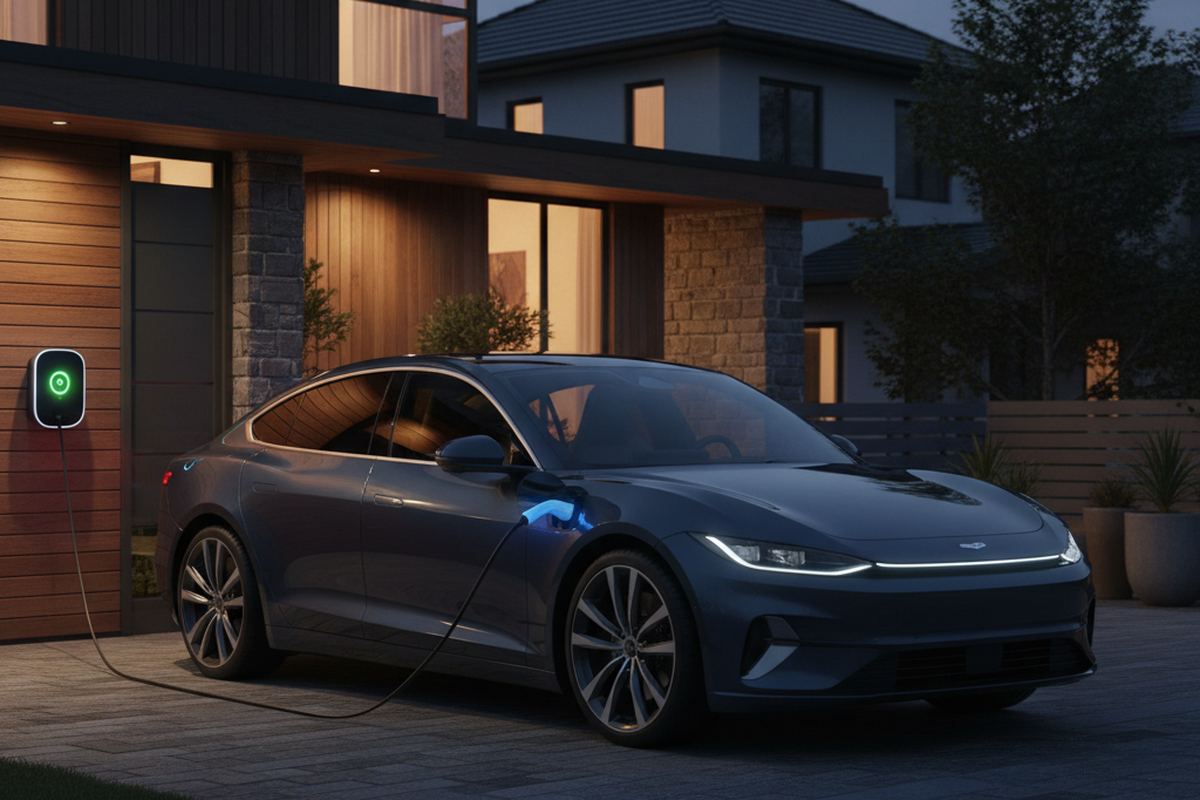
Understanding the true cost of your daily commute is essential for financial planning. With the automotive landscape shifting towards electric vehicles (EVs), many commuters are weighing the financial implications of making the switch. This analysis breaks down the per-mile costs for EVs compared to traditional gasoline vehicles, considering factors like electricity rates, fuel efficiency, and maintenance. By examining 2026 projections, we aim to provide a clear picture to help you make an informed decision about your commute.
Estimating Your EV's Charging Costs
The primary operating cost for an EV is electricity. In 2026, residential electricity rates are projected to range from approximately $0.15 to $0.25 per kilowatt-hour (kWh) across the US, with significant variations by state and time-of-day pricing. Charging at home, especially during off-peak hours, is generally the most economical option. For example, if your EV consumes 0.3 kWh per mile and your electricity rate is $0.18/kWh, your per-mile charging cost would be about $0.054.
Public charging, while convenient, typically carries higher rates. Fast chargers can cost upwards of $0.30 to $0.50 per kWh, or sometimes charge by the minute. This can significantly increase your per-mile cost, potentially reaching $0.09 to $0.15 per mile for fast charging. Therefore, maximizing home charging opportunities is key to realizing the full cost-saving potential of an EV commute. Consider your daily mileage and access to home charging when evaluating EV costs.
Gas Car Commute: Fuel Price Projections
For gasoline vehicles, fuel prices remain a volatile but significant expense. In 2026, average gasoline prices are projected to range from $3.00 to $4.00 per gallon. The actual cost per mile depends directly on your vehicle's fuel efficiency, often expressed in miles per gallon (MPG). A car achieving 30 MPG with gasoline at $3.50 per gallon would incur a fuel cost of approximately $0.117 per mile.
Commuters with less fuel-efficient vehicles, such as larger SUVs or older models, will see higher per-mile costs. For instance, a vehicle getting 20 MPG at the same $3.50 per gallon would have a per-mile fuel cost of $0.175. These figures highlight how vehicle efficiency plays a critical role in the overall expense of a gasoline-powered commute, often overshadowing minor fluctuations in gas prices.
Maintenance and Wear: EV vs. Gas
Maintenance costs for EVs are generally lower than for gasoline cars. EVs have fewer moving parts, no oil changes, spark plugs, or complex exhaust systems. Routine maintenance for EVs typically includes tire rotations, brake inspections, and cabin air filter replacements. Over a five-year period, EV owners might save $1,000 to $2,000 in scheduled maintenance compared to gasoline vehicle owners.
However, it's important to account for potential EV battery replacement costs, though these are typically covered by lengthy warranties (8-10 years or 100,000-150,000 miles). Tire wear can also be slightly higher for EVs due to their heavier weight and instant torque, but this difference is often marginal. When factoring in these elements, EVs tend to offer a more predictable and often lower long-term maintenance expenditure.
Total your commute cost — fuel, parking, wear, transit, and the value of your time.
Open the Commute Cost CalculatorInsurance Costs: A Shifting Landscape
Insurance premiums for EVs have historically been higher than for comparable gasoline vehicles, largely due to higher repair costs for specialized components and limited availability of trained technicians. In 2026, this trend is expected to continue, though the gap may narrow as EV adoption increases and repair infrastructure improves. New EV models are often more expensive to replace, contributing to higher premiums.
However, insurance rates are highly individualized, influenced by factors such as driver history, location, and the specific EV model. Some insurers offer discounts for EVs, offsetting some of the premium difference. It's advisable to obtain quotes for both EV and gasoline models to get an accurate comparison for your personal situation, as this cost can significantly impact your overall commute budget.
Depreciation: An Often Overlooked Factor
Vehicle depreciation is a significant, yet often uncalculated, cost of ownership. Historically, gasoline cars have followed predictable depreciation curves. EVs have shown more variability, with some models holding value exceptionally well, and others depreciating faster due to rapid technological advancements or changes in government incentives. For 2026, the depreciation rates for popular EV models are expected to stabilize as the market matures.
Generally, a new car can lose 15% to 25% of its value in the first year and around 50% over five years. While EVs may initially depreciate slightly faster than comparable gasoline cars, the gap is narrowing. When considering a vehicle for your commute, researching the expected resale value of specific models, both EV and gasoline, can provide a more complete financial picture beyond just operational costs.
Calculating Your Total Commute Cost Per Mile
To get a comprehensive per-mile cost, you need to combine all relevant factors: fuel/electricity, maintenance, insurance, and depreciation. For an EV, with an average electricity cost of $0.06/mile, maintenance savings of $0.02/mile (compared to gas), and potentially higher insurance/depreciation of $0.03/mile, the net operational cost could be around $0.07/mile, not including the initial purchase price or financing.
Conversely, a gasoline car at $0.12/mile for fuel, $0.04/mile for maintenance, and $0.02/mile for insurance/depreciation might average $0.18/mile. These are illustrative figures, and individual results will vary widely based on vehicle choice, driving habits, and local rates. The benefit of an EV often becomes clearer over a longer ownership period, as fuel and maintenance savings accumulate.
- Electricity Cost: $0.05 - $0.15 per mile (EV)
- Gasoline Cost: $0.10 - $0.20 per mile (Gas Car)
- Maintenance Savings: ~$0.02 per mile (EV advantage)
- Insurance: Highly variable, often slightly higher for EVs
- Depreciation: Similar long-term trends, but short-term EV variability
The bottom line
Evaluating your commute cost involves more than just fuel or electricity. By considering maintenance, insurance, and depreciation, you can gain a clearer understanding of the true financial impact of your daily travel. Use these projections and considerations to assess which vehicle type aligns best with your financial goals and commuting needs.
Get more guidance like this in your inbox
Weekly emergency-fund tactics, milestone checklists, and the next article — delivered free.
Run your own number
Get a personalized emergency fund target based on your income, expenses, and job stability.
Open the calculator