Garden Water Cost: Sprinkler vs Drip vs Rain Barrel
The water cost of running a garden and how drip irrigation pays for itself.
Planning a garden involves many considerations, from plant selection to sunlight exposure. Often overlooked, however, is the ongoing cost of water, which can significantly impact your gardening budget. Understanding the water usage and efficiency of different irrigation methods is crucial for sustainable and cost-effective gardening. This guide explores the financial implications of common watering techniques, helping you make informed decisions for your backyard oasis.
Understanding Your Water Bill
Before diving into irrigation methods, it's helpful to understand how water is typically billed. Most municipalities charge based on consumption, measured in cubic feet or gallons, often with tiered pricing where higher usage leads to a higher per-unit cost. Sewer charges, which can be a significant portion of your bill, are frequently calculated as a percentage of your water usage, even if that water doesn't enter the sewer system. This means that every gallon used in your garden can have a dual impact on your utility expenses.
Your local water provider's website is the best source for specific rates and billing structures. For example, if your average water rate is $0.005 per gallon and your sewer charge adds another $0.004 per gallon for garden use, each gallon costs you $0.009. This might seem small, but it adds up quickly. A garden requiring 500 gallons per week would cost $4.50 weekly, or $180 over a 40-week growing season, excluding any potential tiered rate increases.
Overhead Sprinklers: Convenience with Hidden Costs
Traditional overhead sprinklers, including oscillating, pulsing, or pop-up systems, are a common sight in many gardens. They offer broad coverage and are relatively inexpensive to install initially. However, their efficiency is often compromised by significant water loss due to evaporation and runoff. A considerable amount of water may never reach the plant roots, especially on windy days or when watering during the hottest parts of the day. This inefficiency translates directly into higher water bills.
For instance, a typical sprinkler might deliver 1.5 inches of water per hour over a 100 square foot area. To provide a deep watering of 1 inch per week, you'd run it for about 40 minutes. If half that water is lost to evaporation or runoff, you're effectively paying double for the water that actually benefits your plants. This method can be a significant drain on both water resources and your budget, potentially adding hundreds of dollars to your annual gardening costs compared to more efficient alternatives.
Drip Irrigation: Precision and Savings
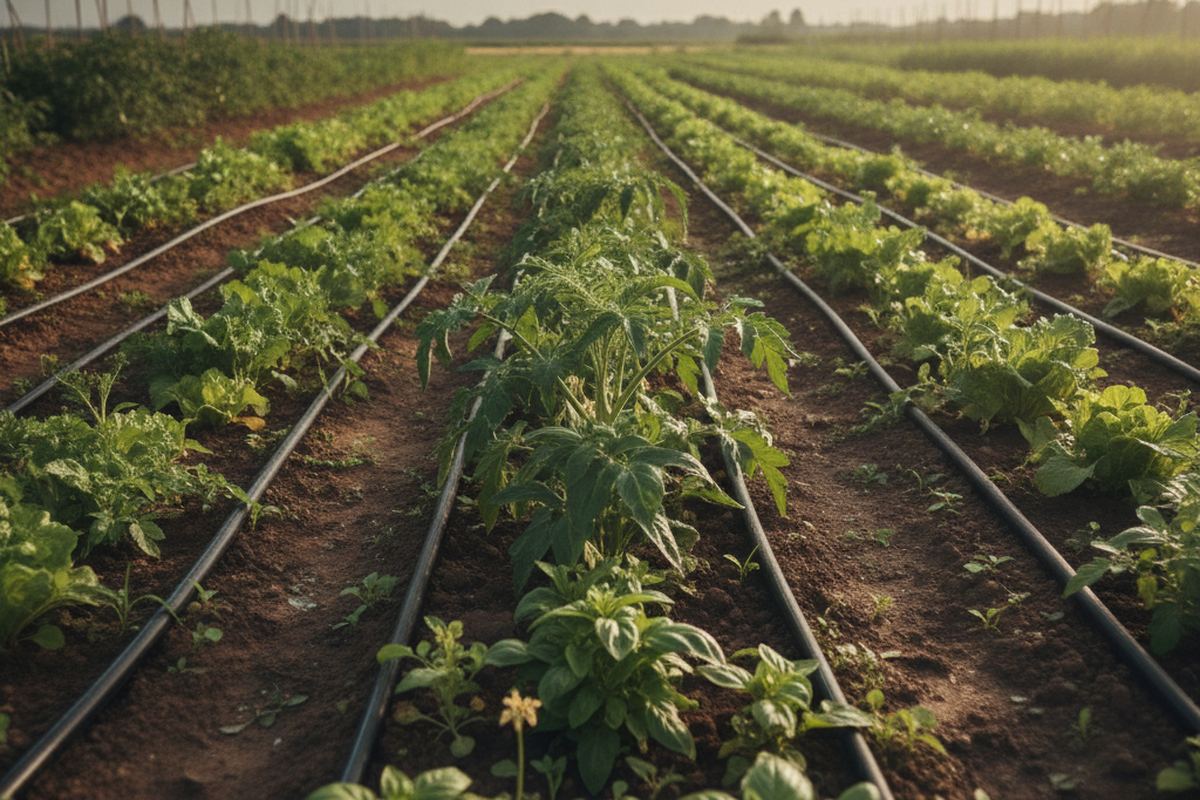
Drip irrigation systems deliver water directly to the plant's root zone, either on the soil surface or slightly below it. This method minimizes evaporation and runoff, ensuring nearly all the water applied is utilized by the plants. Drip systems consist of a network of tubes, emitters, and connectors, and while the initial setup cost can be higher than a basic sprinkler, the long-term water savings are substantial. Many homeowners find that a drip system pays for itself within one to three growing seasons through reduced utility bills.
Consider a 100 square foot garden needing 1 inch of water per week. With a drip system, you might apply 0.5 gallons per square foot, totaling 50 gallons. At our example rate of $0.009 per gallon, this costs $0.45 per week, or $18 over a 40-week season. Compared to the $180 for inefficient sprinkler use, the savings are clear. Drip irrigation can reduce water usage by 30-70% compared to traditional sprinklers, offering both financial and environmental benefits.
- Reduced water evaporation
- Minimized runoff and waste
- Direct delivery to plant roots
- Lower risk of fungal diseases on foliage
- Can be automated with timers
Plan a real garden — bed size, soil, mulch, and grocery-equivalent yield.
Open the Garden PlannerRain Barrels: Harnessing Free Water
Rain barrels collect rainwater from your roof, providing a free and sustainable source of irrigation water. A standard 50-gallon rain barrel can capture a significant amount of water from a single downpour. For every inch of rain that falls on a 100 square foot roof section, approximately 62 gallons of water can be collected. This collected water can then be used to supplement or entirely replace municipal water for your garden, especially during dry spells.
While the upfront cost of a rain barrel ranges from $80 to $200, the water it provides is completely free. Over a growing season, a few well-placed rain barrels can collect hundreds to thousands of gallons, translating into significant savings. For a 40-week season, if you collect 500 gallons per week on average and use it all, that's $180 saved. This method is particularly effective in regions with consistent rainfall, offering an excellent return on investment and reducing your reliance on municipal water supplies.
Optimizing Your Watering Schedule
Regardless of the irrigation method, timing is critical for water efficiency. Watering deeply and less frequently encourages deeper root growth, making plants more resilient to dry conditions. Aim to water in the early morning, before the sun is high, to minimize evaporation. Avoid watering in the evening, which can leave foliage wet overnight and increase the risk of fungal diseases. Regularly checking soil moisture is also key to ensuring you're only watering when necessary, preventing both under and overwatering.
Consider using a soil moisture meter, which can be purchased for $10-$30, to accurately assess when your plants truly need water. Automatic timers, ranging from $20 for basic models to $100+ for smart systems, can further optimize your schedule, ensuring consistent and efficient watering even when you're away. These tools help eliminate guesswork and ensure your garden receives precisely what it needs, preventing unnecessary water expenditure.
Mulch: A Simple Yet Powerful Ally
Applying a layer of organic mulch, such as straw, wood chips, or shredded leaves, around your plants is one of the easiest and most effective ways to conserve soil moisture. Mulch acts as a protective barrier, reducing water evaporation from the soil surface and moderating soil temperatures. This means your plants stay hydrated longer, and you can reduce the frequency of watering, leading to direct savings on your water bill. A 2-4 inch layer of mulch can cut water loss by 25-50%.
Beyond water conservation, mulch also suppresses weeds, which compete with your garden plants for water and nutrients. By reducing weed growth, you further enhance the efficiency of your watering efforts. The cost of mulch is relatively low, typically $5-$10 per bag or $30-$60 per cubic yard, making it a highly cost-effective investment for any gardener looking to optimize water usage and improve soil health. It's a foundational practice for a water-wise garden.
The bottom line
Choosing the right irrigation method and adopting water-wise practices can significantly impact your garden's health and your wallet. By understanding the costs associated with different watering techniques and implementing strategies like drip irrigation, rain barrels, and mulching, you can create a thriving garden while conserving a precious resource. Evaluate your current practices and consider which adjustments will offer the best return for your specific garden needs.
Get more guidance like this in your inbox
Weekly emergency-fund tactics, milestone checklists, and the next article — delivered free.
Run your own number
Get a personalized emergency fund target based on your income, expenses, and job stability.
Open the calculator