Hardwood Floor Refinishing Cost 2026 (Sand and Stain)
What refinishing costs per sq ft, when it beats replacement, and the number of refinish cycles left in your floor.
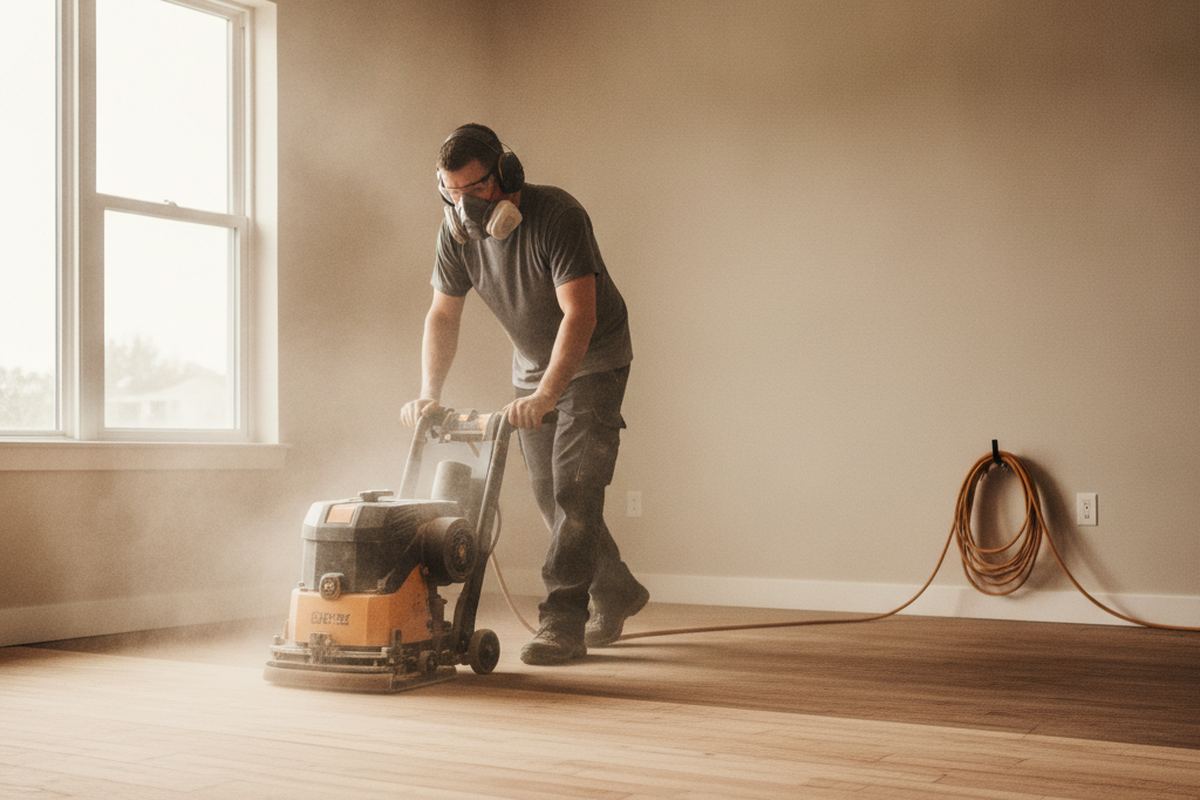
Refinishing hardwood floors can breathe new life into a home, restoring their original luster and enhancing property value. It's often a more cost-effective and sustainable option than full replacement, especially for solid hardwood. Understanding the factors that influence refinishing costs, such as square footage, wood type, and labor, is crucial for homeowners planning this project. This guide breaks down the typical expenses and considerations for refinishing hardwood floors in 2026.
Understanding the Cost Per Square Foot
The primary driver of hardwood floor refinishing cost is the square footage of the area to be treated. For a standard sand and stain process, homeowners can expect to pay between $3.00 to $6.50 per square foot in 2026. This range includes labor, materials like sandpaper, stain, and polyurethane finish. Factors such as regional labor rates, the complexity of the job, and the type of finish chosen can influence where your project falls within this spectrum. For instance, a basic clear finish will typically be on the lower end, while multiple coats of a premium, highly durable finish or a custom color stain could push costs higher.
To illustrate, refinishing a 500-square-foot living room might cost between $1,500 and $3,250. This estimate generally covers the complete process from initial sanding to the final topcoat application. Keep in mind that this per-square-foot cost typically assumes a clear, empty room. Additional charges may apply for moving furniture, removing old carpeting or adhesives, or repairing damaged floorboards before the refinishing process can begin. Always obtain detailed quotes that itemize these potential extra services.
Factors Influencing Your Total Project Price
Several variables beyond square footage contribute to the overall cost of hardwood floor refinishing. The type of wood, for example, can play a role; some softer woods require more delicate sanding, while very hard woods might demand more aggressive abrasives. The existing finish also matters. If the floor has multiple layers of old wax or paint, more extensive preparation might be necessary, adding to labor time. The choice of finish (e.g., water-based, oil-based, or moisture-cure polyurethane) impacts material costs, with some premium finishes offering enhanced durability and a higher price point.
Geographic location significantly affects labor costs; urban areas and regions with a higher cost of living generally have higher hourly rates for skilled tradespeople. The condition of the existing floor is another key factor. If there are damaged planks that need replacement, or significant gaps that require filling, these repairs will add to the total expense. Furthermore, intricate patterns like herringbone or parquet may require specialized sanding equipment and techniques, increasing the labor component. Always discuss these potential complexities with your contractor during the quoting process.
- Wood species and hardness
- Existing finish type and condition
- Choice of new stain and topcoat
- Local labor rates
- Floor damage requiring repair
- Floor pattern complexity
When Refinishing Outperforms Replacement
Refinishing is almost always more economical than replacing solid hardwood floors. The cost of installing new hardwood, including materials, subfloor preparation, and labor, typically ranges from $8.00 to $18.00 per square foot or more, depending on the wood species and installation method. Compared to the $3.00 to $6.50 per square foot for refinishing, the savings are substantial. Beyond cost, refinishing is a more sustainable choice, extending the life of existing materials and reducing waste sent to landfills. It also preserves the original character and history of your home's flooring.
Another key advantage is the disruption level. While refinishing involves some dust and odor, it is generally a quicker process than a full tear-out and new installation. New flooring installation can entail significant demolition, subfloor work, and a longer timeline, making refinishing a more convenient option for many homeowners. If your existing hardwood is structurally sound and has sufficient thickness to withstand sanding, refinishing is often the superior choice for both your budget and the environment.
Estimate flooring cost by square footage and material — with waste factor and install labor baked in.
Open the Flooring Cost CalculatorDetermining Refinish Cycles and Floor Lifespan
The number of times a hardwood floor can be refinished depends primarily on the thickness of its wear layer, which is the solid wood above the tongue and groove. For standard 3/4-inch solid hardwood, there is typically enough material for 5 to 7 full refinishing cycles over its lifetime. Each sanding removes a small amount of wood, usually 1/32 to 1/16 of an inch. Engineered hardwood, on the other hand, has a thinner veneer layer and can typically only be refinished 1 to 3 times, depending on the veneer thickness.
To assess how many refinishes your floor has left, inspect the side profile of a floorboard, often visible near vents or where the floor meets a wall. You'll want to see at least 1/8 to 1/4 inch of solid wood above the tongue. If the floor is starting to show signs of the tongue and groove, or if nails are becoming visible, it may be nearing the end of its refinishing life. A professional flooring expert can accurately assess your floor's condition and provide an informed opinion on its remaining refinishing potential.
The Refinishing Process: What to Expect
The hardwood floor refinishing process typically begins with thorough preparation, including clearing the room and protecting adjacent areas. The floors are then sanded using progressively finer grits of sandpaper to remove the old finish, smooth out imperfections, and prepare the wood for staining. This step is crucial for achieving an even, beautiful result. Dust collection systems are used to minimize airborne particles, but some dust is inevitable.
After sanding, the floor is meticulously cleaned to remove all dust. If a new stain color is desired, it is applied evenly. This is followed by the application of multiple coats of a protective finish, such as polyurethane, with light sanding between coats to ensure adhesion and smoothness. Each coat requires adequate drying time. The entire process, from start to finish, can take anywhere from 3 to 7 days, depending on the size of the area, the number of coats, and drying conditions.
Maintaining Your Newly Refinished Floors
Proper maintenance is key to extending the life of your newly refinished hardwood floors and protecting your investment. Allow the finish to fully cure before placing heavy furniture or rugs back on the floor, which can take several days to a few weeks depending on the product. Use furniture pads under all legs to prevent scratches and dents. Regularly sweep or vacuum with a soft brush attachment to remove grit and dirt that can act as an abrasive.
For cleaning, use a hardwood floor cleaner recommended by your flooring professional or a pH-neutral cleaner specifically designed for finished wood floors. Avoid using excessive water, steam cleaners, or harsh chemicals like ammonia-based cleaners, as these can damage the finish and the wood itself. Promptly wipe up spills to prevent water damage. By following these simple maintenance practices, your refinished floors can maintain their beauty and durability for many years.
The bottom line
Refinishing hardwood floors is a significant home improvement project that offers substantial aesthetic and financial benefits. By understanding the cost factors, the process, and the long-term value, homeowners can make informed decisions. A well-executed refinishing project not only revitalizes your living space but also extends the life of a valuable asset.
Get more guidance like this in your inbox
Weekly emergency-fund tactics, milestone checklists, and the next article — delivered free.
Run your own number
Get a personalized emergency fund target based on your income, expenses, and job stability.
Open the calculator