How Much Interest Will I Save Paying Off My Mortgage Early?
A calculator-driven guide to quantifying the exact interest savings from extra principal payments, biweekly schedules, and lump sums.
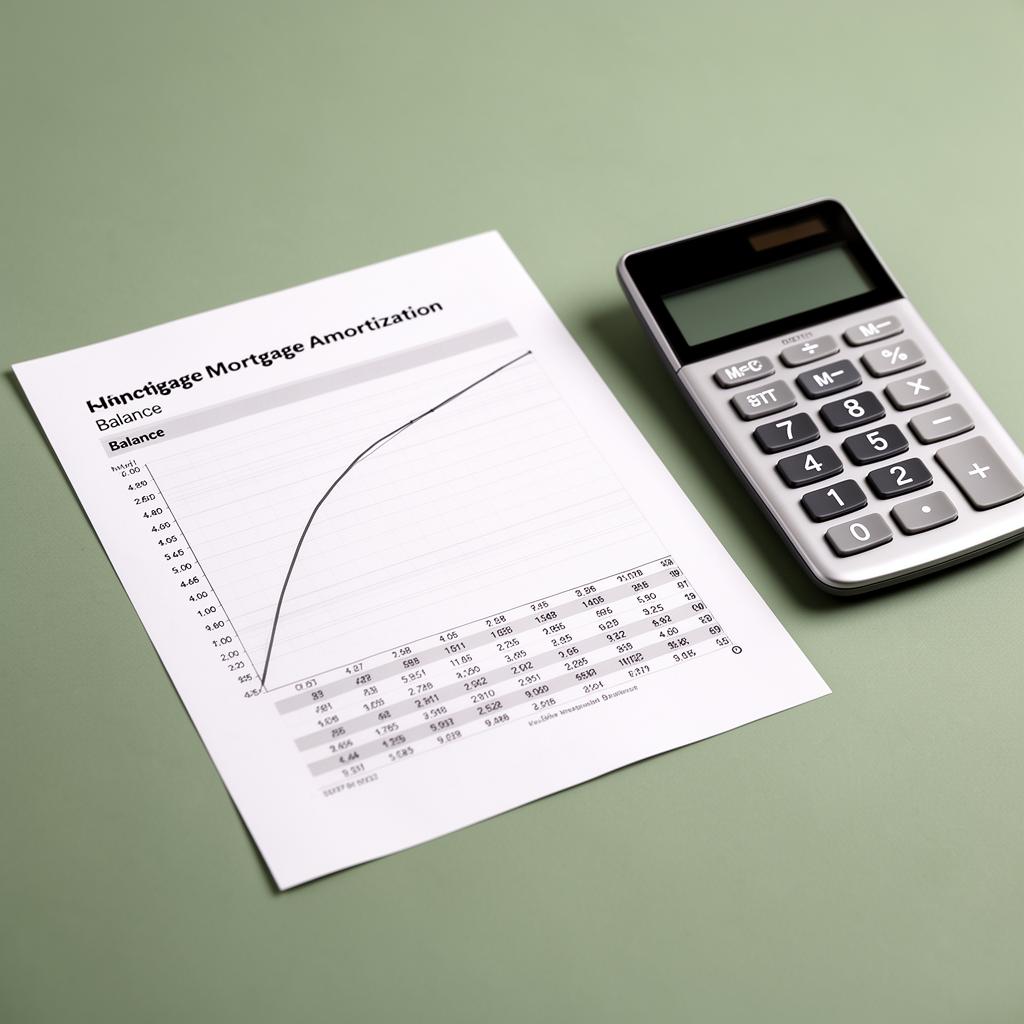
The most motivating number in mortgage payoff isn't the new payoff date — it's the interest you never have to pay. On a typical 30-year loan, interest often equals or exceeds the original principal. Paying off early doesn't just shorten the timeline; it can cut the total cost of your home in half. Here's how to calculate your exact savings.
The baseline: total interest on a standard loan
On a $400,000 mortgage at 6.8% for 30 years, total interest is $540,320. Your $400,000 house costs $940,320. That interest amount is not fixed — it's the price of sticking to the minimum payment schedule. Every extra dollar to principal reduces it.
Savings from extra monthly payments
- $100/month extra: saves $52,000, pays off 2.5 years early
- $250/month extra: saves $112,000, pays off 5.8 years early
- $500/month extra: saves $194,000, pays off 9.2 years early
- $1,000/month extra: saves $294,000, pays off 14.1 years early
Savings from biweekly payments
Biweekly payments create one extra payment per year. On the $400,000 loan at 6.8%, that alone saves $74,600 in interest and pays off the loan 3.9 years early. No budget change, no lifestyle sacrifice — just different timing.
Savings from annual lump sums
A $5,000 annual lump sum applied to principal in year 1 of the same loan saves $96,400 over the life of the loan and pays it off 5.2 years early. The earlier the lump sum, the more it saves, because it reduces the balance that all future interest is calculated on.
Stack biweekly payments, extra principal, and annual lump sums to see the combined effect on your exact loan. The total savings often surprises people.
Stack Your StrategiesStacking strategies: the multiplier effect
The real power comes from combining tactics. Biweekly payments plus $300/month extra plus a $3,000 annual lump sum on the $400,000 loan pays it off in 16.8 years and saves $312,000 in interest. That's $312,000 that stays in your pocket instead of going to the lender.
The present value of savings
Future interest savings sound abstract. To make them concrete, divide total interest saved by your remaining term. Saving $200,000 over 15 years is effectively $13,300 per year — or $1,110 per month — of future income you no longer need to generate. That's a meaningful raise, tax-free.
Calculate your exact savings
Enter your loan balance, interest rate, remaining term, and any extra payments into the Mortgage Payoff Calculator. It will show total interest saved, years shaved, and a month-by-month projection. The number is your motivation.
Get more guidance like this in your inbox
Weekly emergency-fund tactics, milestone checklists, and the next article — delivered free.
Plan your mortgage-free date
See exactly when you'll be mortgage-free and how much interest you'll save with your extra payments.
Open the Mortgage Payoff Calculator