How to Estimate Your Roof in Squares (Without a Ladder)
Use satellite imagery and pitch multipliers to estimate your roof size in roofing squares without climbing up.
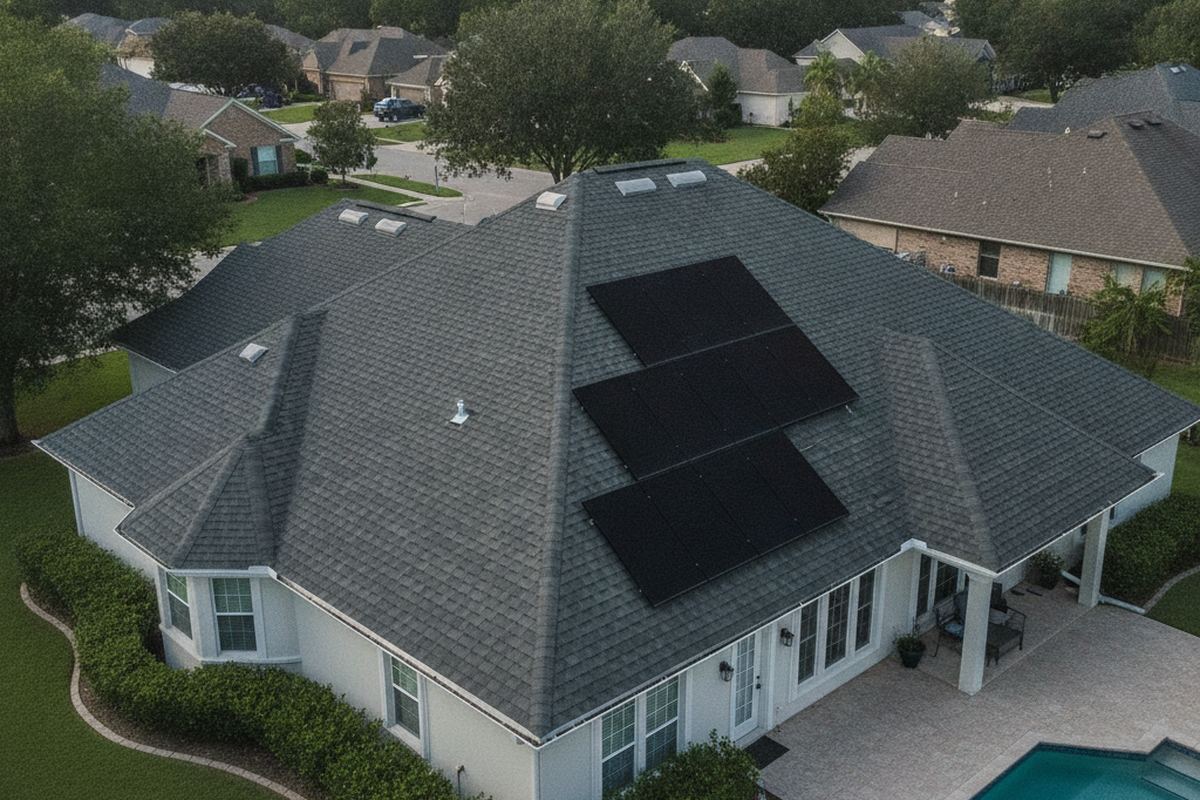
Understanding your roof's size is a crucial first step when planning a replacement. Professional roofers typically quote projects in "squares," a unit representing 100 square feet of roofing material. Knowing your roof's square footage early helps you budget more accurately and communicate effectively with contractors. Fortunately, you can often get a good estimate without ever setting foot on a ladder, using readily available tools and a few simple calculations.
Why "Squares" Matter for Your Roof Replacement
A roofing "square" is a standard measurement in the industry, equivalent to 100 square feet. This unit simplifies material ordering and pricing for contractors. For example, a 2,000 square foot roof would be 20 squares. When you receive quotes, they will often be broken down by the cost per square, allowing for easier comparison between different contractors and material types. Understanding this unit helps you interpret bids and manage your project expectations.
Knowing your roof's size in squares also helps in estimating the amount of materials needed, from shingles and underlayment to nails and flashing. While contractors will perform their own precise measurements, having an initial estimate empowers you as a homeowner. It provides a baseline for discussions and helps prevent potential misunderstandings regarding project scope and cost. This knowledge is a valuable asset in your planning process for 2026.
Leveraging Satellite Imagery for Initial Measurements
Modern satellite imagery tools, such as Google Maps or other online mapping services, offer a convenient way to get a bird's-eye view of your property. Many of these platforms include measurement tools that allow you to trace the perimeter of your roof planes. While not perfectly precise, these tools can provide a good approximation of your roof's flat surface area. Look for the 'measure distance' or 'area measurement' features within these applications.
When using satellite imagery, zoom in as much as possible to accurately trace the edges of each distinct roof section. If your house has multiple roof planes (e.g., a main section, a garage, and an extension), measure each one separately and then add the areas together. Remember that these measurements represent the horizontal footprint, not the actual surface area that roofing materials will cover. We will account for the slope shortly.
Understanding Roof Pitch and Its Impact
Roof pitch refers to the steepness of your roof, expressed as a ratio (e.g., 6/12). This ratio indicates that for every 12 horizontal inches, the roof rises 6 vertical inches. The steeper the pitch, the more surface area it has compared to its flat footprint. This additional surface area requires more roofing materials and can also increase labor costs due to safety considerations and difficulty of work.
While you can measure pitch manually with a level and tape measure from inside an attic or gable end, for an initial estimate, you might be able to infer it. Look at comparable homes in your neighborhood or consult your home's original blueprints if available. A common pitch is 4/12 or 6/12. Understanding your roof's pitch is critical because it directly influences the "pitch multiplier" used in your calculations, which accounts for the actual sloped area.
Estimate roof replacement cost by square footage, pitch, and material — get a realistic 2026 number in under a minute.
Open the Roof Replacement CalculatorApplying the Pitch Multiplier for Accurate Area
Once you have your flat footprint area (from satellite imagery) and an estimate of your roof's pitch, you can apply a pitch multiplier to find the true surface area. Each pitch ratio corresponds to a specific multiplier. For example, a 4/12 pitch has a multiplier of approximately 1.05, a 6/12 pitch is about 1.12, and an 8/12 pitch is around 1.20. These multipliers account for the increased surface area due to the slope.
To calculate your roof's true surface area, multiply your flat footprint area (in square feet) by the appropriate pitch multiplier. For instance, if your flat footprint is 1,800 square feet and your roof has a 6/12 pitch (multiplier 1.12), your true surface area would be 1,800 x 1.12 = 2,016 square feet. This figure is closer to the actual material quantity needed and can then be converted into roofing squares.
- 4/12 Pitch: Multiplier ~1.05
- 6/12 Pitch: Multiplier ~1.12
- 8/12 Pitch: Multiplier ~1.20
- 10/12 Pitch: Multiplier ~1.30
- 12/12 Pitch: Multiplier ~1.41
Accounting for Overhangs, Waste, and Features
Your roof's actual surface area includes overhangs that extend beyond the walls of your home. Satellite measurements often capture these, but it's important to verify. Additionally, roofing projects always involve some material waste due to cutting, trimming, and imperfections. Industry standards suggest adding an extra 10-15% for waste, especially for complex rooflines with many hips, valleys, or dormers. Simpler roofs might only need 5-10% extra.
Features like chimneys, skylights, and vents also impact material usage and labor. While they reduce the area covered by shingles, they require specialized flashing and cutting, which can add to the complexity and cost. For a preliminary estimate, focus on the overall surface area and factor in a waste percentage. A professional roofer will provide precise measurements and account for all these elements in their detailed bid for your 2026 project.
Converting to Roofing Squares and Estimating Costs
Once you have your estimated true surface area in square feet, including waste, divide it by 100 to get the number of roofing squares. For example, if your calculated surface area is 2,016 square feet plus 10% waste (201.6 sq ft) for a total of 2,217.6 square feet, you would have approximately 22.18 squares. This is the number you can use when discussing material quantities with contractors.
With your estimated number of squares, you can begin to research average costs. While prices vary widely by region, material choice (e.g., asphalt shingles, metal, tile), and contractor, a general range for a full asphalt shingle replacement in 2026 might be between $400 and $800 per square, including labor and materials. This means a 22-square roof could cost anywhere from $8,800 to $17,600. Remember, this is a broad estimate, and detailed quotes are essential.
What Your Estimate Tells You (and What It Doesn't)
Your self-calculated estimate of roofing squares provides a valuable starting point for your roof replacement project. It empowers you with information, helping you understand the scope of work and budget potential costs. This initial estimate can also help you identify if a contractor's quote seems unusually high or low, prompting further questions and comparisons. It's a tool for informed decision-making.
However, this remote estimate is not a substitute for a professional inspection and quote. It doesn't account for hidden damage, specific structural needs, local building codes, or complex roof geometries that only an on-site assessment can reveal. Use your estimate as a guide to engage with contractors confidently, but always rely on their detailed proposals for the final project scope and cost for your 2026 roof replacement.
The bottom line
Estimating your roof's size in squares remotely is a practical skill for any homeowner planning a replacement. By using satellite imagery, understanding roof pitch, and applying simple multipliers, you can gain a significant advantage in the planning and budgeting process. This initial understanding will help you effectively communicate with contractors and make informed decisions about your investment. Always confirm with professional quotes before finalizing your project plans.
Get more guidance like this in your inbox
Weekly emergency-fund tactics, milestone checklists, and the next article — delivered free.
Run your own number
Get a personalized emergency fund target based on your income, expenses, and job stability.
Open the calculator