Kitchen Lighting Plan: Ambient, Task, and Accent Layers
How pros layer kitchen lighting for both function and beauty — with fixture counts.
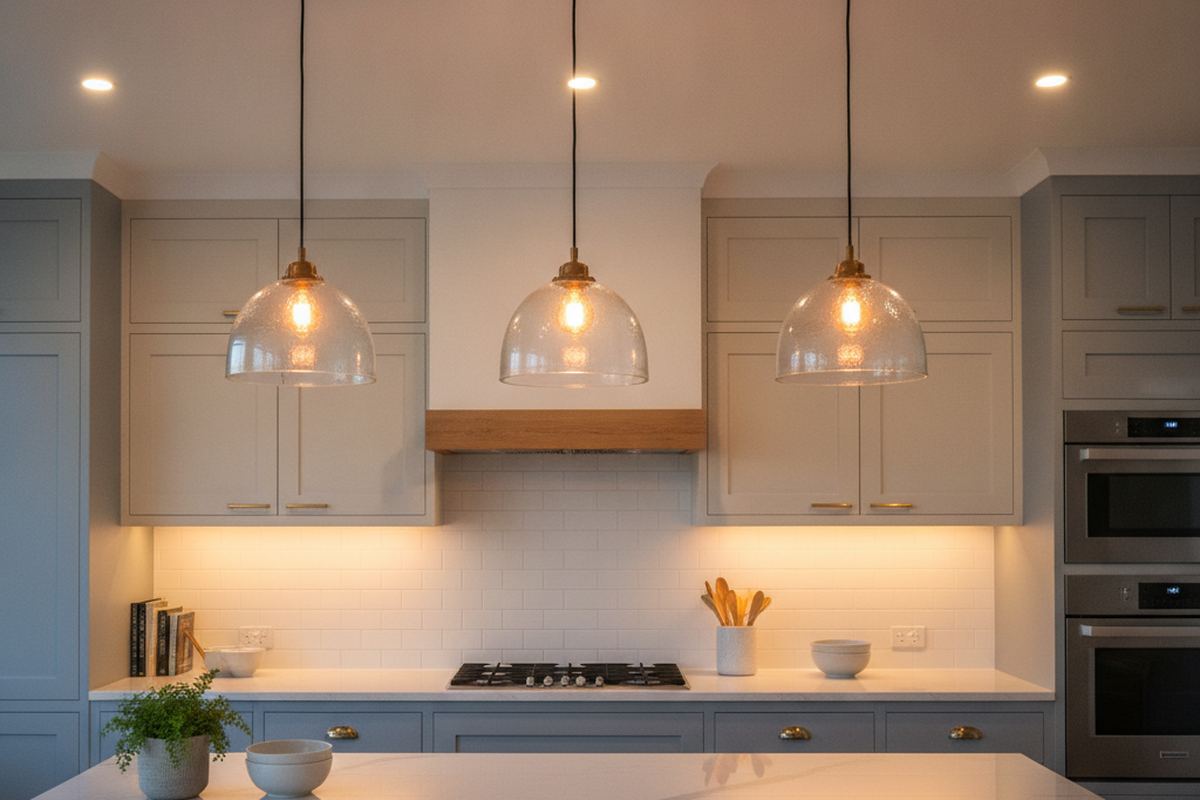
Effective kitchen lighting goes beyond simply illuminating your space. A well-designed lighting plan integrates multiple layers to enhance both usability and aesthetic appeal. This approach ensures every area of your kitchen is adequately lit for its purpose, from intricate food preparation to ambient dining. Understanding how to combine ambient, task, and accent lighting can transform your kitchen into a more functional and inviting heart of the home, while also influencing the overall perceived value of your remodel project.
Understanding the Three Pillars of Kitchen Lighting
A comprehensive kitchen lighting scheme is built upon three distinct layers: ambient, task, and accent. Ambient lighting provides the general illumination for the entire room, preventing dark spots and creating an overall sense of brightness. Task lighting focuses directly on areas where specific activities occur, such as countertops or the stovetop, ensuring safety and precision. Accent lighting adds decorative flair, highlighting architectural features, artwork, or cabinetry, contributing to the room's character and depth.
Each layer serves a critical role, and neglecting any one can compromise the kitchen's functionality or aesthetic. For example, relying solely on ambient lighting can lead to shadows over work surfaces, making tasks difficult and potentially unsafe. Conversely, too much task lighting without sufficient ambient light can create a harsh, unbalanced environment. A balanced plan integrates these layers seamlessly, allowing for flexibility and control over the kitchen's mood and utility at different times of day.
Establishing Your Ambient Lighting Foundation
Ambient lighting is the primary source of illumination, setting the overall tone for your kitchen. Recessed lights, often 4- to 6-inch cans, are a popular choice for their discreet appearance and even light distribution. For a typical kitchen of 100-200 square feet, you might consider 4 to 8 recessed fixtures, spaced approximately 4 to 6 feet apart. These should be placed to wash the entire room in a soft, uniform glow, avoiding direct placement over task areas which would create glare.
Alternatively, flush-mount or semi-flush-mount fixtures can serve as ambient lighting, particularly in kitchens with lower ceilings where recessed cans might not be feasible. Large kitchens may benefit from a central decorative fixture, such as a chandelier or a large pendant, to anchor the space and provide additional ambient light. Always ensure your ambient fixtures are on a dimmer switch, allowing you to adjust the brightness for various activities and times of day, from bright morning prep to softer evening dining.
Optimizing Task Lighting for Efficiency and Safety
Task lighting is crucial for functional areas, illuminating specific workstations to prevent shadows and reduce eye strain. Under-cabinet lighting is paramount for countertops, where most food preparation takes place. Linear LED strips or puck lights installed beneath upper cabinets provide direct, shadow-free illumination. For a standard 10-foot run of upper cabinets, you would typically install one continuous LED strip or 5-7 puck lights, spaced evenly.
Other key task areas include the sink and stovetop. A small recessed light directly above the sink can provide focused light for washing dishes. Over the stovetop, a range hood with integrated lighting is essential for visibility while cooking; ensure its brightness is adequate. Pendants can also serve as effective task lighting over an island or peninsula, ideally spaced 24-30 inches apart, depending on the island length, to provide even coverage without obstructing views.
Build a real kitchen remodel budget by tier — cabinets, counters, appliances, labor, and contingency.
Open the Kitchen Remodel Budget PlannerAdding Depth with Accent Lighting
Accent lighting adds visual interest and highlights specific features, elevating the kitchen's aesthetic. In-cabinet lighting, often achieved with small LED strips or puck lights, can illuminate glassware or decorative items displayed behind glass doors. Toe-kick lighting, subtle LED strips at the base of cabinets, creates a gentle glow that defines the room's perimeter and can serve as a soft nightlight.
Beyond cabinetry, accent lighting can draw attention to architectural details like exposed brick walls, artwork, or open shelving. Small, adjustable directional spotlights, either recessed or track-mounted, can be used for this purpose. The goal of accent lighting is to create focal points and add layers of visual interest, typically accounting for about 10-15% of the total light output in the room, making it noticeable without being overpowering.
Fixture Counts and Bulb Selection Considerations
When planning fixture counts, consider the size of your kitchen and the desired light levels. A general guideline is to aim for roughly 20-40 lumens per square foot for ambient lighting. For a 150 sq ft kitchen, this means 3,000-6,000 total lumens, which could be achieved with six 600-lumen recessed lights. Task lighting should be brighter, often 50-100 lumens per square foot over the immediate work surface. Always err on the side of having more fixtures on dimmers rather than too few, as you can always reduce light but cannot add it without new installations.
Bulb selection is equally important. LED bulbs are highly recommended for their energy efficiency, longevity (often 25,000-50,000 hours), and consistent light output. Pay attention to color temperature, measured in Kelvin (K). Warm white (2700K-3000K) creates a cozy atmosphere, while cool white (3500K-4000K) is more energizing and suitable for task areas. A Color Rendering Index (CRI) of 90 or higher is ideal for kitchens, ensuring that food colors appear natural and vibrant.
- Ambient: 4 to 8 recessed lights (4-6" diameter) for 100-200 sq ft kitchen.
- Under-cabinet: 1 continuous LED strip or 5-7 puck lights per 10 ft of counter.
- Island Pendants: 2 to 3 pendants, spaced 24-30 inches apart, depending on island length.
- Toe-kick/In-cabinet: As needed for decorative effect, typically LED strips.
Integrating Controls and Planning for Future Needs
Smart lighting controls and dimmer switches are essential for a versatile kitchen lighting plan. Installing dimmers on all ambient and accent lighting circuits allows you to adjust the mood and intensity for different occasions. Smart controls, such as those integrated with home automation systems, offer even greater flexibility, enabling scheduling, remote operation, and scene creation (e.g., "cooking scene" or "dinner scene") that combine various light layers at predetermined settings.
When developing your electrical plan, consider future needs. Are you planning to add a new appliance that requires dedicated power? Will you want to expand your island or add more cabinetry later? It is often more cost-effective to run extra wiring during a remodel than to retrofit it later. Consulting with a qualified electrician early in the planning process can help you anticipate these needs and ensure your lighting system is robust and adaptable for years to come. This foresight contributes significantly to the overall value and functionality of your kitchen remodel.
The bottom line
A thoughtful lighting plan is a cornerstone of any successful kitchen remodel, impacting both daily function and long-term enjoyment. By strategically layering ambient, task, and accent lighting, you can create a space that is not only beautiful but also highly efficient and adaptable to your lifestyle. Investing in quality fixtures and smart controls will ensure your kitchen remains well-lit and welcoming for years to come.
Get more guidance like this in your inbox
Weekly emergency-fund tactics, milestone checklists, and the next article — delivered free.
Run your own number
Get a personalized emergency fund target based on your income, expenses, and job stability.
Open the calculator