How Much Mulch Do You Actually Need? The Simple Formula
The mulch quantity formula that keeps you from buying too much or too little.
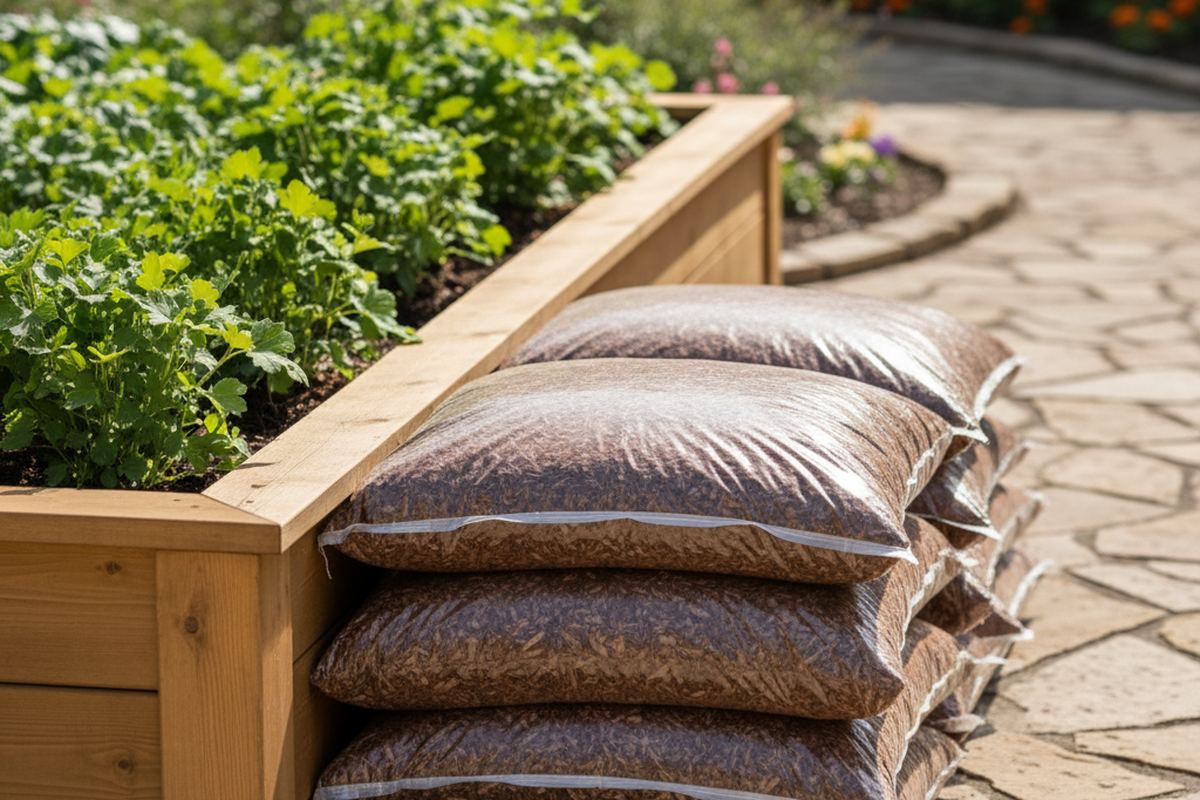
Understanding how much mulch you need for your garden beds is a common challenge for many homeowners. Too little, and you'll be making extra trips to the garden center; too much, and you've overspent and have excess material to store or dispose of. This guide provides a straightforward method to accurately calculate your mulch requirements, helping you achieve a beautifully mulched garden without waste. We'll break down the factors that influence mulch quantity and offer practical advice for efficient application.
Why Mulch Quantity Matters for Your Garden
Applying the correct amount of mulch is crucial for its effectiveness. A layer that is too thin, generally less than 2 inches, will not adequately suppress weeds, retain soil moisture, or regulate soil temperature. Weeds can easily penetrate a sparse layer, and water evaporates more quickly, requiring more frequent irrigation. Insufficient mulch also breaks down faster, necessitating more frequent reapplication.
Conversely, an excessively thick layer of mulch, typically more than 4 inches, can harm plants by suffocating roots, promoting fungal growth, and creating a habitat for pests like rodents. It can also impede water penetration to the soil below. Finding the 'Goldilocks' zone – usually 2 to 4 inches – ensures your plants receive the full benefits of mulching without experiencing adverse effects.
Understanding the Standard Mulch Depth
For most general garden beds and ornamental plantings, a mulch depth of 2 to 4 inches is ideal. This range provides effective weed suppression, moisture retention, and temperature moderation. The exact depth within this range can depend on the type of mulch, the plants, and your local climate. For instance, in very hot, dry climates, a slightly thicker layer might be beneficial for moisture retention.
Around trees and shrubs, it's important to keep mulch away from the trunk or stem, forming a 'donut' shape rather than a 'volcano.' Piling mulch against the base can lead to bark decay and pest problems. For vegetable gardens, a 2-3 inch layer is often sufficient, allowing for easier plant management and harvesting. Consider the specific needs of your plants when determining depth.
The Simple Formula: Length x Width x Depth
Calculating your mulch needs starts with basic geometry. You'll need to measure the length and width of your garden beds in feet. Once you have these dimensions, you can calculate the square footage of each bed. For example, a bed that is 10 feet long and 4 feet wide has a square footage of 40 square feet (10 ft x 4 ft = 40 sq ft). For irregular shapes, break them down into smaller, measurable rectangles or squares.
Next, you convert your desired mulch depth into feet. If you want a 3-inch layer, you'll divide 3 by 12 (since there are 12 inches in a foot), which equals 0.25 feet. The final step is to multiply your total square footage by this depth in feet to get the cubic feet of mulch needed. So, for our 40 sq ft bed, with a 3-inch (0.25 ft) depth, you would need 10 cubic feet of mulch (40 sq ft x 0.25 ft = 10 cubic ft).
Plan a real garden — bed size, soil, mulch, and grocery-equivalent yield.
Open the Garden PlannerConverting Cubic Feet to Bags or Yards
Mulch is typically sold in bags or by the cubic yard. Standard bags often contain 2 cubic feet or 3 cubic feet. If your calculation shows you need 10 cubic feet, and you're buying 2 cubic foot bags, you'd need 5 bags (10 cubic ft / 2 cubic ft per bag = 5 bags). Always check the bag label for the exact volume.
For larger areas, purchasing mulch by the cubic yard is more economical. One cubic yard is equivalent to 27 cubic feet (3 ft x 3 ft x 3 ft = 27 cubic ft). If you calculated needing 50 cubic feet of mulch, you would divide 50 by 27, which equals approximately 1.85 cubic yards. Round up to 2 cubic yards to ensure you have enough.
- 1 cubic yard = 27 cubic feet
- Common bag sizes: 2 cubic feet, 3 cubic feet
- Always round up to ensure sufficient material
Estimating for Irregularly Shaped Beds
Gardens rarely consist of perfect rectangles. For circular beds, measure the radius (distance from the center to the edge), square it, and then multiply by pi (approximately 3.14) to get the area: Area = π * radius². For example, a circular bed with a 5-foot radius would be 3.14 * (5 ft * 5 ft) = 78.5 square feet.
For more complex, irregular shapes, consider sketching the area and dividing it into smaller, more manageable rectangles, squares, and possibly triangles or circles. Calculate the area of each smaller section and then add them together for your total square footage. This approach, while requiring a bit more effort, provides a more accurate estimate than guesstimating.
Factoring in Mulch Type and Decomposition
The type of mulch you choose can influence how frequently you need to reapply it. Organic mulches like wood chips, shredded bark, and straw decompose over time, enriching the soil. Finer mulches tend to break down faster than coarser ones. For instance, shredded leaves might need replenishment every 6-12 months, while larger bark nuggets could last 12-24 months.
Inorganic mulches, such as gravel or rubber mulch, do not decompose and therefore do not need to be replaced. However, they don't contribute organic matter to the soil. When calculating for organic mulches, consider adding a small buffer (5-10%) to your initial calculation, especially if you anticipate some settling or minor losses over the season before your next application.
Practical Tips for Mulch Application
Before applying mulch, ensure the area is free of weeds and debris. Water the soil thoroughly if it's dry, as mulch helps retain existing moisture. Spread the mulch evenly across the bed, aiming for your desired depth. Use a rake or your hands to ensure uniform coverage and to avoid creating thick spots or bare patches.
Remember to leave a small gap, typically 1-2 inches, around the base of plant stems and tree trunks. This prevents moisture buildup against the plant, which can lead to rot and pest issues. Consistent application of the correct mulch quantity not only improves the health of your plants but also enhances the overall aesthetic appeal of your garden.
The bottom line
Accurately calculating your mulch needs saves money, reduces waste, and ensures your garden receives optimal benefits. By using the simple length x width x depth formula and understanding common unit conversions, you can approach your next mulching project with confidence. A well-mulched garden is healthier, requires less watering, and boasts a more polished appearance.
Get more guidance like this in your inbox
Weekly emergency-fund tactics, milestone checklists, and the next article — delivered free.
Run your own number
Get a personalized emergency fund target based on your income, expenses, and job stability.
Open the calculator