Mulch vs Rock Groundcover: Real Cost Over 10 Years
The upfront and 10-year cost comparison of mulch vs decorative rock.
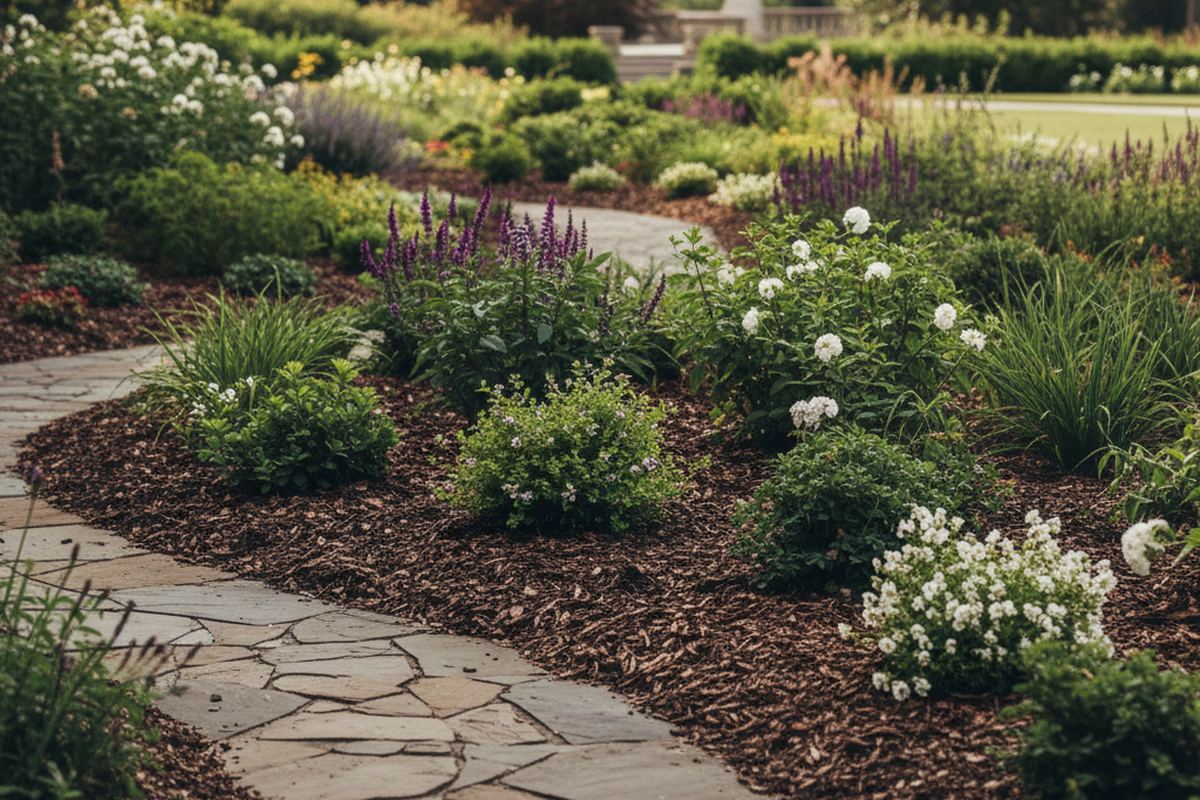
Choosing the right groundcover is a foundational decision for any landscaping project, impacting both aesthetics and your long-term budget. While mulch and decorative rock both offer benefits like weed suppression and moisture retention, their initial costs and ongoing maintenance requirements differ significantly. Understanding these financial implications over a decade can help homeowners make an informed choice that aligns with their project goals and financial planning. This analysis provides a data-oriented comparison to guide your decision-making process.
Initial Purchase Price: Upfront Investment
The initial cost of groundcover is a key factor. Mulch, typically sold by the cubic yard, generally costs less per unit than decorative rock, which is often sold by the ton. For example, a cubic yard of common bark mulch might range from $30 to $70, while a ton of decorative gravel or river rock could cost between $80 and $250. When covering a substantial area, these per-unit differences accumulate quickly, making mulch appear more budget-friendly at first glance.
To illustrate, covering a 300-square-foot area with a 3-inch layer requires approximately 2.8 cubic yards of mulch or 1.5 tons of rock. This translates to an initial mulch cost of roughly $84 to $196. For rock, the initial outlay would be closer to $120 to $375. Installation costs, if hiring professionals, also vary; spreading mulch is often less labor-intensive than moving and leveling heavy rock, contributing to slightly lower initial labor expenses for mulch projects.
Installation Labor: DIY vs. Professional
The choice between DIY and professional installation significantly affects the overall project cost. Homeowners opting for DIY can save substantially on labor, paying only for materials and potentially rental equipment like wheelbarrows or shovels. Spreading mulch is a relatively straightforward task for most homeowners, requiring basic tools and moderate physical effort. This can keep initial labor costs near zero for smaller projects.
Installing decorative rock, especially larger stones or for extensive areas, can be more physically demanding due to the weight. Hauling and spreading tons of rock may necessitate renting heavier equipment or hiring professional landscaping services. Professional installation for either material can add $0.50 to $1.50 per square foot, but rock installation often falls on the higher end of this range due to the increased labor and equipment requirements.
Replacement & Replenishment: Ongoing Costs
One of the primary differentiators in long-term cost is the need for replenishment. Organic mulches decompose over time, requiring annual or biennial top-ups to maintain their aesthetic appeal and functional benefits like weed suppression and moisture retention. Expect to add a 1-2 inch layer of mulch every 1-2 years, which means recurring material and potential labor costs every few seasons.
Decorative rock, by contrast, is a permanent groundcover. Once installed, it does not decompose or blow away significantly. While you might occasionally need to rake it to redistribute or rinse it to clean, the need for replenishment is minimal over a decade. This permanence translates to virtually no recurring material costs beyond the initial purchase, representing a significant long-term saving compared to mulch.
Build a phased landscaping budget — hardscape, softscape, irrigation — that fits your yard.
Open the Landscaping Budget PlannerMaintenance & Upkeep: Time and Effort
Beyond replenishment, both groundcovers have distinct maintenance needs. Mulch's organic nature means it can become compacted, requiring occasional turning to improve aeration and water penetration. It can also attract certain insects or fungi, though this is usually manageable. Weeds can still sprout through mulch, especially if the layer is thin, necessitating regular weeding.
Decorative rock generally requires less active maintenance. Weeds are less likely to sprout directly through a well-installed rock bed with a landscape fabric barrier, but windblown seeds can still take root in accumulated debris. Blowing leaves or removing debris from rock beds can be more challenging than from mulched areas. Over time, rocks can sink into soft soil, requiring occasional leveling or border adjustments.
Weed Control: An Unavoidable Expense
Effective weed control is crucial for maintaining the appearance and health of your landscape, and its cost varies by groundcover. Mulch suppresses weeds by blocking sunlight and inhibiting germination, but its effectiveness diminishes as it decomposes. Annual weeding or applying pre-emergent herbicides is often necessary for mulched areas, incurring ongoing costs for products or labor.
For rock beds, installing a high-quality landscape fabric beneath the rock is highly recommended to prevent weeds from growing up from the soil. This initial investment in fabric is a one-time cost, typically adding $0.15 to $0.50 per square foot. While fabric significantly reduces weed growth, some surface weeds may still appear, requiring occasional spot treatment with herbicides or manual removal. The overall expenditure on weed control tends to be lower for rock beds over the long term.
10-Year Cost Projection: A Comparative Look
Let's consider a 300-square-foot area over 10 years. For mulch, assuming an initial cost of $150 and replenishment every two years at 75% of the initial volume, the material cost alone could approach $700-$800 over the decade. Add to this potential annual weeding or herbicide costs, and the total can easily exceed $1,000 for materials and basic upkeep over 10 years.
For decorative rock, an initial material cost of $250 for the same area, plus $75 for landscape fabric, brings the upfront total to $325. With minimal replenishment and perhaps slightly lower ongoing weed control expenses, the 10-year total for rock could remain closer to its initial installation cost, potentially ranging from $350-$500, excluding significant professional maintenance. This long-term view highlights rock's cost efficiency despite its higher initial price point.
- Mulch 10-year cost estimate: $700 - $1,200 (materials + basic upkeep)
- Decorative Rock 10-year cost estimate: $350 - $600 (materials + basic upkeep)
The bottom line
Evaluating groundcover options requires looking beyond the initial purchase price to understand the full financial impact over several years. While mulch offers a lower upfront cost and enriches soil, its ongoing replenishment and maintenance can add up. Decorative rock, with its higher initial investment, often proves more cost-effective in the long run due to its permanence and reduced maintenance needs. Consider your budget, aesthetic preferences, and willingness to perform ongoing upkeep to choose the best groundcover for your home.
Get more guidance like this in your inbox
Weekly emergency-fund tactics, milestone checklists, and the next article — delivered free.
Run your own number
Get a personalized emergency fund target based on your income, expenses, and job stability.
Open the calculator