Overseeding vs New Lawn: The Real Seeding Rate Difference
Why overseeding needs half the seed of a new lawn, and how to time it for maximum germination.
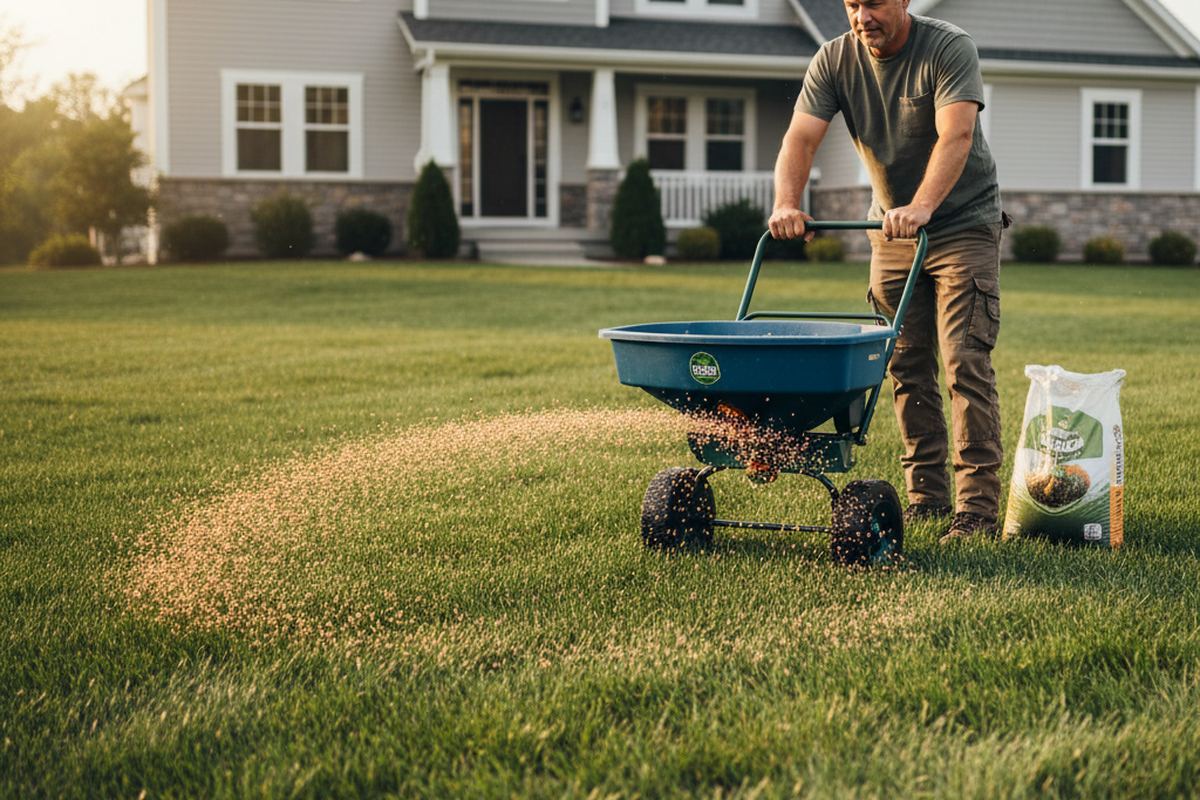
Understanding the correct seeding rate is crucial whether you're establishing a new lawn or revitalizing an existing one. Using too little seed can result in a thin, patchy lawn, while using too much wastes resources and can lead to competition among seedlings for nutrients and light. This guide will clarify the distinct seeding requirements for overseeding versus starting a new lawn from scratch. We'll explore the factors influencing these rates and provide practical advice for achieving a lush, healthy turf.
Understanding Seeding Rates for New Lawns
When you're establishing a brand new lawn, the goal is to achieve full coverage from bare soil. This process requires a significantly higher volume of seed to ensure a dense stand of grass. The soil must be properly prepared, including grading, tilling, and amending, to provide an optimal environment for germination and growth. Uniform seed distribution is critical, often achieved with a broadcast spreader.
For most common cool-season grasses like Kentucky bluegrass, perennial ryegrass, or fescue, a new lawn typically requires a seeding rate between 6 to 10 pounds per 1,000 square feet. Warm-season grasses such as Bermuda grass or zoysia may have slightly lower rates, ranging from 2 to 5 pounds per 1,000 square feet, due to their different growth habits. These higher rates account for natural seed loss, uneven germination, and the need to quickly establish a robust turf.
Seeding Rates for Overseeding Existing Lawns
Overseeding involves spreading grass seed over an existing lawn to improve its density, fill in bare spots, and introduce new, more resilient grass varieties. Since there's already an established turf, the seeding rate is considerably lower than for a new lawn. The existing grass provides some protection for new seedlings and helps suppress weeds, reducing the amount of seed needed.
For overseeding, a general guideline for cool-season grasses is 3 to 5 pounds per 1,000 square feet. Warm-season grasses typically require 1 to 3 pounds per 1,000 square feet when overseeding. The aim is to supplement the current turf, not to replace it entirely. Proper preparation, such as dethatching and aerating, can significantly improve seed-to-soil contact and germination success when overseeding.
Why the Seeding Rate Difference Exists
The primary reason for the difference in seeding rates lies in the presence or absence of an existing lawn. With a new lawn, you are starting from zero, requiring enough seed to cover the entire area and overcome environmental challenges. There's no competition from existing grass, but also no support system. The goal is complete, uniform coverage to prevent weeds from taking hold.
When overseeding, the existing grass provides a canopy that protects new seedlings from harsh sun and erosion. It also competes with potential weeds, creating a more favorable environment for the new grass to establish. However, the existing grass also competes for water and nutrients, so too much seed can lead to overcrowding and weak growth. The reduced rate is a balance to fill in and thicken without causing excessive competition.
Get the exact pounds of seed you need for your lawn size, grass type, and overseeding vs new lawn.
Open the Lawn Seed CalculatorFactors Influencing Your Seeding Rate Choice
Several factors beyond just new lawn versus overseeding can influence your ideal seeding rate. The specific grass type is paramount, as different species have varying seed sizes and germination rates. Soil quality, including its composition and nutrient levels, also plays a role; poor soil may require slightly higher rates to compensate for less ideal growing conditions. Climate, particularly rainfall and temperature, affects germination and establishment.
The condition of your existing lawn is also a key factor for overseeding. If your lawn is severely thin or has numerous bare patches, you might lean towards the higher end of the overseeding range, or even consider treating those bare spots as small "new lawn" areas. Conversely, a relatively healthy but slightly sparse lawn might only need the lower end of the recommended overseeding rate. Always consider the specific needs of your turf.
Optimal Timing for Seeding Success
Timing is as critical as the seeding rate for successful lawn establishment. For cool-season grasses, the ideal time to seed or overseed is late summer to early fall (August to October in many regions). This period offers warm soil temperatures for germination, cooler air temperatures for growth, and fewer weed competitors. Spring seeding can be done, but it's often less successful due to competition from summer weeds and heat stress.
Warm-season grasses are best seeded in late spring to early summer (April to June), when soil temperatures are consistently warm and continue to rise. This timing allows the grass to establish before the peak heat of summer and provides ample growing season before dormancy. Avoid seeding too late in the season for either grass type, as seedlings need time to mature before facing extreme cold or heat.
- Cool-season grasses: Late summer to early fall (August-October)
- Warm-season grasses: Late spring to early summer (April-June)
- Ensure soil temperatures are optimal for your grass type
- Avoid seeding just before expected droughts or freezes
Post-Seeding Care for Germination
Once you've applied the seed at the correct rate, proper post-seeding care is essential for successful germination and establishment. Consistent moisture is the most critical factor. Newly seeded areas should be kept continuously moist, not saturated, for the first two to three weeks. This often means light watering several times a day, especially during dry periods, to prevent the tiny seeds from drying out.
After the initial germination period, you can gradually reduce the frequency of watering but increase the duration, encouraging deeper root growth. Avoid heavy foot traffic on newly seeded areas for at least four to six weeks. Do not apply herbicides until the new grass has been mowed several times, typically after two months, as they can harm young seedlings. A starter fertilizer can also provide essential nutrients for developing roots.
Practical Examples for 1,000 Square Feet
Let's consider a 1,000 square foot area. If you are starting a new lawn with a cool-season fescue blend, you would typically need 6 to 10 pounds of seed. Using a mid-range of 8 pounds, you would purchase an 8-pound bag of seed for that area. This ensures dense coverage from bare soil, allowing for some natural loss during the establishment phase.
For overseeding that same 1,000 square foot area with the same fescue blend, the requirement drops significantly to 3 to 5 pounds. Opting for 4 pounds, you would need only a 4-pound bag. This reduced rate is sufficient to thicken the existing turf without oversaturating it, leveraging the existing grass for support and competition control. This demonstrates how overseeding generally requires about half the seed of a new lawn.
The bottom line
Choosing the right seeding rate, whether for a new lawn or overseeding, is fundamental to achieving a healthy and vibrant turf. By understanding the differences and considering factors like grass type, soil condition, and timing, you can optimize your efforts. Proper post-seeding care will then ensure your investment in time and seed yields the best possible results.
Get more guidance like this in your inbox
Weekly emergency-fund tactics, milestone checklists, and the next article — delivered free.
Run your own number
Get a personalized emergency fund target based on your income, expenses, and job stability.
Open the calculator