Shared Sibling Birthday Party: When It Works
How to run a shared sibling birthday party without any hurt feelings.
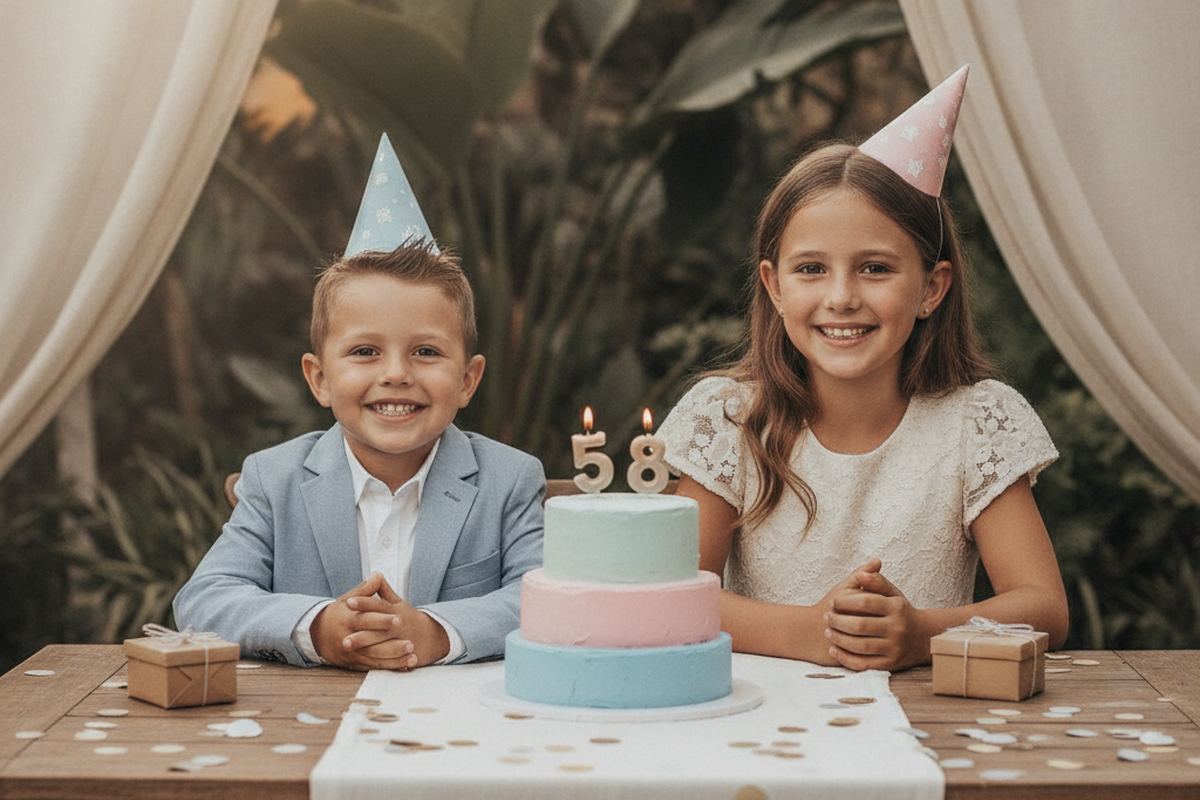
Coordinating birthday parties for multiple children can be both time-consuming and expensive. For siblings whose birthdays fall close together, a shared celebration often seems like a logical solution. However, combining parties requires careful planning to ensure each child feels equally celebrated and special. This approach can save resources while still creating memorable experiences for everyone involved.
Identifying Ideal Scenarios for a Joint Celebration
A shared party works best when siblings are close in age, generally within two to three years, or when their birthdays are within a few weeks of each other. This proximity often means their friend groups might overlap, simplifying guest list management. Consider a joint party if both children are enthusiastic about the idea, as their buy-in is crucial for success.
Conversely, a shared party might be less suitable if there's a significant age gap, like a 5-year-old and a 15-year-old, where interests and friend circles diverge widely. Also, if one child has a milestone birthday (e.g., 1st, 10th, 16th) and the other does not, it might be better to celebrate separately to give the milestone its due attention. Always gauge your children's feelings about sharing the spotlight.
Budgeting for a Combined Event
Combining parties can lead to significant savings compared to hosting two separate events. For instance, instead of renting a venue twice at an average cost of $200-$500 each, you pay once. Food and decorations can also be purchased in larger, more cost-effective quantities. Estimate your total budget by considering venue, food, drinks, cake, decorations, entertainment, and party favors.
While savings are a benefit, it's important not to underspend to the point where the party feels diminished. Allocate funds carefully to ensure both children's preferences are met. For example, if a party for one child typically costs around $300-$500, a shared party might range from $500-$800, still less than two separate events totaling $600-$1000. This allows for a more elaborate single celebration.
Theme Selection and Decoration Strategies
Choosing a theme that appeals to both children is key. This could be a broad concept like 'superheroes' or 'animals,' or a more specific dual theme such as 'space and princesses.' If their interests are disparate, consider dividing the party space into two distinct zones or using a neutral base theme with personalized touches for each child. For example, a 'carnival' theme allows for different game booths tailored to various age groups and interests.
Decorations should reflect both personalities. Use a common color palette to tie everything together, but incorporate specific elements that represent each child. For instance, one side of the cake could have a dinosaur topper for one child, while the other side features a unicorn for the other. Balloons and banners can feature individual names alongside combined celebratory messages.
Plan a birthday party that hits the vibe without wrecking the month.
Open the Birthday Party Budget CalculatorCrafting Inclusive Guest Lists
The guest list should aim to include friends and family important to both children. For younger children, this might mean a more universal list. As children get older, their social circles become more distinct. For example, a 7-year-old might invite 8-10 friends, and a 9-year-old might invite 10-12. A combined list could then be 15-20 children, rather than 20-24 for two separate parties.
Communicate clearly with guests that it is a joint celebration. This helps manage expectations regarding gifts and attention. If there's a significant age difference in friend groups, ensure activities cater to both. You might have separate activity stations or games designed for different age ranges to keep everyone engaged.
Ensuring Equitable Attention and Gifts
Make a conscious effort to give each child equal attention throughout the party. This means an equal number of guests they invited, an equal number of turns in activities, and an equal share of the spotlight during moments like blowing out candles. For example, if there are distinct activities, ensure each child has one that aligns with their preference.
When it comes to gifts, some families suggest guests bring one gift for each child, while others prefer a single gift for the pair. Clearly communicate your preference on the invitation. Alternatively, consider a "fiver party" where guests contribute $5 towards a larger joint gift or individual gifts. This ensures both children receive something they truly want, proportionate to their age and interests.
Personalizing the Celebration for Each Child
Even in a shared party, individual moments are essential. Plan distinct activities or games that cater specifically to each child's interests. For instance, if one child loves crafts and the other enjoys active games, set up both options. This shows that their unique preferences are valued and incorporated into the celebration.
The cake moment is often a highlight. Consider two smaller individual cakes, or a single cake with two distinct sections and two sets of candles, allowing each child their own moment to make a wish and blow out candles. Small gestures, like personalized party favors or a special toast acknowledging each child, can make a big difference in ensuring both feel uniquely celebrated.
Post-Party Review and Future Planning
After the party, take time to reflect with your children on what went well and what could be improved. Ask them directly how they felt about sharing their birthday. Their feedback is invaluable for planning future celebrations. Did they feel equally celebrated? Were their friends included? This conversation helps reinforce their feelings of being heard and valued.
Use this feedback to decide if a shared party is a viable option for next year. While it can be a practical solution, it's not always the right fit. Be open to alternating between shared and individual parties based on their evolving preferences and milestones. The goal is always to create joyful and meaningful memories for both children.
The bottom line
A shared sibling birthday party can be a fantastic way to celebrate while managing resources effectively. With thoughtful planning around themes, guest lists, and personalized touches, you can create a memorable and equitable experience for both children. Focus on making each child feel special and heard, ensuring the celebration is a happy occasion for everyone.
Get more guidance like this in your inbox
Weekly emergency-fund tactics, milestone checklists, and the next article — delivered free.
Run your own number
Get a personalized emergency fund target based on your income, expenses, and job stability.
Open the calculator