Debt Snowball vs Avalanche: Which Method Saves More (and Which Feels Better)?
The math says avalanche; the psychology often says snowball. Here's the honest dollar difference between the two debt payoff methods and how to pick.
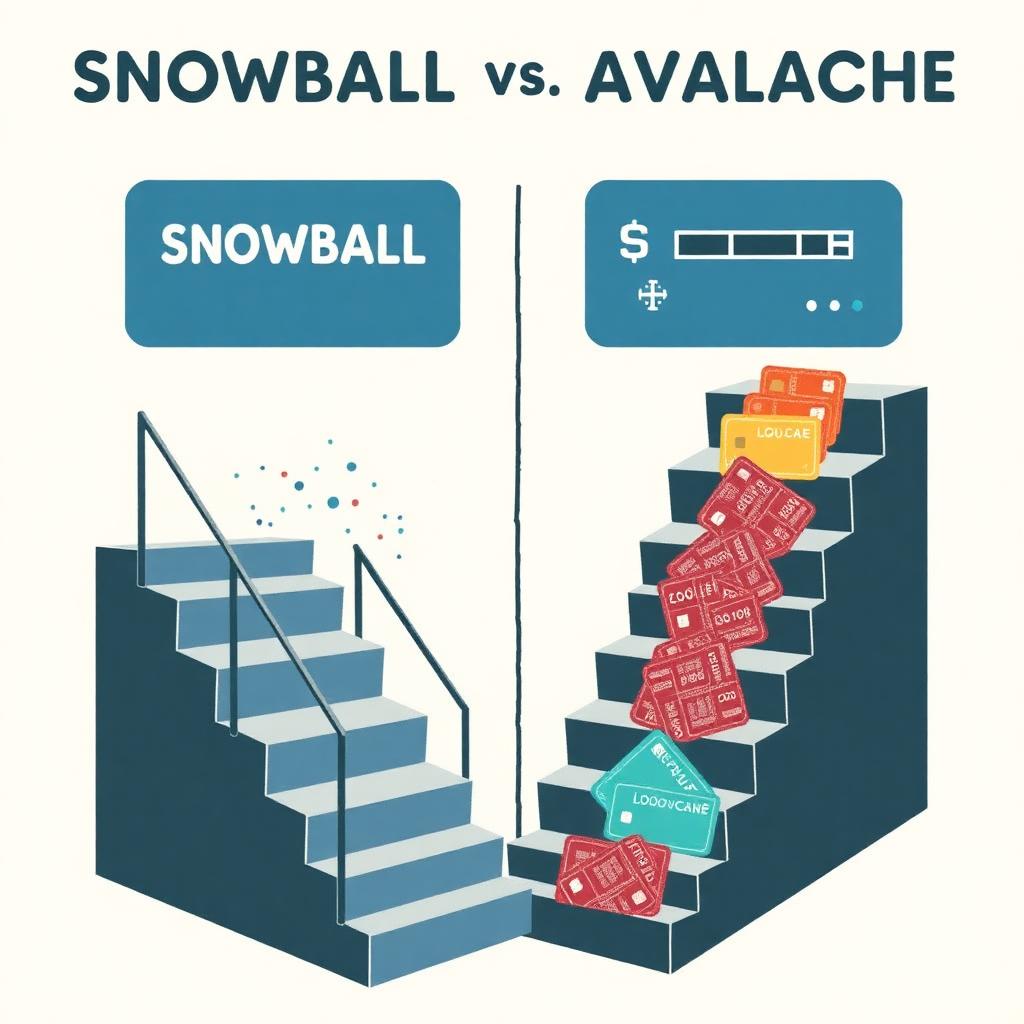
The snowball vs avalanche debate has dominated personal finance forums for over a decade. The math is unambiguous — avalanche saves more interest. The behavioral evidence is also unambiguous — snowball has higher completion rates. The right pick depends on you, not on which strategy is theoretically optimal.
How each method works in one sentence
- Snowball: pay minimums on everything, attack smallest balance first, roll freed-up payments forward.
- Avalanche: pay minimums on everything, attack highest APR first, roll freed-up payments forward.
How much avalanche actually saves
For most three-to-five-card portfolios with mixed APRs, avalanche saves $50–$500 over the life of payoff compared to snowball. Larger debts and bigger APR spreads make the difference bigger — a portfolio with one $8,000 card at 28% and a $500 card at 15% favors avalanche by over $1,000. A portfolio of small similar-APR cards barely differs.
The behavioral case for snowball
Dave Ramsey's research and a Northwestern study both find that people who use snowball are more likely to fully pay off their debt — the early wins keep them engaged. A snowball that completes beats an avalanche that gets abandoned at month 9.
Enter your card balances, APRs, and monthly budget — see your exact payoff date and total interest under both snowball and avalanche, side by side.
Open the Credit Card Payoff CalculatorHybrid: avalanche with a snowball start
If one of your smallest balances has a high APR — common — both methods attack it first. That's the ideal: psychological win plus interest savings. Always run both in a calculator; for many portfolios they recommend the same first card.
When to pick snowball
- You've abandoned previous debt plans before.
- You have one or two very small balances that would close in under three months.
- Your APR spread is narrow (all cards within 5 points).
When to pick avalanche
- Your APR spread is wide (10+ points between highest and lowest).
- Your largest balance is also your highest APR.
- You're disciplined and motivated by long-term dollar savings.
Don't overthink the choice
The biggest predictor of success isn't which method you pick — it's whether you pay more than the minimum every month. A consistent $200 extra under snowball beats an inconsistent $300 extra under avalanche every time.
Get more guidance like this in your inbox
Weekly emergency-fund tactics, milestone checklists, and the next article — delivered free.
Run your own number
Get a personalized emergency fund target based on your income, expenses, and job stability.
Open the calculator