Vegetable Yield per Square Foot: The Cheat Sheet
The realistic yield of common vegetables per square foot with 2026 prices.
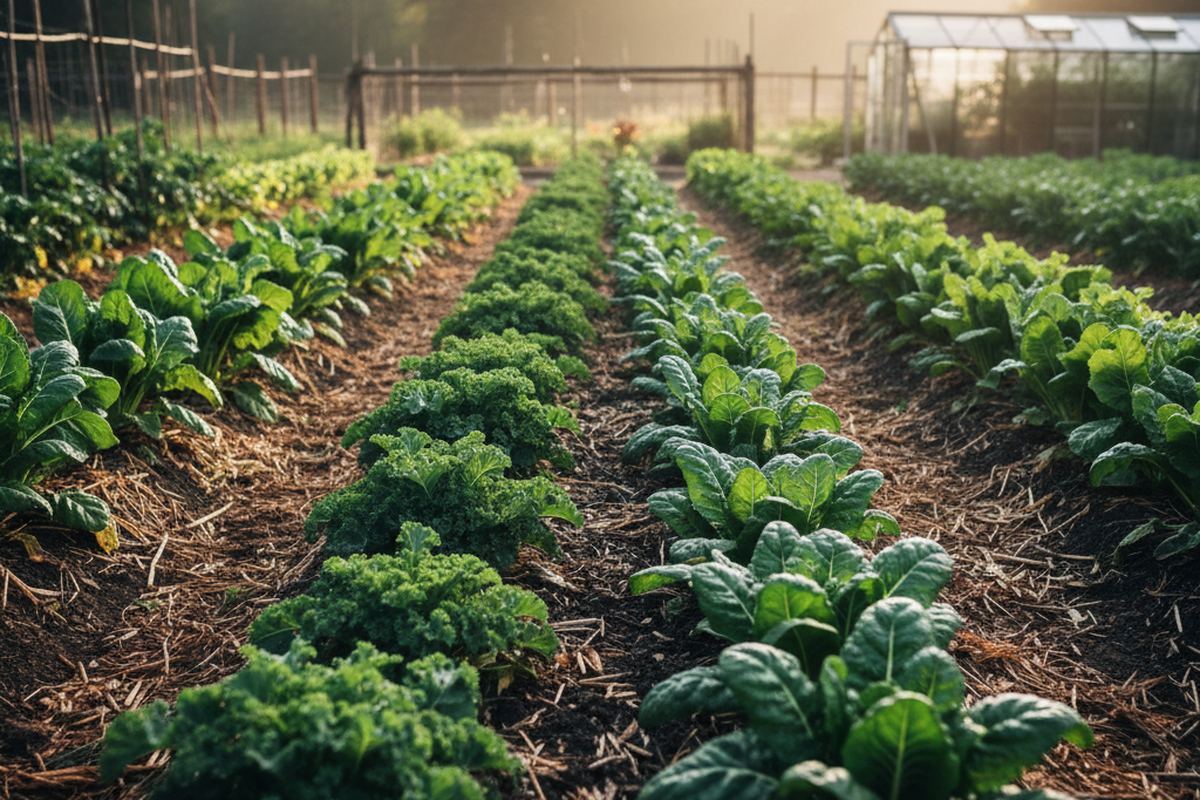
Understanding the potential yield of your vegetable garden per square foot is crucial for efficient planning and maximizing your harvest. This guide provides realistic expectations for common vegetables, helping you make informed decisions about what to plant and how much space to allocate. By optimizing your garden layout, you can significantly increase your homegrown food production and reduce grocery expenses. We'll explore typical yields and offer insights into achieving a bountiful harvest from even a small plot.
Why Square Foot Gardening Matters for Yield
Square foot gardening is a method that emphasizes dense planting in a grid system, typically within raised beds. This approach allows for significantly higher yields from a smaller area compared to traditional row gardening. By minimizing pathways and optimizing plant spacing, you can grow more food in less space, which is particularly beneficial for urban gardeners or those with limited yard size.
The core principle is to treat each square foot as an individual growing unit, allowing you to tailor planting densities to specific crops. This not only boosts productivity but also reduces weed growth and water waste, as you're only watering the planted areas. Understanding these efficiencies is the first step toward a more productive and manageable vegetable patch.
Tomatoes: A Garden Staple's Potential
Tomatoes are a favorite for many home gardeners due to their versatility and rich flavor. Standard indeterminate tomato plants can yield between 10 to 20 pounds per plant over a growing season, often requiring 2 to 4 square feet per plant. This translates to a potential of 2 to 10 pounds per square foot, depending on the variety and care.
For a smaller determinate variety, you might expect 8 to 15 pounds per plant, using 1.5 to 2.5 square feet. At an average retail price of $2.50 to $4.00 per pound for organic tomatoes in 2026, a single well-maintained plant can produce significant value. Supporting the plants with stakes or cages is essential to maximize yield and fruit quality.
Leafy Greens: Continuous Harvests from Small Spaces
Leafy greens like lettuce, spinach, and kale are excellent choices for continuous harvesting and high yield per square foot. Loose-leaf lettuce can be planted densely, yielding 0.5 to 1 pound per square foot over multiple cuttings. Spinach offers similar returns, often providing several harvests before bolting in warmer weather.
Kale is another highly productive green, capable of yielding 1 to 2 pounds per square foot throughout its growing season, especially when harvested using the 'cut-and-come-again' method. With retail prices for organic greens ranging from $3.00 to $5.00 per pound in 2026, these crops offer substantial savings and fresh nutrition.
Plan a real garden — bed size, soil, mulch, and grocery-equivalent yield.
Open the Garden PlannerRoot Vegetables: Substantial Returns Below Ground
Carrots, radishes, and beets are prime examples of root vegetables that offer impressive yields in compact spaces. Carrots can be planted quite densely, yielding 1 to 3 pounds per square foot depending on the variety and soil depth. Radishes mature quickly, providing 0.5 to 1.5 pounds per square foot in a short period.
Beets, harvested for both their roots and greens, can produce 1 to 2 pounds of roots and significant leafy tops per square foot. Given typical 2026 organic retail prices of $2.00 to $3.50 per pound for these root crops, their underground bounty represents a cost-effective addition to your garden.
Squash and Cucumbers: Maximizing Vining Crop Yields
While vining crops like zucchini, summer squash, and cucumbers can take up considerable space if allowed to sprawl, vertical gardening techniques can significantly increase their yield per square foot. A single zucchini plant, trained vertically, can produce 8 to 15 pounds of fruit over its season, occupying roughly 1 to 2 square feet at its base.
Cucumbers, similarly, can be trellised to yield 5 to 10 pounds per plant from a 1-2 square foot footprint. The retail price for organic squash and cucumbers in 2026 typically ranges from $2.00 to $3.50 per pound, making these prolific producers valuable for home growers. Trellising also improves air circulation and reduces disease risk.
Estimating Your Garden's Overall Value
To estimate the financial return of your garden, calculate the total potential yield for each crop and multiply by its average retail value. For example, if you dedicate 4 square feet to tomatoes (yielding 6 lbs/sq ft) and 2 square feet to lettuce (yielding 0.75 lbs/sq ft), and assume prices of $3.00/lb for tomatoes and $4.00/lb for lettuce, your potential value from just these small sections is (4 * 6 * $3.00) + (2 * 0.75 * $4.00) = $72 + $6 = $78.
This calculation demonstrates how even a small, well-planned garden can offset a portion of your grocery bill. Remember that these are estimates, and actual yields can vary based on factors like soil quality, weather, pest control, and consistent watering. However, using these figures provides a solid starting point for garden planning and budgeting.
- Tomatoes: 2-10 lbs/sq ft, $2.50-$4.00/lb
- Leafy Greens: 0.5-2 lbs/sq ft, $3.00-$5.00/lb
- Carrots/Beets: 1-3 lbs/sq ft, $2.00-$3.50/lb
- Zucchini/Cucumbers (vertical): 4-8 lbs/sq ft, $2.00-$3.50/lb
The bottom line
By understanding the realistic yield potential of various vegetables per square foot, you can design a more productive and satisfying home garden. Strategic planting, coupled with good care, allows you to maximize your harvest and enjoy fresh, homegrown produce. Use these insights to plan your 2026 garden efficiently, turning your outdoor space into a valuable asset.
Get more guidance like this in your inbox
Weekly emergency-fund tactics, milestone checklists, and the next article — delivered free.
Run your own number
Get a personalized emergency fund target based on your income, expenses, and job stability.
Open the calculator