Digital vs Paper Chore Charts: What Actually Works
The trade-offs between digital apps and old-school paper chore charts.
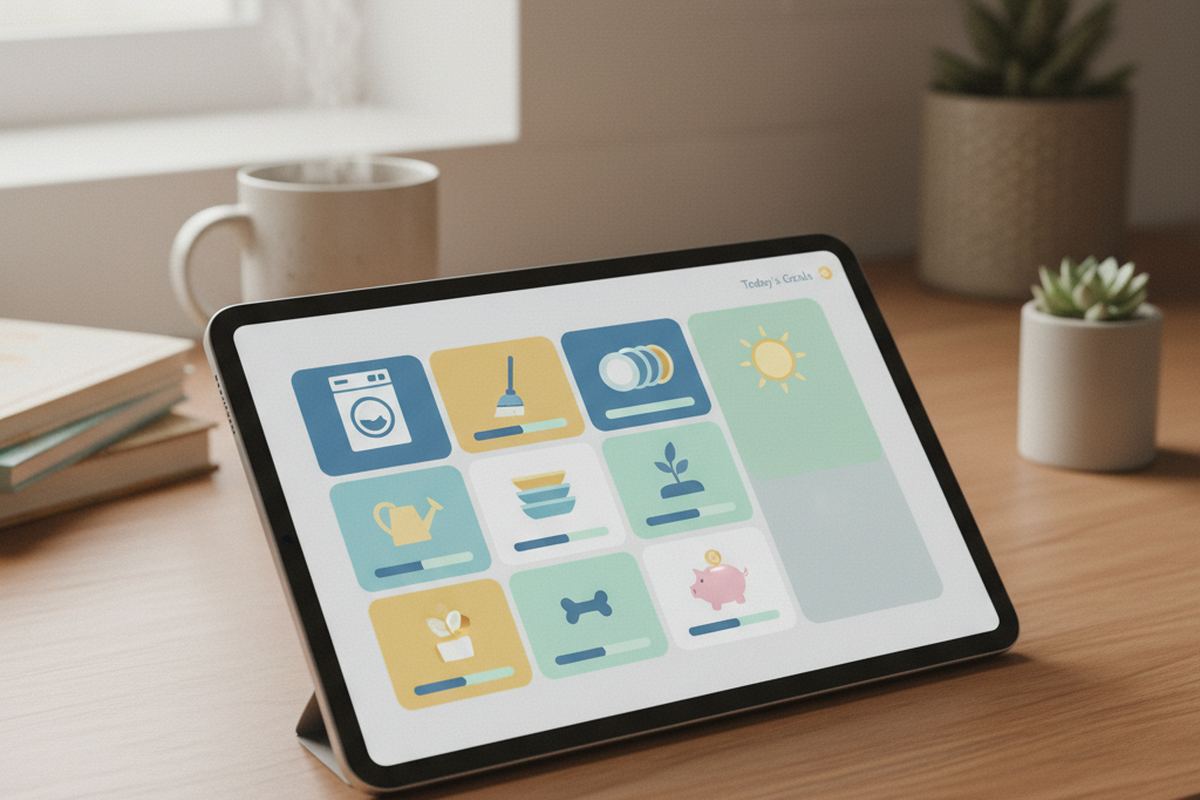
Deciding between a digital app and a traditional paper chart for managing household chores can feel like a significant choice for parents. Both methods offer distinct advantages and drawbacks, impacting everything from ease of use to how children engage with responsibilities. Understanding these differences is key to selecting a system that aligns with your family's unique dynamics and financial goals. This guide explores the practical considerations for each approach, offering insights to help you make an informed decision for your family's chore and allowance system.
Understanding the Appeal of Digital Chore Apps
Digital chore apps offer a modern approach to managing household tasks, often appealing to tech-savvy parents and children. These applications typically feature customizable chore lists, automated reminders, and instant tracking capabilities. Many platforms allow for easy assignment of tasks, setting deadlines, and even integrating allowance payouts directly, streamlining the entire process. The visual appeal and interactive elements can make chores seem more engaging, especially for older children who are already comfortable with digital interfaces.
Beyond convenience, digital apps can provide valuable data and insights into chore completion rates and allowance distributions. This can be particularly useful for families looking to analyze patterns or discuss performance during family meetings. For instance, an app might show that a child consistently forgets a specific chore, prompting a conversation about its importance or a review of the task's instructions. The ability to access and update the chart from multiple devices also adds a layer of flexibility for busy families.
- Automated reminders and notifications
- Interactive and customizable interfaces
- Easy tracking of progress and allowance
- Data insights into chore completion
The Enduring Benefits of Paper Chore Charts
Despite the rise of digital tools, paper chore charts maintain a strong appeal for many families. Their simplicity and tangibility are often cited as primary advantages. A physical chart, prominently displayed in a common area like the kitchen, serves as a constant, visible reminder for everyone. Children can physically check off tasks, providing a satisfying sense of accomplishment that a digital tap might not fully replicate. This hands-on interaction can be particularly effective for younger children who are still developing fine motor skills and a sense of routine.
Paper charts also offer a low-tech, screen-free option, which many parents prefer to limit screen time for their children. They require no batteries, Wi-Fi, or software updates, making them reliable and accessible at all times. The process of creating and decorating a paper chart can even become a family activity, fostering a sense of ownership and collaboration. For example, a family might spend an afternoon illustrating chores or designing a reward system, making the chart a personalized tool rather than a generic template.
- Tangible and visible reminders
- Satisfying physical check-off action
- No screen time required
- Opportunity for family customization
Cost and Accessibility Considerations
When evaluating chore chart systems, cost and accessibility are practical factors. Paper charts generally involve minimal expense, requiring only paper, markers, and perhaps some stickers. Many free printable templates are available online, making them a budget-friendly option for any family. This low barrier to entry ensures that every family can implement a chore system without financial strain, focusing resources instead on the allowance itself or other financial goals.
Digital apps, conversely, can range from free basic versions to subscription-based services with advanced features. While some free apps are robust, others may limit the number of users or features unless a premium plan is purchased. For example, a family might pay $5-$10 per month for a comprehensive app that handles chore tracking, allowance distribution, and savings goals. Access to smart devices and reliable internet is also a prerequisite for digital systems, which may not be universally available or preferred in every household.
Build a weekly chore chart that ties allowance to real work — with kid-friendly amounts.
Open the Chore Chart GeneratorEngagement and Motivation for Children
The effectiveness of a chore chart hinges significantly on how well it engages and motivates children. Digital apps often incorporate gamification elements, such as points, badges, and virtual rewards, which can be highly motivating for children who enjoy digital interaction. The instant feedback and visual progress indicators in apps can maintain interest and encourage consistent participation, especially as children grow older and become more accustomed to digital tracking.
Paper charts rely on different forms of motivation. The act of physically marking a completed task, seeing a chart fill up with checkmarks or stickers, and the anticipation of a tangible reward can be very powerful. For younger children, a sticker chart culminating in a small toy or an extra hour of playtime can be more impactful than a digital notification. The shared experience of reviewing a physical chart during family time can also reinforce positive behavior and strengthen family bonds.
Flexibility and Customization for Your Family
Both digital and paper systems offer various degrees of flexibility and customization. Digital apps excel in allowing quick edits, adding or removing chores, and adjusting allowances on the fly. This adaptability is beneficial for families whose routines change frequently or who want to experiment with different chore assignments. Most apps also allow for individual profiles, ensuring each child sees only their assigned tasks and progress, which can reduce conflict.
Paper charts, while less dynamic, can be customized through creativity. Families can design their own charts, incorporate drawings, or use different colors to categorize chores. While changes might involve reprinting or manual adjustments, the process of involving children in these modifications can be a valuable learning experience. For example, a family might create a themed chart each month, keeping the system fresh and engaging without relying on digital features.
Integrating Allowance and Financial Education
A chore system is often a primary vehicle for teaching children about money management. Both digital and paper charts can integrate allowances effectively. Digital apps frequently offer direct allowance tracking, allowing parents to link chores to specific monetary values and even automate payouts to a linked bank account or digital wallet. Some apps include features for tracking savings, spending, and charitable giving, which are excellent tools for early financial literacy. For example, a child earning $10 per week might allocate $5 to savings, $3 to spending, and $2 to a charitable fund within the app.
With paper charts, parents typically manage allowance payouts manually, often on a designated payday. This manual process can be an opportunity for hands-on financial education. Parents can physically count out money, discuss budgeting, and help children allocate funds into physical jars for spending, saving, and giving. This tangible interaction with money can be particularly impactful for younger children, making the abstract concept of money more concrete. The key is consistent application, regardless of the chosen method, to reinforce the connection between effort and reward.
Making the Right Choice for Your Household
Ultimately, the best chore chart system is the one that your family will consistently use. There is no universally superior option; the ideal choice depends on your children's ages, your family's technological comfort, and your specific goals for financial education. Consider whether your children respond better to digital interaction or tangible rewards. Think about the level of flexibility you need and how involved you want the chore management process to be.
Starting with a simple system, whether digital or paper, and being open to adjustments is a practical approach. You might even find a hybrid system works best—a paper chart for younger children and a digital app for older ones. The goal is to establish clear expectations, foster responsibility, and provide a consistent framework for earning and managing money. The most effective system is one that integrates smoothly into your daily life and supports your family's long-term financial learning.
The bottom line
Choosing between a digital and paper chore chart involves weighing convenience, cost, and engagement. Both methods offer valuable ways to teach responsibility and financial literacy. Evaluate your family's needs and preferences to select the system that will be most effective and sustainable. Consistency in implementation, regardless of the tool, is what truly builds good habits and financial understanding.
Get more guidance like this in your inbox
Weekly emergency-fund tactics, milestone checklists, and the next article — delivered free.
Run your own number
Get a personalized emergency fund target based on your income, expenses, and job stability.
Open the calculator