Ductwork Size and HVAC Performance
Why undersized ducts wreck oversized HVAC systems, and the Manual D duct calc.
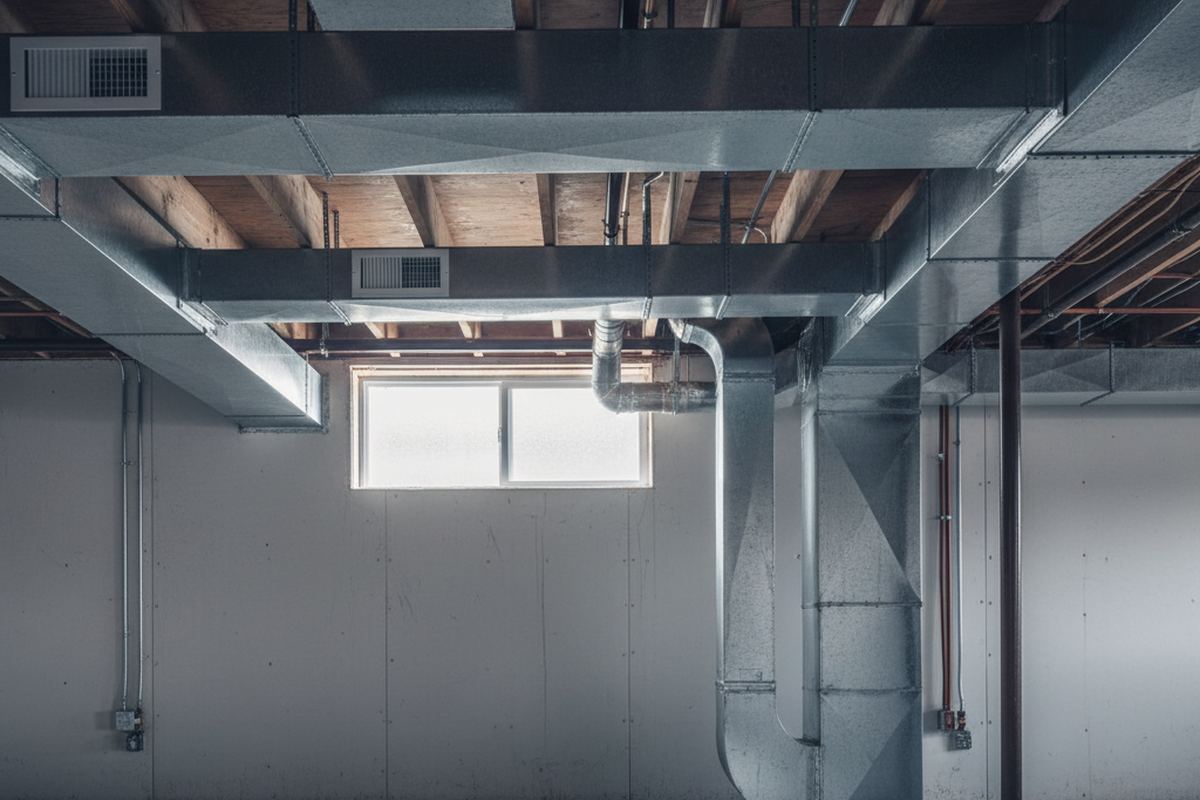
When replacing or upgrading your HVAC system, the focus often centers on the furnace and air conditioner units themselves. However, a crucial component often overlooked is your home's ductwork. Properly sized ducts are essential for your HVAC system to deliver conditioned air efficiently and effectively throughout your home. An undersized or improperly designed duct system can severely compromise even the most advanced and energy-efficient HVAC equipment, leading to discomfort, higher energy bills, and premature system wear.
Understanding the Role of Ductwork
Your ductwork acts as the circulatory system for your home's conditioned air, distributing warm or cool air from your HVAC unit to each room and returning stale air for reconditioning. The design, material, and insulation of these ducts directly impact how much air reaches its intended destination and at what temperature. Without adequate airflow, your HVAC system struggles to maintain desired indoor temperatures, regardless of its BTU capacity.
The primary function of ductwork is to maintain a consistent air pressure and volume throughout the system. When ducts are too small for the airflow produced by the HVAC unit, static pressure increases significantly. This elevated static pressure forces the system to work harder, reducing its lifespan and increasing energy consumption. Conversely, oversized ducts can lead to reduced air velocity, poor air mixing, and stratification of temperatures within rooms.
The Impact of Undersized Ducts on HVAC Efficiency
Installing a high-efficiency HVAC unit without addressing ductwork limitations can negate many of its benefits. An air conditioner rated at 3 tons, for example, requires a specific volume of air to pass through its coils to operate efficiently. If the ductwork restricts this airflow, the unit cannot transfer heat effectively. This leads to longer run times, higher electricity usage, and a failure to reach the thermostat setting.
Beyond energy waste, undersized ducts contribute to uneven heating and cooling across your home. Certain rooms may feel perpetually too warm or too cold because they are not receiving sufficient airflow. This often prompts homeowners to lower or raise thermostat settings further, exacerbating energy consumption and system strain. The lack of proper airflow can also cause the evaporator coil in an AC unit to freeze, a common issue resulting from restricted air movement.
Why Oversizing Your HVAC Unit Won't Fix Duct Issues
A common misconception is that installing a larger HVAC unit will compensate for inadequate ductwork. This is rarely effective and often counterproductive. An oversized unit will push more air than the existing ducts can handle, intensifying the problems of high static pressure. This can lead to increased noise from the system, reduced airflow velocity, and a higher risk of duct leaks due to increased pressure.
Furthermore, an oversized air conditioner cycles on and off more frequently because it cools the space too quickly. This short-cycling prevents the system from adequately dehumidifying the air, leaving your home feeling clammy even at cooler temperatures. It also puts undue stress on the compressor, leading to premature component failure and costly repairs, typically within 8-10 years rather than the expected 15-20 years.
Size your HVAC in BTUs and tons based on square footage, climate zone, insulation, and windows.
Open the HVAC Size CalculatorManual D: The Gold Standard for Duct Sizing
To ensure your ductwork is appropriately matched to your HVAC system, industry professionals utilize a calculation method known as ACCA Manual D. This comprehensive guide considers various factors, including the HVAC system's airflow requirements (determined by Manual J load calculations), duct material, insulation, length, number of turns, and the size and type of registers and grilles. Manual D provides the precise specifications needed for each section of your duct system.
Attempting to size ductwork by guesswork or simple rules of thumb can lead to significant performance issues. A proper Manual D calculation ensures that each room receives the correct amount of conditioned air, optimizing comfort and efficiency. It accounts for pressure drops and friction losses, designing a system that delivers air effectively with minimal energy expenditure. This detailed approach is crucial for any new HVAC installation or major system upgrade.
Key Considerations for Ductwork Design
When designing or evaluating your ductwork, several factors are critical. The material of the ducts (e.g., sheet metal, fiberglass board, flexible ducting) impacts airflow resistance and insulation properties. Properly sealed ducts are paramount; leaks can account for 20% to 30% of energy loss, allowing conditioned air to escape into unconditioned spaces like attics or crawl spaces. Insulation is also vital, especially for ducts running through unconditioned areas, to prevent heat gain or loss.
The layout of the duct system is equally important. Minimizing sharp turns, long runs, and abrupt changes in duct size helps reduce static pressure and maintain consistent airflow. Incorporating appropriate return air pathways is also essential. Many homes have insufficient return air, leading to negative pressure within the house and reduced HVAC performance. A balanced system requires adequate supply and return air to function optimally.
- Duct material (e.g., sheet metal, flexible)
- Duct insulation R-value
- Sealing of all joints and connections
- Number and radius of turns
- Length of duct runs
- Size and type of registers and grilles
- Adequate return air pathways
Planning for Optimal HVAC Performance in 2026
As energy efficiency standards continue to evolve, particularly with the anticipated changes for 2026, the importance of a holistic approach to HVAC system design becomes even more critical. New regulations will likely push for higher Seasonal Energy Efficiency Ratio 2 (SEER2) and Heating Seasonal Performance Factor 2 (HSPF2) ratings, meaning the efficiency of the entire system, including ductwork, will be scrutinized. A well-designed duct system ensures your investment in a high-efficiency unit truly pays off.
For homeowners planning HVAC upgrades in the near future, it is prudent to consider a comprehensive home energy audit that includes ductwork inspection and performance testing. Addressing ductwork issues alongside a new HVAC installation ensures compliance with future standards and maximizes your comfort and energy savings. A properly sized and sealed duct system can reduce cooling costs by an estimated 20-30% and heating costs by 15-25% in many homes.
The bottom line
Understanding the critical role of ductwork in your home's HVAC system is key to achieving optimal comfort and energy efficiency. Do not underestimate the impact of properly sized and sealed ducts on your overall system performance. Prioritize a professional assessment of your ductwork when considering any HVAC replacement or upgrade to ensure your investment delivers its full potential.
Get more guidance like this in your inbox
Weekly emergency-fund tactics, milestone checklists, and the next article — delivered free.
Run your own number
Get a personalized emergency fund target based on your income, expenses, and job stability.
Open the calculator