Where to Put Your Emergency Fund in Your Monthly Budget
How to size, fund, and refill an emergency fund without breaking your 50/30/20 targets.
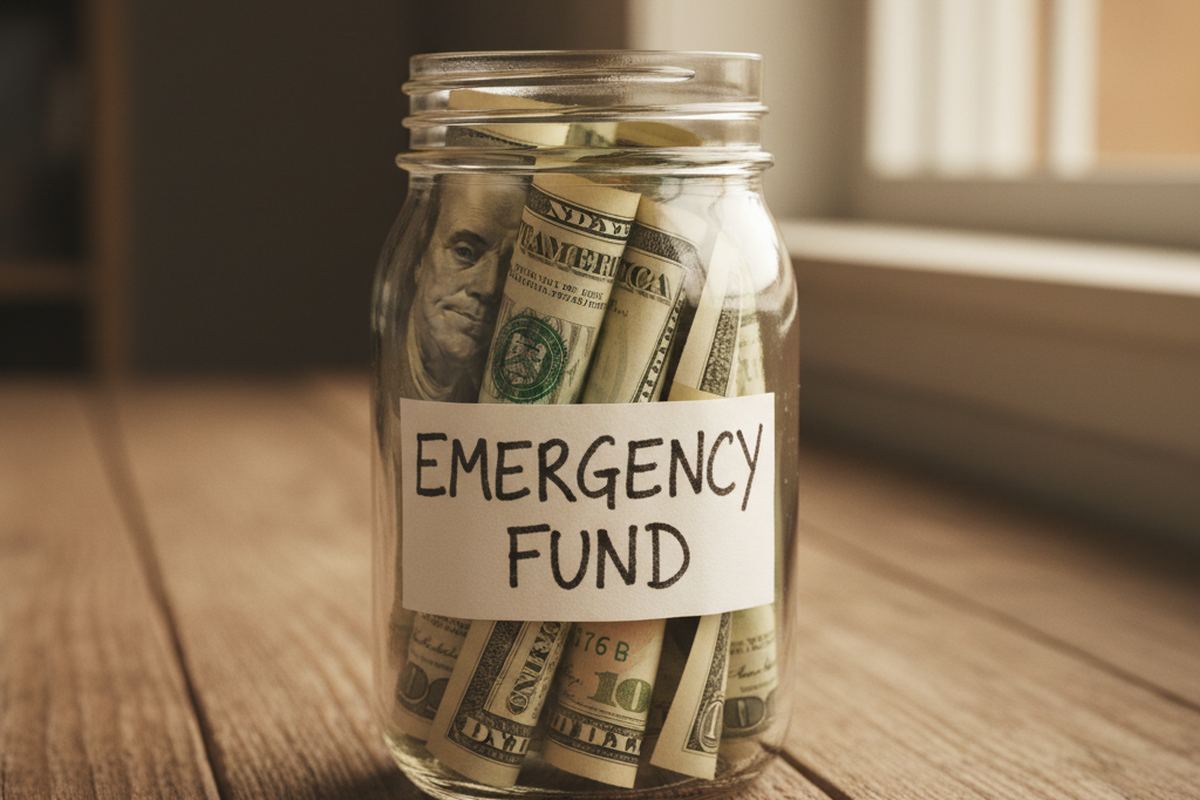
Building an emergency fund is a cornerstone of financial stability, offering a critical buffer against unexpected expenses. However, integrating this essential savings goal into your regular monthly budget, especially within frameworks like the 50/30/20 rule, can seem challenging. This guide will clarify how to effectively size, fund, and maintain your emergency savings, ensuring you're prepared for life's financial surprises without derailing your other financial objectives. Understanding where this fund fits within your spending plan is key to long-term financial resilience.
Defining Your Emergency Fund: How Much Do You Really Need?
The primary purpose of an emergency fund is to cover essential living expenses during unforeseen circumstances, such as job loss, medical emergencies, or significant home repairs. A common recommendation is to save three to six months' worth of necessary expenses. For a more robust safety net, particularly for those with dependents, a single income, or less job security, aiming for six to twelve months might be more appropriate. This calculation should focus on non-discretionary spending like housing, utilities, groceries, transportation, and insurance, rather than your complete income.
To determine your specific target, begin by itemizing your essential monthly outgoings. For example, if your core expenses total $3,000 per month, a three-month fund would be $9,000, and a six-month fund would be $18,000. While these figures may seem substantial, breaking the goal into smaller, manageable contributions makes it achievable. It is important to remember that this fund is for true emergencies, not for planned purchases or wants.
Integrating Emergency Savings into Your 50/30/20 Budget
The 50/30/20 budgeting rule allocates 50% of your after-tax income to needs, 30% to wants, and 20% to savings and debt repayment. Your emergency fund contributions typically fall under the 20% savings category. This allocation ensures that you are consistently setting aside money for your future and financial security without compromising your current essential needs or reasonable discretionary spending. When you're first building your fund, prioritizing these contributions within the 20% is crucial.
Consider an individual earning $4,000 after taxes per month. Under the 50/30/20 rule, $800 (20%) would be allocated to savings and debt. If you have no high-interest debt, the majority, if not all, of this $800 could be directed towards your emergency fund until it reaches its target. Once your emergency fund is fully established, you can then reallocate that 20% towards other financial goals, such as retirement contributions, college savings, or down payments.
Strategic Funding: Automate and Prioritize
The most effective way to build your emergency fund is to automate your contributions. Set up an automatic transfer from your checking account to a dedicated high-yield savings account immediately after each paycheck. Even small, consistent contributions add up significantly over time. For example, saving $100 per paycheck (if paid bi-weekly) amounts to $2,600 per year. This automation removes the temptation to spend the money and ensures steady progress toward your goal.
Prioritizing your emergency fund means treating it as a non-negotiable expense, similar to rent or utilities. If you receive a bonus, tax refund, or any unexpected windfall, consider directing a significant portion, or even all, of these funds directly into your emergency savings. This strategy can accelerate your progress and allow you to reach your target much faster than relying solely on regular paycheck contributions.
Enter your take-home pay and see your 50/30/20 plan in under a minute — free, no signup.
Open the Paycheck Budget CalculatorChoosing the Right Account for Your Emergency Fund
The ideal home for your emergency fund is a high-yield savings account (HYSA). These accounts offer better interest rates than traditional savings accounts, allowing your money to grow slightly while remaining easily accessible. Look for accounts with no monthly fees, no minimum balance requirements, and FDIC insurance to protect your deposits up to $250,000 per depositor. This combination ensures liquidity, growth, and security.
Avoid accounts that tie up your money, such as Certificates of Deposit (CDs), or investments with market volatility, like stocks or mutual funds. While these options may offer higher returns, they don't provide the immediate access or capital preservation necessary for an emergency fund. Your emergency money needs to be safe and readily available without penalties or significant risk when you need it most.
Refilling Your Fund After an Emergency Withdrawal
Life happens, and sometimes you will need to tap into your emergency fund. When this occurs, the immediate priority after addressing the emergency is to replenish the fund. Treat refilling your emergency savings with the same urgency and dedication as you did when initially building it. This might mean temporarily pausing other savings goals or reducing discretionary spending until the fund is back to its target level. Re-evaluate your budget to see where you can temporarily cut back.
Consider a scenario where you used $2,000 from your $10,000 emergency fund for an unexpected car repair. Your immediate financial goal should be to restore that $2,000. You might temporarily increase your savings contributions from 20% to 25% of your income or cut back on dining out and entertainment until the $2,000 is saved again. This discipline ensures your financial safety net remains intact for future unforeseen events.
Beyond the Basics: Advanced Emergency Fund Strategies
Once your primary emergency fund is fully stocked, consider establishing a secondary, more specialized fund for larger, less frequent, but predictable expenses. This could include a 'sinking fund' for things like annual insurance premiums, car maintenance, or home repairs that exceed your primary emergency fund's scope. This approach allows your main emergency fund to remain untouched for true emergencies.
Another strategy involves 'tiered' emergency savings. You might keep enough for one to two months' expenses in an easily accessible HYSA, and the remaining four to ten months' worth in a slightly less liquid but higher-yielding option, like a money market account or even short-term, highly liquid bond ETFs, if you are comfortable with a minimal amount of market exposure. However, for most, a single, robust high-yield savings account remains the simplest and most effective approach.
Maintaining Your Financial Safety Net
Regularly review your emergency fund balance and your essential monthly expenses. Life circumstances change, and what constituted three to six months of expenses a few years ago might be different today. An annual review ensures your fund remains adequately sized to protect you against current financial risks. Adjust your savings goal if your income, expenses, or family situation has significantly changed.
This ongoing maintenance is not merely about accumulating money but about cultivating a habit of financial preparedness. By consistently checking in on your emergency fund, you reinforce its importance within your overall financial plan, ensuring it continues to serve as a reliable safety net for years to come. This proactive approach strengthens your financial foundation and reduces stress during unexpected challenges.
The bottom line
Establishing and maintaining an emergency fund is a critical component of sound financial planning. By thoughtfully integrating it into your budget, prioritizing consistent contributions, and wisely choosing its location, you build a robust financial safety net. This preparation offers peace of mind and the resilience to navigate life's inevitable financial surprises without derailing your long-term goals. Make this essential fund a cornerstone of your personal finance strategy.
Get more guidance like this in your inbox
Weekly emergency-fund tactics, milestone checklists, and the next article — delivered free.
Run your own number
Get a personalized emergency fund target based on your income, expenses, and job stability.
Open the calculator