Furnace Sizing Guide (BTUs, AFUE, and Zone)
How to size a furnace by BTU input, AFUE efficiency, and climate zone.
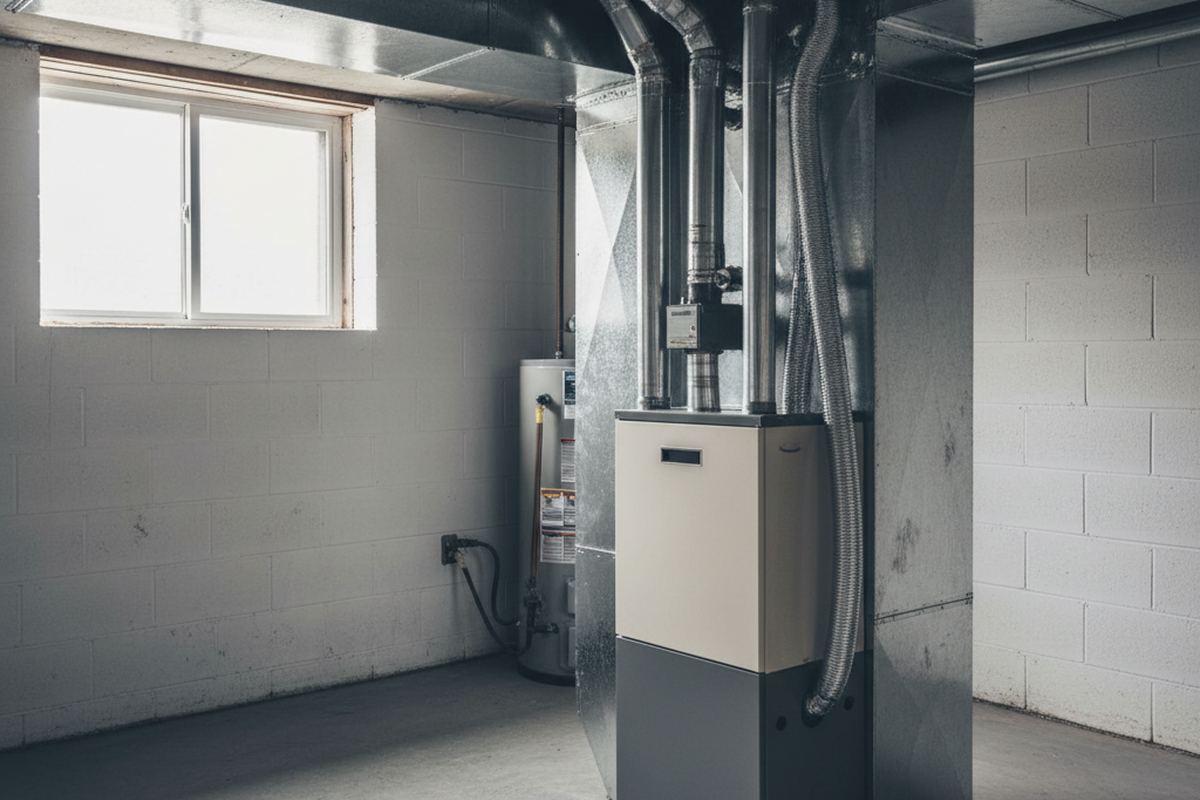
Choosing the right furnace size for your home is crucial for both comfort and energy efficiency. An undersized unit will struggle to heat your home adequately, especially during cold snaps, leading to higher energy bills and uneven temperatures. Conversely, an oversized furnace can cycle on and off too frequently, known as short-cycling, which increases wear and tear, reduces its lifespan, and can still result in uncomfortable temperature swings. Understanding key metrics like BTUs, AFUE, and how your home's unique characteristics play a role is essential for making an informed decision.
Understanding BTUs: The Core of Furnace Sizing
BTU, or British Thermal Unit, is the standard measurement for heat energy. When discussing furnaces, BTU refers to the amount of heat the unit can produce. Furnaces are typically rated by their BTU input, which is the amount of fuel energy consumed, and BTU output, which is the actual heat delivered to your home after accounting for efficiency losses. For example, a furnace with a 100,000 BTU input and an 80% AFUE rating would have an 80,000 BTU output.
To determine the appropriate BTU output for your home, various factors are considered beyond just square footage. These include ceiling height, insulation levels, window types and quantity, and the local climate. A common rule of thumb is to allow 20 to 60 BTUs per square foot, depending on these variables. For instance, a well-insulated home in a moderate climate might need closer to 25 BTUs per square foot, while a poorly insulated home in a very cold region could require 50 BTUs or more.
AFUE: Measuring Furnace Efficiency
AFUE stands for Annual Fuel Utilization Efficiency, and it's a critical metric indicating how efficiently a furnace converts fuel into usable heat over a typical heating season. Expressed as a percentage, AFUE represents the ratio of heat output to total fuel input. For example, a furnace with a 90% AFUE rating means that 90 cents of every dollar spent on fuel goes towards heating your home, with the remaining 10 cents lost through the exhaust.
Higher AFUE ratings generally mean lower operating costs. Furnaces with AFUE ratings below 80% are considered standard efficiency, while those 90% and above are high-efficiency models. While high-efficiency furnaces often have a higher upfront cost, the long-term savings on fuel bills can significant, especially in colder climates or for homes with high heating demands. Federal tax credits or local utility rebates may also be available for installing high-efficiency units.
- Standard Efficiency: 78-80% AFUE
- Mid-Efficiency: 80-89% AFUE
- High-Efficiency: 90%+ AFUE
Considering Your Climate Zone
The climate zone where your home is located significantly impacts the required furnace size. Homes in colder regions with longer and more severe winters will naturally require a furnace with a higher BTU output compared to homes in milder climates. The Department of Energy divides the U.S. into various climate zones, each with specific heating requirements. Ignoring your climate zone can lead to an undersized furnace that struggles to keep up or an oversized unit that wastes energy.
For instance, a home in a northern state like Minnesota might need 40-50 BTUs per square foot, whereas a similar-sized home in a southern state like Georgia might only need 20-30 BTUs per square foot. These are general guidelines, and local weather patterns, average winter temperatures, and the duration of the heating season all play a role in fine-tuning the BTU calculation for your specific location.
Size your HVAC in BTUs and tons based on square footage, climate zone, insulation, and windows.
Open the HVAC Size CalculatorHome Insulation and Window Quality
The thermal envelope of your home directly influences how much heat escapes and therefore how much heating capacity your furnace needs. Well-insulated walls, attics, and floors significantly reduce heat loss, allowing for a smaller BTU furnace. Conversely, older homes with minimal or no insulation will require a larger furnace to compensate for the continuous heat escape. Upgrading insulation can often allow for a smaller, more efficient furnace.
Windows are another major source of heat loss. Single-pane windows are notoriously inefficient, whereas modern double-pane or triple-pane windows with low-emissivity (Low-E) coatings offer much better thermal performance. The number and size of windows, as well as their orientation (e.g., north-facing windows tend to lose more heat), should be factored into the sizing calculation. Sealing air leaks around windows and doors also contributes to a more efficient heating system.
Ductwork and Air Distribution
Even with a perfectly sized furnace, an inefficient or poorly designed ductwork system can compromise your home's comfort and energy efficiency. Leaky ducts can lose a significant amount of heated air before it reaches your living spaces, forcing your furnace to work harder. Similarly, undersized or improperly configured ducts can restrict airflow, leading to uneven heating and reduced system performance. It is important to ensure your ductwork is properly sealed and sized for your home.
A qualified HVAC technician can inspect your existing ductwork for leaks, blockages, or design flaws. Sealing leaks with mastic or specialized tape, rather than duct tape, can improve efficiency by 10-30%. In some older homes, ductwork may need to be modified or replaced to accommodate a new, more efficient furnace and ensure optimal air distribution throughout all rooms.
Professional Load Calculation (Manual J)
While online calculators and rules of thumb provide a good starting point, the most accurate way to size a furnace is through a professional heat load calculation, often referred to as a Manual J calculation. This detailed assessment considers every aspect of your home, including square footage, ceiling height, insulation R-values, window and door types, local climate data, number of occupants, and even the orientation of your home relative to the sun.
A Manual J calculation provides a precise BTU output requirement for your specific home, leading to the selection of a furnace that is neither too large nor too small. This precision ensures optimal comfort, maximum energy efficiency, and a longer lifespan for your heating system. Investing in a professional load calculation is a wise decision that pays dividends in long-term performance and savings.
The bottom line
Selecting the correct furnace size is a critical decision that influences your home's comfort, energy consumption, and the longevity of your heating system. By understanding BTUs, AFUE, climate zones, and your home's unique characteristics, you can make an informed choice. Always consider a professional load calculation to ensure the best fit for your specific needs.
Get more guidance like this in your inbox
Weekly emergency-fund tactics, milestone checklists, and the next article — delivered free.
Run your own number
Get a personalized emergency fund target based on your income, expenses, and job stability.
Open the calculator