Insulation and HVAC Load: How R-Value Changes the Size
How insulation R-value directly reduces the HVAC size you need — with worked numbers.
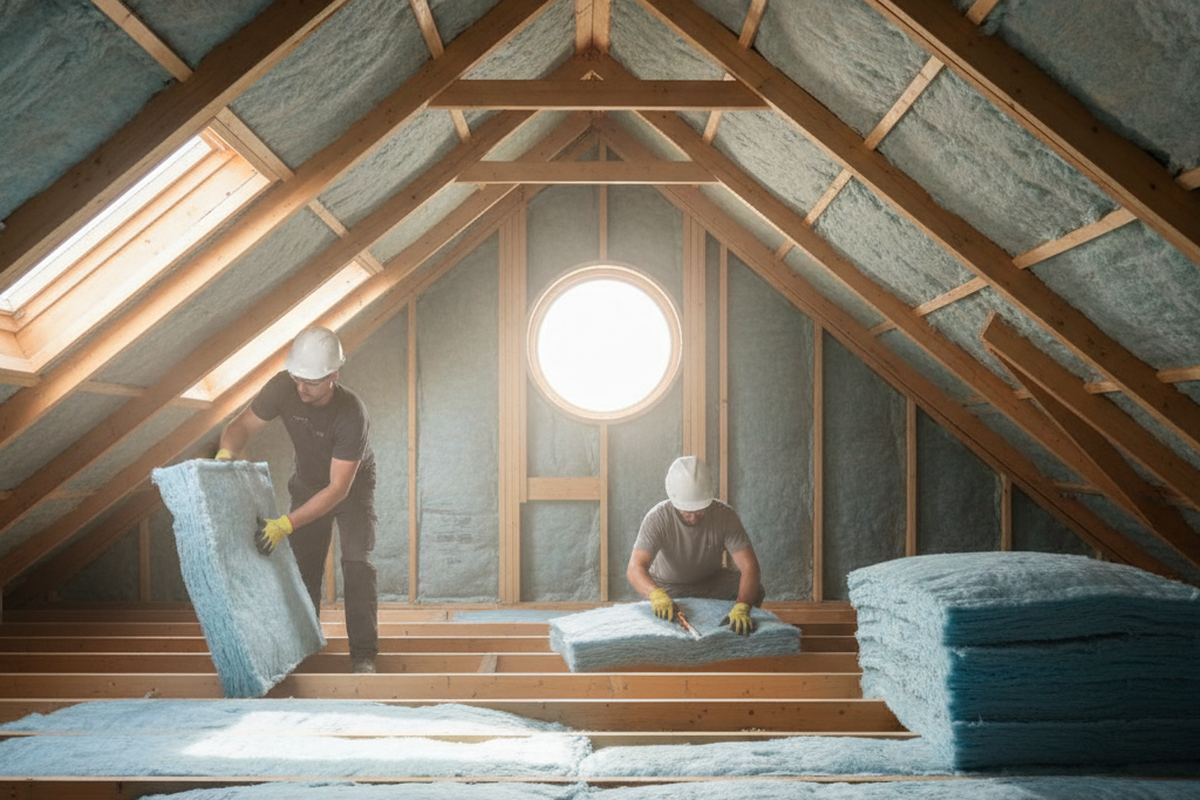
When considering a new HVAC system, many homeowners focus solely on their home's square footage. However, the quality of your home's insulation plays an equally critical role in determining the appropriate size of your heating and cooling equipment. Understanding the relationship between insulation R-value and HVAC load can prevent oversizing or undersizing, leading to significant savings on energy bills and improved indoor comfort. This guide explains how better insulation directly reduces the demands on your HVAC system.
Understanding R-Value and Heat Transfer
R-value is a measure of thermal resistance, indicating how well a material resists the flow of heat. A higher R-value means better insulation performance. In winter, insulation prevents heat from escaping your home, while in summer, it restricts heat from entering. This resistance is crucial because your HVAC system's primary job is to maintain a comfortable indoor temperature by either adding or removing heat.
Heat naturally moves from warmer areas to cooler areas. Without adequate insulation, heat rapidly transfers through walls, ceilings, and floors, forcing your HVAC system to work harder and longer to compensate. By improving your home's R-value, you slow this heat transfer, reducing the amount of heating or cooling your system needs to provide, which directly impacts the required HVAC capacity.
How Insulation Impacts HVAC Load Calculations
HVAC load calculations, often performed using methods like Manual J, factor in various aspects of your home to determine the precise heating and cooling requirements. Key inputs include your home's square footage, window types and sizes, local climate, and, critically, the R-value of your insulation in the attic, walls, and floors. These calculations quantify the amount of heat your home gains or loses per hour.
For example, a home with R-38 attic insulation will have a significantly lower heat loss/gain through the ceiling compared to an identical home with R-19 insulation. This reduction in load means your HVAC system doesn't need to generate or remove as much heat, allowing for a smaller, more efficient unit. Ignoring insulation improvements can lead to an oversized system, which cycles frequently and consumes more energy.
The Cost Savings of Better Insulation
Investing in higher R-value insulation can lead to substantial long-term savings. While there is an upfront cost for insulation upgrades, these are often recouped through lower energy bills and potentially a smaller, less expensive HVAC unit. A smaller HVAC unit can also mean reduced installation costs and lower ongoing maintenance expenses due to less wear and tear.
Consider a typical 2,000 sq ft home in a moderate climate. Upgrading attic insulation from R-19 to R-49 might reduce the heating and cooling load by 10,000 to 15,000 BTUs per hour. This reduction could allow for a 3-ton AC unit instead of a 4-ton unit, or a furnace with 80,000 BTUs instead of 100,000 BTUs. The difference in equipment cost alone could be hundreds to over a thousand dollars, not to mention the annual energy savings.
Size your HVAC in BTUs and tons based on square footage, climate zone, insulation, and windows.
Open the HVAC Size CalculatorOptimal R-Values for Different Home Areas
Recommended R-values vary based on your climate zone and the specific area of your home. For attics, the Department of Energy generally recommends R-38 to R-60 for most US climates. For walls, R-13 to R-21 is common, depending on the framing and wall cavity depth. For floors, R-25 to R-30 is often recommended, especially over unheated crawl spaces or basements.
It's important to consult local building codes and energy efficiency guidelines for your specific region. These recommendations are designed to optimize energy performance. Achieving these levels might involve adding blown-in insulation to an existing attic, using batt insulation in wall cavities during renovations, or insulating subfloors. Each improvement contributes to a lower overall HVAC load.
Insulation Types and Their R-Values
Various insulation materials offer different R-values per inch and suit various applications. Fiberglass batts and blown-in fiberglass typically offer R-value between 2.9 to 4.3 per inch. Mineral wool is similar, ranging from R-3.0 to R-4.2 per inch. Loose-fill cellulose, often made from recycled paper, provides R-3.2 to R-3.8 per inch.
More advanced options include rigid foam boards, like polyisocyanurate (R-5.8 to R-7.0 per inch) and extruded polystyrene (R-4.7 to R-5.0 per inch), which are excellent for continuous insulation on exterior walls. Spray foam insulation, both open-cell (R-3.5 to R-3.7 per inch) and closed-cell (R-6.0 to R-7.0 per inch), offers excellent air sealing properties in addition to thermal resistance.
Considering Air Sealing with Insulation
While insulation reduces heat transfer through materials, air sealing addresses heat transfer through gaps and cracks. Air leaks can compromise even the best insulation, allowing conditioned air to escape and unconditioned air to enter. Common culprits include gaps around windows and doors, plumbing and electrical penetrations, and attic hatches.
Combining effective air sealing with proper insulation is crucial for maximizing energy efficiency. Sealing these leaks before or during insulation upgrades ensures that your new insulation performs at its peak R-value. This integrated approach creates a tighter building envelope, significantly reducing the demands on your HVAC system and enhancing comfort.
Planning Your HVAC and Insulation Strategy for 2026
As energy efficiency standards continue to evolve, planning your HVAC and insulation strategy together is more important than ever. For 2026, homeowners should anticipate continued emphasis on holistic home performance. Prioritizing insulation upgrades before replacing an HVAC system can lead to a more appropriately sized and efficient unit, aligning with future energy goals.
Start by assessing your current insulation levels and identifying areas for improvement. Consider a home energy audit to pinpoint specific deficiencies. Once your home's thermal envelope is optimized, you can confidently determine the correct HVAC size, ensuring your new system operates at peak efficiency for years to come and meets new performance requirements.
The bottom line
Understanding the profound impact of insulation on HVAC load is key to making informed decisions for your home. By prioritizing R-value and air sealing, you can significantly reduce your energy consumption and extend the lifespan of your heating and cooling equipment. This strategic approach ensures a more comfortable home and lower utility bills.
Get more guidance like this in your inbox
Weekly emergency-fund tactics, milestone checklists, and the next article — delivered free.
Run your own number
Get a personalized emergency fund target based on your income, expenses, and job stability.
Open the calculator