Kitchen Backsplash Tile Cost: The Whole Job in One Number
What a kitchen backsplash actually costs installed — from subway tile to natural stone.
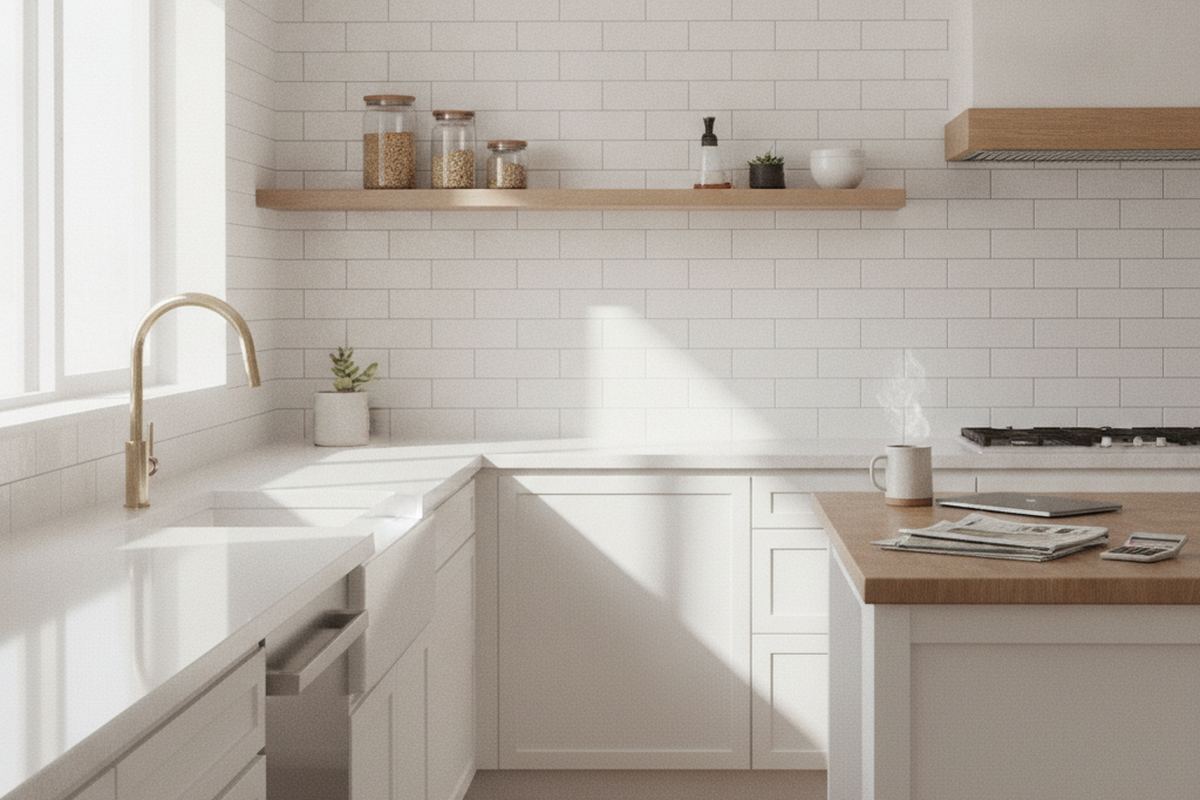
Understanding the true cost of a kitchen backsplash installation involves more than just the price per square foot of your chosen tile. Many factors, from material selection to labor rates and necessary prep work, contribute to the final expense. This guide breaks down the various components that make up the total cost, helping you budget accurately for your project. We will explore typical price ranges for both materials and installation, ensuring you have a comprehensive picture before you begin. Knowing these details upfront can prevent unexpected costs and help you make informed decisions.
Material Costs: Tile Type and Quality
The type of tile you select is often the largest variable in your backsplash budget. Ceramic and porcelain tiles are generally the most budget-friendly options, with prices typically ranging from $2 to $15 per square foot. These materials are durable, widely available, and come in a vast array of colors and patterns, including popular subway tile styles. Higher-end ceramic or porcelain can reach $20 per square foot, especially for designer or handmade varieties.
Natural stone tiles, such as marble, travertine, or granite, offer a luxurious look but come at a higher price point, usually between $10 and $50 per square foot. Glass tiles, known for their reflective qualities, can range from $15 to $40 per square foot, with intricate mosaics sometimes exceeding $60 per square foot. Specialty tiles like handcrafted, metallic, or unique patterns will also command premium prices, often starting at $30 per square foot and going upwards of $100 per square foot for very unique designs.
Beyond the Tile: Essential Supplies
Beyond the tile itself, you'll need several other materials to complete a backsplash installation. Thin-set mortar, used to adhere the tiles to the wall, typically costs $20 to $40 for a 25-pound bag, which is usually sufficient for a standard kitchen backsplash. Grout, which fills the spaces between tiles, runs about $15 to $30 per 10-pound bag, with sanded grout for wider joints and unsanded for narrower ones. Sealant, crucial for protecting natural stone and grout from stains, adds another $15 to $35.
Other essential supplies include spacers for consistent grout lines ($5-$15), sponges for cleanup ($5-$10), and potentially backer board if the wall surface isn't suitable, which can add $10-$20 per sheet. For a typical 30-square-foot backsplash, expect to spend an additional $100 to $250 on these ancillary materials. Don't forget safety gear like gloves and eye protection, which are a small but important investment.
Labor Costs: DIY vs. Professional Installation
Choosing between a DIY installation and hiring a professional significantly impacts your overall cost. If you opt for DIY, your labor cost is effectively zero, though you'll need to factor in the time commitment and potentially tool rentals or purchases. A basic tile cutter might cost $30-$50 to rent for a day, while a wet saw rental could be $50-$80 per day, or you might buy a basic one for $100-$200 if you plan future projects.
Professional installation typically costs between $10 and $35 per square foot, depending on your location, the complexity of the tile pattern, and the experience of the installer. For specialty tiles or intricate designs like herringbone patterns, labor rates can reach $40-$60 per square foot. A professional will also factor in preparation time, such as ensuring the wall surface is clean, level, and ready for tiling. For an average 30-square-foot backsplash, expect professional labor to range from $300 to $1,050.
Calculate how many tiles you need — with pattern waste, thinset, and grout coverage included.
Open the Tile CalculatorPreparation and Demolition Expenses
Before new tiles can go up, any existing backsplash material often needs to be removed. Demolition costs can vary based on the existing material and how firmly it's adhered. If you're removing old ceramic tile, expect to spend $2 to $5 per square foot for professional removal and disposal. Removing wallpaper or painted surfaces might cost less, around $1 to $3 per square foot for prep work.
Beyond demolition, the wall surface may require preparation to ensure a smooth, stable base for the new tile. This could involve patching holes, sanding, or applying a skim coat of plaster, which can add $1 to $4 per square foot. If the wall is severely damaged or uneven, installing cement backer board might be necessary, adding $5 to $10 per square foot for materials and labor. These preparatory steps are crucial for a long-lasting and professional-looking result.
Design Complexity and Layout Impact
The complexity of your chosen tile layout directly influences both material waste and labor time. A simple straight-lay pattern with standard-sized tiles is the most straightforward and least expensive to install. Conversely, intricate patterns like herringbone, chevron, or basketweave require more cuts, more precise alignment, and significantly more time, increasing labor costs. For example, a herringbone pattern might add 20% to 50% to the labor cost compared to a straight lay.
Smaller tiles, such as mosaics, also increase labor time due to the sheer number of individual pieces and grout lines. Incorporating decorative elements like border tiles, accent strips, or custom inlays will add to both material costs and the intricacy of the installation. Even selecting a tile size that requires many cuts around outlets or windows can drive up labor hours. Consider these design choices carefully when budgeting, as they have a tangible impact on the final price.
Total Project Cost Examples for 2026
Let's consider a 30-square-foot kitchen backsplash as a common example. For a budget-friendly option using standard ceramic subway tile (e.g., $3/sq ft) and DIY installation, your material costs would be around $90 for tile, plus $100-$200 for thin-set, grout, spacers, and other supplies, totaling $190 to $290. If you hire a professional for this basic installation ($15/sq ft labor), add another $450, bringing the total to $640 to $740, excluding demolition.
For a mid-range project using glass tile (e.g., $25/sq ft) and professional installation, the tile alone would be $750. Add $150-$250 for supplies and $750 for professional labor ($25/sq ft), resulting in a total of $1,650 to $1,750, again before any demolition. A high-end natural stone mosaic (e.g., $50/sq ft) with intricate installation ($40/sq ft labor) could easily reach $1,500 for tile, $200-$300 for supplies, and $1,200 for labor, totaling $2,900 to $3,000 or more for a 30-square-foot area.
The bottom line
Understanding the detailed breakdown of kitchen backsplash costs empowers you to plan your project effectively. By considering tile type, necessary supplies, labor, and potential preparation work, you can create a realistic budget that aligns with your aesthetic and financial goals. Always get multiple quotes from professionals and factor in a contingency for unexpected issues. Careful planning ensures a beautiful and long-lasting addition to your kitchen.
Get more guidance like this in your inbox
Weekly emergency-fund tactics, milestone checklists, and the next article — delivered free.
Run your own number
Get a personalized emergency fund target based on your income, expenses, and job stability.
Open the calculator