Mini-Split vs Central AC: Which Is Right for Your Home?
Where ductless mini-splits win over central AC and vice versa.
Choosing the right cooling system for your home involves weighing several factors, from initial cost to long-term energy efficiency and installation complexity. Two primary options dominate the market: central air conditioning and ductless mini-split systems. Each offers distinct advantages and disadvantages depending on your home's structure, your budget, and your specific comfort needs. Understanding these differences is crucial for making an informed decision that will provide optimal comfort for years to come.
Understanding Central Air Conditioning Systems
Central air conditioning uses a network of ducts to distribute cooled air throughout your entire home from a single outdoor unit and an indoor evaporator coil. This system is ideal for homes already equipped with existing ductwork, as it provides consistent, whole-house cooling and often integrates seamlessly with your existing furnace for heating. The primary components include a condenser unit outside, an evaporator coil and air handler inside, and a system of supply and return vents.
While central AC offers uniform temperature control across all rooms, its efficiency can be compromised by leaky or poorly insulated ductwork. Up to 30% of conditioned air can be lost through duct leaks, according to the Department of Energy, leading to higher energy bills. Proper sizing is also critical; an oversized unit will cycle too frequently, increasing wear and tear and failing to dehumidify effectively, while an undersized unit will struggle to cool the home on hot days.
Exploring Ductless Mini-Split Systems
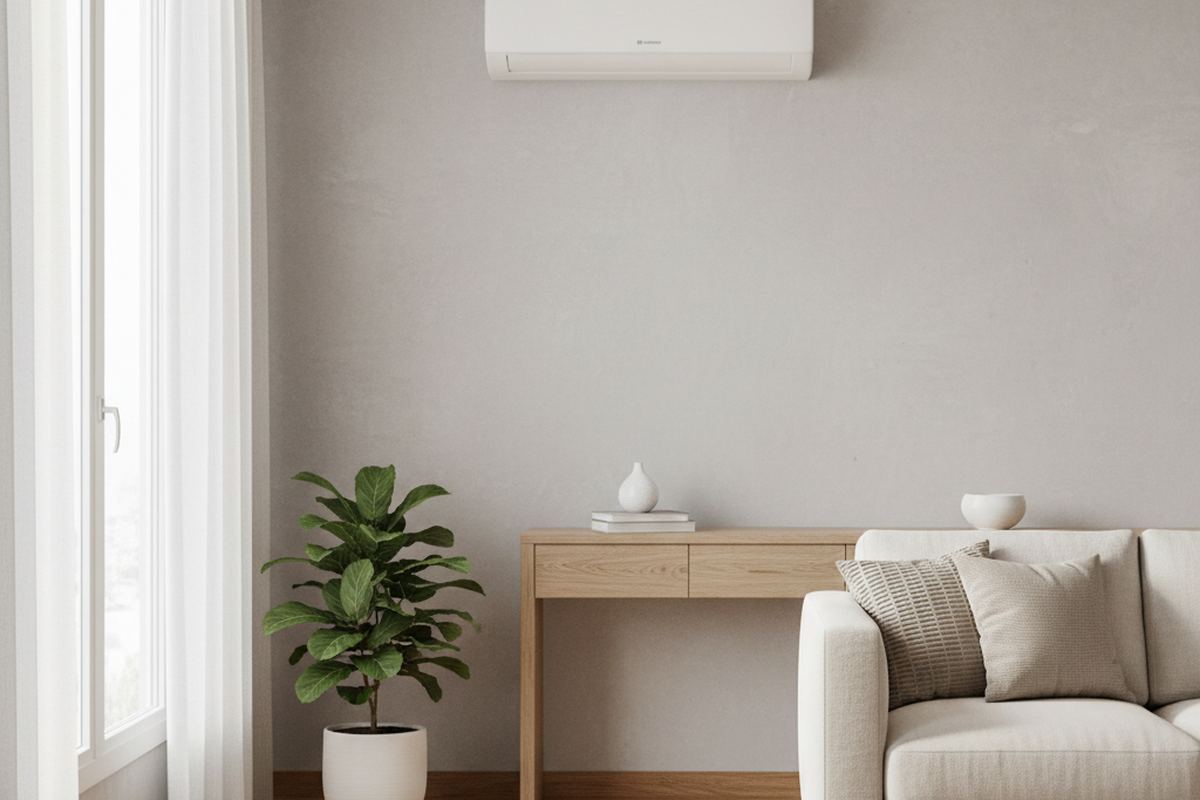
Ductless mini-split systems consist of an outdoor compressor/condenser unit connected to one or more indoor air-handling units via a small conduit. These systems do not require extensive ductwork, making them an excellent choice for homes without existing ducts, new additions, or areas requiring targeted cooling. Each indoor unit can be controlled independently, allowing for zone-specific temperature settings and eliminating the need to cool unoccupied spaces.
Mini-splits are highly energy-efficient, particularly models with inverter technology that can modulate compressor speed to match demand. This precise control reduces energy consumption compared to traditional systems that frequently cycle on and off. Their compact size and flexible installation options also make them versatile, fitting into spaces where bulky ductwork would be impractical or impossible.
Installation and Cost Considerations
The initial installation cost for central AC can range significantly, typically from $4,000 to $8,000 for a 2.5-ton system, excluding ductwork installation or repair. If new ductwork is required, costs can increase substantially, potentially adding several thousand dollars. Installation complexity for central AC is higher, requiring skilled technicians to connect refrigerant lines, electrical wiring, and the duct system.
Ductless mini-split installation costs generally range from $2,000 to $6,000 for a single-zone system and $6,000 to $12,000 for a multi-zone system with three to four indoor units. While the per-ton cost might be higher for mini-splits, the absence of ductwork often makes the total installation more affordable, especially for homes that would otherwise need extensive duct installation. The installation process is less invasive, involving a small opening in the wall for the conduit.
Size your HVAC in BTUs and tons based on square footage, climate zone, insulation, and windows.
Open the HVAC Size CalculatorEnergy Efficiency and Operating Expenses
Energy efficiency is a significant factor in long-term operating costs. Central AC systems typically have SEER (Seasonal Energy Efficiency Ratio) ratings ranging from 13 to 21. For 2026, the minimum SEER2 rating for most central AC units in the South will be 14.3 (equivalent to SEER 15.0), and 13.4 SEER2 (equivalent to SEER 14.0) in the North. Higher SEER2 ratings reduce energy consumption, but operating costs are still affected by duct losses.
Ductless mini-splits often boast higher SEER2 ratings, with many models reaching 20-30 SEER2 or more. This superior efficiency, combined with their zoning capabilities, allows homeowners to cool only specific areas when needed, leading to substantial energy savings. For example, cooling only a primary bedroom at night instead of the entire house can reduce electricity consumption by 20-40% compared to a central system providing whole-house cooling.
Comfort, Aesthetics, and Maintenance
Central AC delivers consistent, relatively unobtrusive cooling, with vents typically flush with walls or ceilings. However, temperature variations can occur due to duct design or sun exposure in different rooms. Maintenance involves annual check-ups, filter replacements, and occasional duct cleaning. The indoor air handler is usually located in a closet, attic, or basement, keeping it out of sight.
Mini-splits offer precise temperature control for individual zones, enhancing comfort. The indoor units are mounted on walls or ceilings, which some homeowners find visually less appealing than hidden ductwork. Maintenance is straightforward, requiring regular cleaning of filters and occasional professional servicing. Their quiet operation, often below 30 decibels, is another comfort advantage.
Optimal Applications for Each System
Central AC is generally the best fit for new home constructions or existing homes with well-maintained, efficient ductwork already in place. It provides uniform cooling throughout larger spaces and is often preferred for its discreet appearance and integrated whole-house climate control. If your home already has a furnace and ductwork, upgrading to a new central AC unit can be a cost-effective solution.
Mini-splits excel in homes without existing ductwork, such as older houses, or for additions like sunrooms, garages, or converted attics. They are also ideal for creating independent climate zones, allowing for personalized comfort and energy savings. If you need to supplement an existing inefficient system or cool specific rooms without impacting others, a mini-split offers targeted, efficient cooling.
- Central AC: Best for whole-house cooling in homes with existing ducts.
- Mini-Split: Ideal for ductless homes, additions, or zone-specific cooling.
The bottom line
The choice between a mini-split and central AC ultimately depends on your home's unique characteristics and your priorities. Evaluate your current ductwork situation, your budget for installation and ongoing energy costs, and your desired level of comfort and zoning. Consider how each system aligns with your long-term efficiency goals to ensure you select the best solution for your cooling needs.
Get more guidance like this in your inbox
Weekly emergency-fund tactics, milestone checklists, and the next article — delivered free.
Run your own number
Get a personalized emergency fund target based on your income, expenses, and job stability.
Open the calculator