The No-Allowance Chore Chart That Still Works
How to run a successful chore chart without paying for chores.
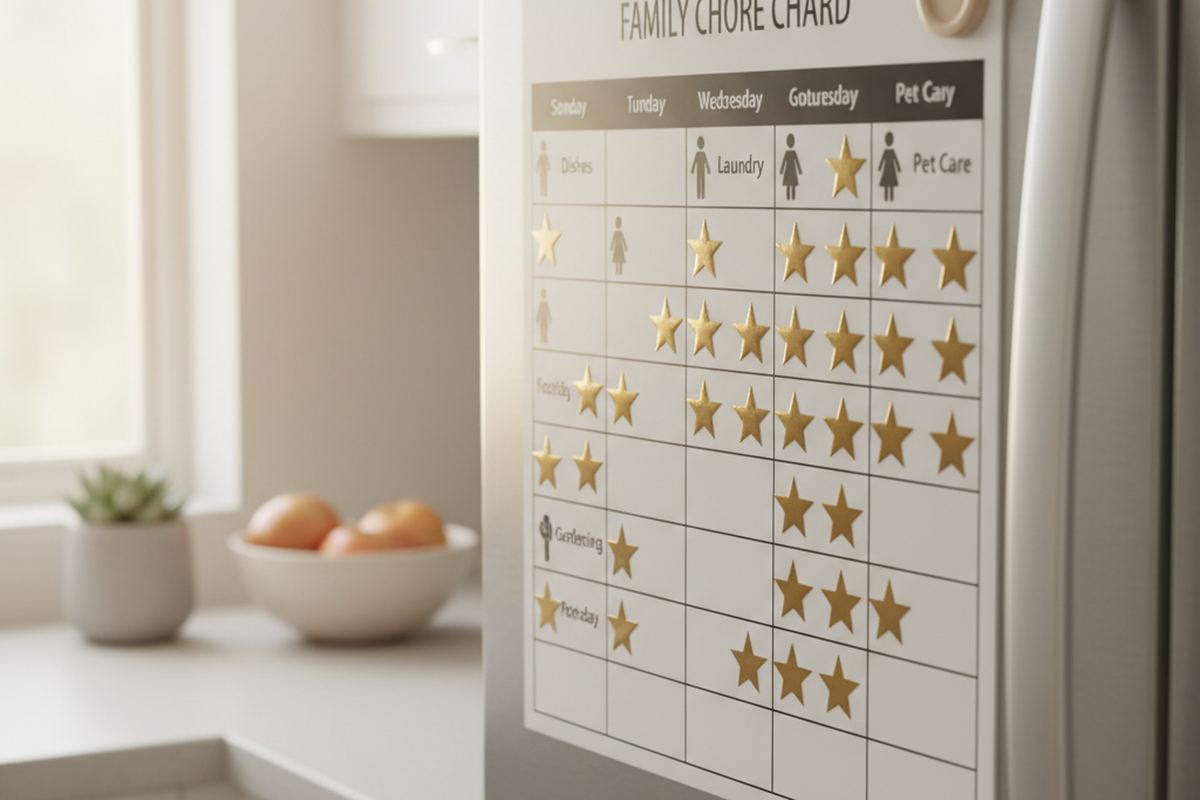
Developing a system for household chores and allowances can be a cornerstone of family financial education. While many parents link allowances directly to completed chores, an alternative approach focuses on fostering responsibility without direct monetary compensation for every task. This method can teach children about contributing to a household and the intrinsic value of work, rather than solely performing tasks for payment. Exploring a no-allowance chore chart offers a different perspective on instilling discipline and a sense of shared duty within the family structure.
Understanding the 'No-Allowance' Philosophy
The core idea behind a no-allowance chore chart is to distinguish between household contributions and earned income. This philosophy suggests that children are integral members of the family unit and, as such, have a responsibility to contribute to its smooth functioning. Tasks like making their bed, tidying their room, or helping with dinner are viewed as expected contributions, similar to how an adult contributes to household upkeep without receiving a separate payment from other family members.
This approach can help children understand that some responsibilities are simply part of being a family. It aims to prevent the mindset where every action is transactional. Instead, it fosters an understanding that a well-maintained home benefits everyone, and participation is a natural part of communal living. This can lay a foundation for civic responsibility and community engagement later in life, where contributions are often made without direct financial reward.
Clearly Defining Age-Appropriate Expectations
Success with a no-allowance system hinges on clear communication and realistic expectations tailored to each child's age and developmental stage. A 5-year-old might be responsible for putting away toys and helping set the table, while a 12-year-old could manage laundry, take out the trash, or assist with yard work. These tasks should be discussed openly, ensuring children understand what is expected of them and why their contributions are important to the family.
Creating a visual chore chart with specific tasks and due dates can be highly effective. For younger children, pictures alongside text can aid comprehension. For older children, a written list or a digital chart can work well. The goal is to eliminate ambiguity and provide a consistent reference point for everyone. Regular check-ins and positive reinforcement for consistent effort, rather than just completion, are also crucial components.
Linking Chores to Family Privileges
Instead of direct payment, consider linking the successful completion of chores to family privileges or collective rewards. This could involve earning screen time, participation in special family activities, or the ability to choose a family movie night. The connection here is that a well-functioning household, in which everyone contributes, creates more time and opportunity for enjoyable shared experiences. This reinforces the idea of collective benefit from shared effort.
For instance, if daily chores are consistently met, the family might collectively earn a weekend outing, a special dessert, or an extended bedtime on a Friday night. This approach shifts the focus from individual monetary gain to shared family experiences and benefits, emphasizing teamwork and mutual support. It can also be a powerful motivator, as children often value these shared moments highly.
Build a weekly chore chart that ties allowance to real work — with kid-friendly amounts.
Open the Chore Chart GeneratorIntroducing Financial Literacy Separately
While chores aren't paid, financial education remains vital. Consider separating allowance from chores entirely. An allowance can be provided as a teaching tool for budgeting, saving, and spending decisions, independent of chore completion. For instance, a child might receive a weekly allowance of $5-$15 (depending on age) to manage personal expenses like toys, treats, or entertainment. This allows them to practice financial management skills without feeling that their household duties are transactional.
This separate allowance can be framed as a learning fund. Parents can guide children on how to divide it into categories like 'spend,' 'save,' and 'give.' This teaches them about financial responsibility and delayed gratification. For example, if a child wants a larger toy, they learn to save their allowance over several weeks. This models real-world financial planning, where income is managed for various purposes beyond immediate needs.
The Role of Recognition and Positive Reinforcement
In a no-allowance system, consistent praise and recognition become even more important. Acknowledging a child's effort and contribution verbally, through notes, or with non-monetary rewards can be highly motivating. Simple phrases like, 'Thank you for helping with the dishes, it makes a big difference,' or 'I really appreciate how you kept your room tidy,' reinforce their value to the family.
Small, non-monetary rewards can also be effective. This might include choosing the dinner menu for a night, having extra story time, or getting to stay up an extra 15 minutes. These gestures show appreciation and demonstrate that their contributions are noticed and valued, fostering a sense of accomplishment and belonging without attaching a price tag to every task.
Navigating Challenges and Maintaining Consistency
Implementing any chore system will encounter challenges. Children may resist, forget tasks, or complain. It is crucial for parents to remain consistent and firm in their expectations. When a chore is not completed, discuss the natural consequences, such as the family not being able to proceed with a planned activity until the task is done, or the household environment becoming less pleasant for everyone.
Regular family meetings can be an effective forum to discuss the chore system, address any grievances, and make adjustments as needed. This ensures that children feel heard and have a voice in the process, fostering a sense of ownership. Consistency in enforcement and communication is key to establishing routines and ensuring the system's long-term success, ultimately building responsible and contributing family members.
The bottom line
A no-allowance chore chart can be a powerful tool for instilling a sense of responsibility and contribution in children, separate from financial gain. By clearly defining expectations, linking chores to family privileges, and teaching financial literacy independently, parents can cultivate a strong work ethic and a deeper understanding of shared family duties. This approach encourages children to become active, valued members of the household.
Get more guidance like this in your inbox
Weekly emergency-fund tactics, milestone checklists, and the next article — delivered free.
Run your own number
Get a personalized emergency fund target based on your income, expenses, and job stability.
Open the calculator