Sod vs Seed: The Real 5-Year Cost Comparison
When sod's higher up-front cost pays back through fewer failures and less patching.
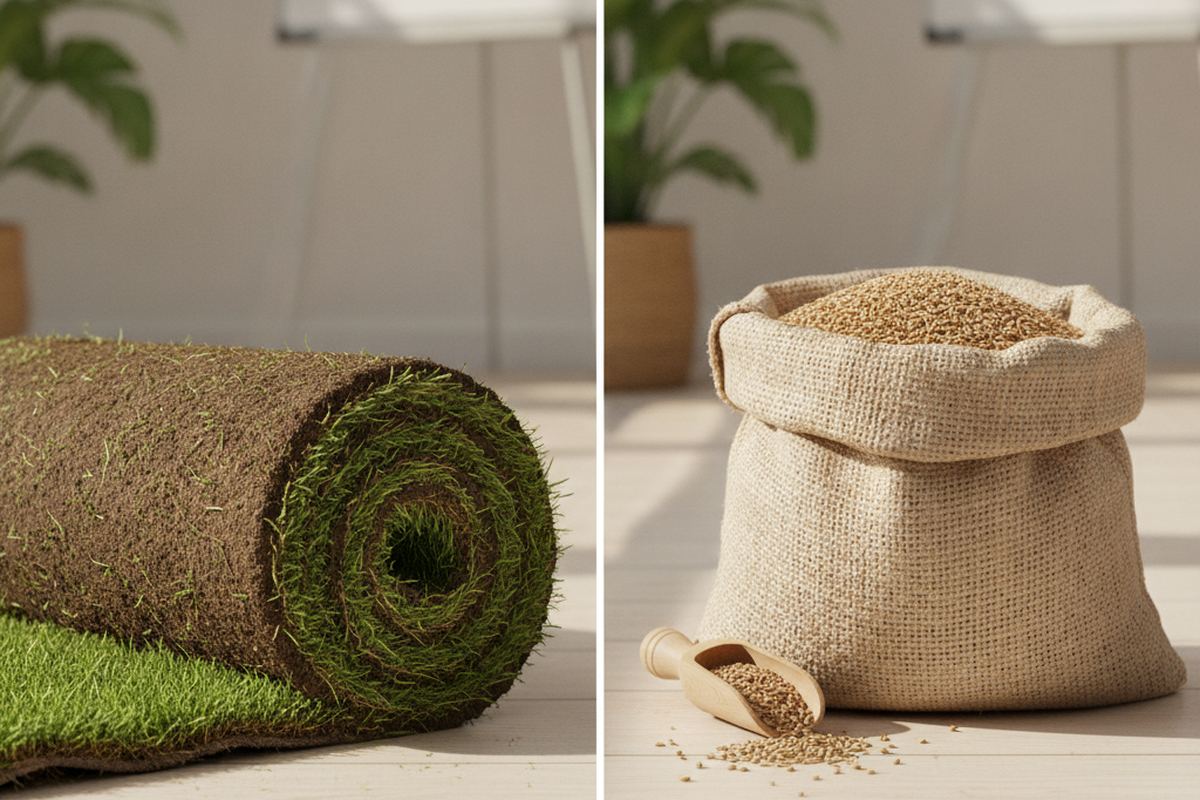
Choosing between sod and seed for a new lawn involves more than just the initial price tag. Homeowners often focus on the immediate costs, but a longer-term perspective reveals a different financial picture. Understanding the expenses over several years, including labor, materials, and potential re-dos, is crucial for making an informed decision. This analysis provides a realistic comparison, helping you evaluate which method offers better value and results for your property in the long run.
Initial Outlay: Sod's Higher Upfront Investment
The most immediate difference between sod and seed is the upfront cost. Sod, being a mature lawn product, naturally commands a higher price per square foot. For a typical 2,000 square foot lawn, professional sod installation might range from $4,000 to $8,000, covering the sod itself, delivery, soil preparation, and labor. DIY sod installation can reduce labor costs, bringing the total down to $2,000 to $4,000 for materials and minimal equipment rental.
Conversely, grass seed is significantly cheaper per pound. To cover the same 2,000 square feet, grass seed might cost $100 to $300, depending on the seed type and quality. Additional materials like starter fertilizer, straw, and watering equipment could add another $100 to $200. While the material cost is low, the labor involved in preparing the soil, spreading seed, and consistent watering over several weeks is substantial, even for a DIY project.
Labor and Time: A Hidden Cost Factor
Sod offers an immediate lawn, which translates to a quicker installation process and less ongoing daily labor for establishment. Professional sod installation for a 2,000 square foot area can be completed in one to two days. For a DIY project, the physical demands are high over a similar timeframe, but once laid, the daily watering and care regimen is relatively straightforward for the first few weeks, primarily focused on keeping the sod moist.
Establishing a lawn from seed is a more prolonged and labor-intensive process. After soil preparation and seeding, daily watering is critical, often multiple times a day, for several weeks to months. This consistent attention is vital for germination and initial growth. If watering is neglected, seeds may not sprout, or young seedlings may die, requiring reseeding and repeating the effort. This extended period of hands-on care represents a significant time investment.
Watering Requirements and Utility Bills
Both sod and seed require substantial watering to establish, but the duration and intensity differ. Sod needs heavy watering for the first two to three weeks to ensure root establishment, with water bills potentially increasing by $50 to $150 during this period, depending on climate and water rates. Once established, sod requires regular but less frequent deep watering, similar to a mature lawn.
Seed, however, demands constant moisture for a longer period. For the first four to six weeks, the seeded area must be kept consistently damp to facilitate germination and seedling growth. This often means light watering several times a day. This extended period of frequent watering can lead to higher utility bills, potentially adding $100 to $300 over two to three months compared to sod, especially in drier climates. Failure to maintain consistent moisture can result in poor germination and patchy growth.
Estimate sod pallets, rolls, and total install cost for your yard — with delivery and prep budget.
Open the Sod CalculatorWeed Control and Pest Management
Sod, being a mature turf, inherently provides a dense canopy that helps suppress weed growth from day one. While some weeds may eventually appear, the established sod acts as a barrier, reducing the need for aggressive weed control measures in the initial months. This can save on herbicide costs and labor associated with weeding a new lawn. The initial density contributes to a healthier lawn, which is more resistant to common pests.
A seeded lawn is highly vulnerable to weeds during its establishment phase. Weed seeds often germinate faster than grass seeds, competing for nutrients, water, and sunlight. This often necessitates manual weeding or selective herbicides after the grass is established enough to tolerate them, adding to labor and material costs. The sparse, young grass is also more susceptible to pest damage as it lacks the resilience of mature sod, potentially requiring more interventions.
Patching, Repairs, and Over-seeding Costs
Even with careful installation, some areas of a new lawn may struggle. With sod, if a section fails to root or dies, it's typically a clear patch that can be easily replaced with a new piece of sod. This targeted repair minimizes disruption and keeps the lawn uniform. The cost for such repairs is usually limited to a few rolls of sod and minimal labor, perhaps $50 to $200 for minor fixes over the first year or two.
For seeded lawns, uneven germination or die-off leads to bare or thin spots that require re-seeding. This process is often more involved than simply patching sod. It requires re-preparing the soil, applying new seed, and recommitting to the intensive watering schedule for that specific area. This can be a recurring effort, especially in the first year, potentially costing an additional $50 to $150 in seed and materials, plus significant time investment for multiple patching attempts.
The 5-Year Financial Outlook
Over a five-year period, the higher upfront cost of sod often evens out or even becomes more cost-effective. While initial professional sod installation for 2,000 sq ft might be $4,000-$8,000, subsequent annual maintenance costs for an established lawn are relatively consistent, around $200-$400 for fertilizer and weed control. This leads to a total 5-year cost of approximately $5,000-$10,000, assuming minimal repair needs and no significant re-sodding.
Conversely, starting with seed for $200-$500 initially, the subsequent costs for re-seeding, extensive weed control, additional fertilizer to encourage growth, and increased water bills during establishment can add up. Over five years, factoring in potential re-dos of patchy areas, specialized starter fertilizers, and more intensive early-stage care, the total cost for a seeded lawn could realistically range from $2,000 to $5,000. However, this range assumes a high level of DIY commitment and successful establishment without major setbacks. If significant portions fail and require professional intervention or multiple re-seedings, the costs can escalate substantially, potentially approaching or exceeding sod's long-term expense.
The bottom line
While sod usually carries a higher initial price, its advantages in rapid establishment, immediate weed suppression, and reduced long-term labor often translate to a more predictable and potentially lower overall cost over five years. Seed, though cheaper upfront, demands a significant, prolonged time investment and consistent attention to avoid costly setbacks. Consider your available time, commitment to daily care, and desired speed of results when making your final decision.
Get more guidance like this in your inbox
Weekly emergency-fund tactics, milestone checklists, and the next article — delivered free.
Run your own number
Get a personalized emergency fund target based on your income, expenses, and job stability.
Open the calculator