Thinset and Grout Coverage: How Much to Buy
The formulas pros use for thinset and grout coverage per tile size and joint width.
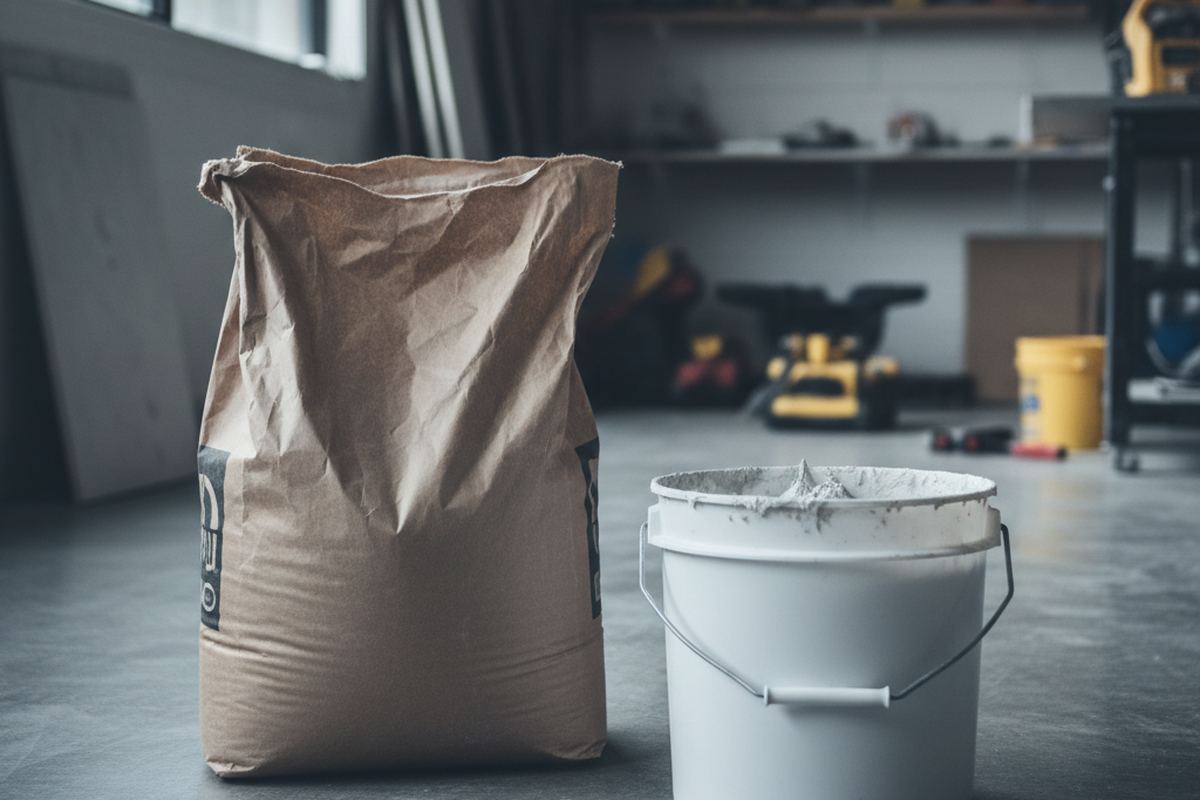
When undertaking a tiling project, accurately estimating material needs for thinset and grout is crucial for both budget management and project efficiency. Over-purchasing leads to wasted money and storage issues, while under-purchasing causes delays and potential color matching problems. Understanding the factors that influence coverage rates, such as tile size, joint width, and material type, can help you make precise calculations. This guide provides the formulas and practical considerations to ensure you buy just the right amount for your next tiling job.
Understanding Thinset Coverage Factors
Thinset mortar, the adhesive used to secure tiles, has coverage rates that vary significantly. Key factors include the type of trowel notch size, the substrate's condition, and the tile's porosity. A larger trowel notch, such as 1/2-inch by 1/2-inch, will use more thinset per square foot than a 1/4-inch by 3/8-inch notch. Additionally, uneven substrates may require more material to achieve a flat surface, and highly porous tiles can absorb more moisture from the thinset, impacting its spread.
Manufacturers typically provide coverage estimates on their product packaging, often stated in square feet per 50-pound bag. These figures are usually based on ideal conditions and specific trowel sizes. For instance, a 50-pound bag of unmodified thinset might cover 80-100 square feet with a 1/4-inch square notch trowel, but only 40-50 square feet with a 1/2-inch square notch. Always check the specific product's data sheet for the most accurate information applicable to your chosen material and trowel.
- Trowel notch size (e.g., 1/4", 3/8", 1/2")
- Substrate flatness and texture
- Tile size and back-buttering needs
- Type of thinset (e.g., unmodified, modified, large format)
Calculating Thinset Needs for Various Tile Sizes
The size of your tiles directly influences the recommended trowel notch and, consequently, thinset consumption. For smaller tiles, such as 4x4 inches, a 1/4-inch square notch trowel is often sufficient, providing excellent coverage and adhesion. As tile size increases to 12x12 inches, a 1/4-inch by 3/8-inch or 1/2-inch by 1/2-inch notched trowel becomes more appropriate to ensure proper mortar coverage and prevent lippage. Large format tiles (LFT), generally those with one side 15 inches or longer, almost always require larger trowels and often back-buttering for full mortar contact.
To estimate accurately, measure your total tiling area in square feet. Then, consult the thinset manufacturer's coverage data for the specific trowel you plan to use. Divide your total square footage by the coverage rate per bag to determine the number of bags needed. For example, if you have 200 square feet to tile with a 1/2-inch trowel and a 50-pound bag covers 50 square feet, you would need 200 / 50 = 4 bags. It is wise to add a 5-10% buffer for waste or unexpected needs.
Estimating Grout Coverage for Different Joint Widths
Grout fills the spaces between tiles, and its coverage depends primarily on tile size, joint width, and grout type. Wider grout joints and smaller tiles generally require more grout per square foot. For instance, a 1/8-inch grout line uses significantly less material than a 1/2-inch line. Sanded grout, typically used for joints 1/8 inch or wider, has different coverage rates than unsanded grout, which is suitable for narrower joints up to 1/8 inch. Epoxy grouts also have unique coverage characteristics.
Many grout manufacturers provide charts or calculators to help estimate quantities. These tools typically require you to input the tile dimensions (length and width), the thickness of the tile, and the desired joint width. A common formula involves calculating the volume of the grout lines. As a general guide, a 25-pound bag of sanded grout might cover 100-150 square feet for 12x12 inch tiles with 1/4-inch joints, but only 50-75 square feet for 4x4 inch tiles with the same joint width.
- Tile length and width
- Tile thickness
- Grout joint width
- Grout type (sanded, unsanded, epoxy)
Calculate how many tiles you need — with pattern waste, thinset, and grout coverage included.
Open the Tile CalculatorCalculating Grout Needs: A Practical Example
Let's consider a practical example for grout estimation. Suppose you are tiling a bathroom floor measuring 100 square feet with 12x24 inch tiles that are 3/8 inch thick, and you plan to use 1/4-inch grout joints. You've selected a sanded grout that, according to the manufacturer's data, covers approximately 75 square feet per 25-pound bag under these conditions. You would divide your total area by the coverage rate: 100 sq ft / 75 sq ft/bag = 1.33 bags. Rounding up, you would need 2 bags of grout.
For more precise calculations, especially with unusual tile sizes or joint widths, consider using an online grout calculator. These tools often account for tile dimensions, thickness, and joint width to provide a more accurate estimate. Always factor in a waste percentage, typically 10-15%, for grout due to spills, mixing errors, and material left in the bucket. This buffer helps avoid project delays for material reordering.
The Role of Tile Thickness in Material Usage
Tile thickness plays a subtle yet important role in both thinset and grout consumption. Thicker tiles, by virtue of their increased mass, often require a more robust thinset bed to ensure proper support and adhesion, potentially leading to the use of larger trowel notches or more thorough back-buttering. This is particularly true for natural stone tiles or porcelain pavers which tend to be thicker and heavier than standard ceramic tiles. The additional weight demands a strong, void-free bond to the substrate.
Regarding grout, thicker tiles mean deeper grout lines, increasing the volume of grout needed per linear foot of joint. While the surface area of the joint remains constant, the depth of the material required to fill the gap is directly proportional to the tile's thickness. Therefore, when using a grout calculator, accurately inputting the tile thickness is essential for precise quantity estimates. Neglecting this detail can lead to underestimating grout needs, especially for projects with substantial tile thickness.
Best Practices for Ordering and Storage
To minimize waste and ensure project continuity, it is generally recommended to order about 5-10% more thinset and 10-15% more grout than your initial calculations suggest. This buffer accounts for cutting errors, mixing inconsistencies, spills, and potential repairs down the line. Having a small amount of extra material ensures you won't run short in the middle of a job, which can be costly in terms of time and effort.
Proper storage is also critical for maintaining the integrity of your materials. Thinset and grout should be stored in a dry environment, off the ground, and protected from extreme temperatures. Moisture can cause these cement-based products to prematurely harden or clump, rendering them unusable. Always seal opened bags tightly to prevent moisture absorption and extend their shelf life. Check manufacturer recommendations for optimal storage conditions and shelf life, which typically range from 6 to 12 months for unopened bags.
The bottom line
Accurately calculating thinset and grout quantities is a foundational step in any successful tiling project. By understanding the variables like tile size, joint width, trowel notch, and material type, you can make informed purchasing decisions. Referencing manufacturer specifications and adding a small buffer for contingencies will streamline your project, save money, and prevent frustrating delays.
Get more guidance like this in your inbox
Weekly emergency-fund tactics, milestone checklists, and the next article — delivered free.
Run your own number
Get a personalized emergency fund target based on your income, expenses, and job stability.
Open the calculator