Tile Underlayment: Cement Board, Uncoupling, and When to Use Each
The three main tile underlayment systems and where each one wins on cost and cracking prevention.
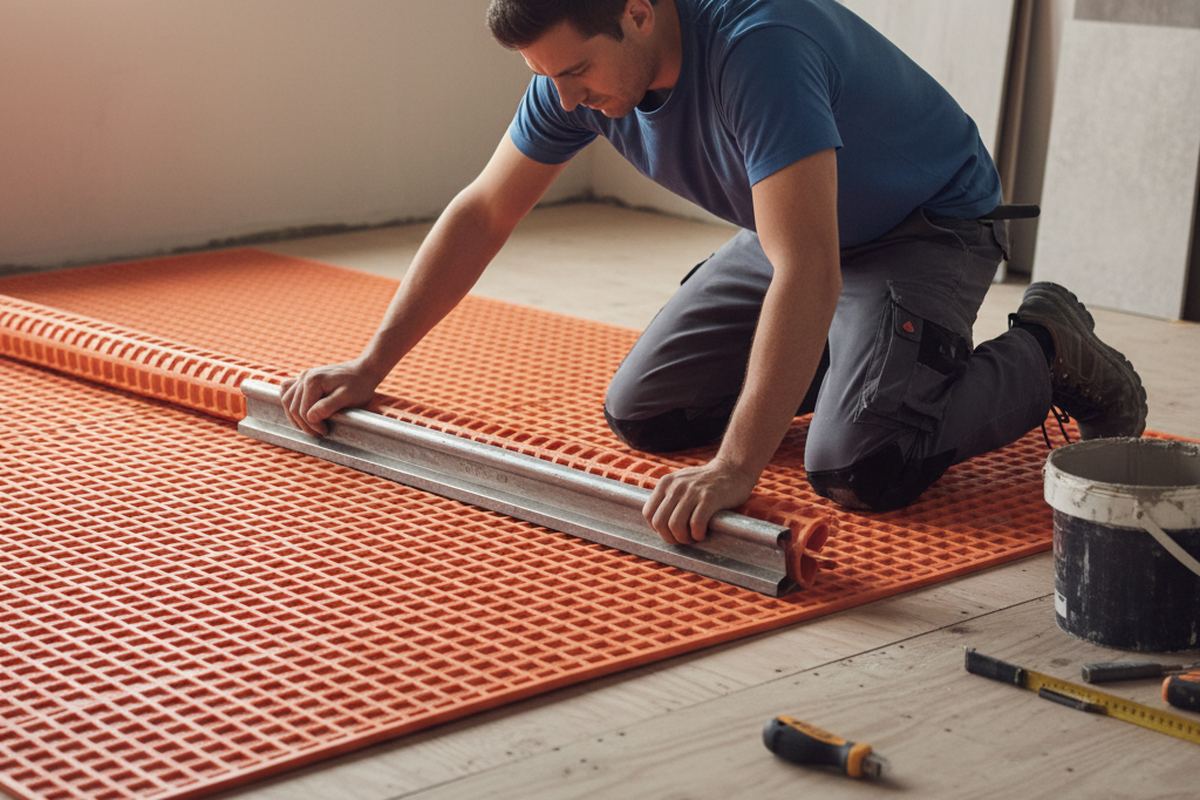
Selecting the correct underlayment is a critical step in any tiling project, directly impacting the longevity and appearance of your finished surface. The right choice prevents common issues like cracking and moisture damage, ensuring your tiles remain stable and beautiful for years. This guide explores the primary underlayment options for floors, walls, and backsplashes: cement board and uncoupling membranes. Understanding their distinct advantages will help you make an informed decision for your specific project needs.
Understanding Substrates and Movement
Before choosing an underlayment, it's essential to understand the substrate you're tiling over. Substrates like plywood, OSB, and concrete slabs can expand, contract, and flex due to changes in temperature, humidity, and structural loads. These movements, even subtle ones, can transfer stress directly to your tile and grout, leading to cracks.
The primary role of a tile underlayment is to create a stable, unyielding surface for the tile while also accommodating or isolating these movements from the substrate below. This separation is crucial for preventing tension and compression stresses from reaching the tile layer, thereby protecting your investment and ensuring the durability of your tiled surface.
Cement Board: A Traditional, Rigid Base
Cement board, often composed of Portland cement, aggregate, and fiberglass mesh, provides a robust and water-resistant substrate for tiling. It's a heavy, rigid panel that offers excellent dimensional stability and is unaffected by moisture, making it suitable for wet areas like showers and bathroom floors. When properly installed with thin-set mortar and screwed to the subfloor or studs, it creates a solid, unyielding foundation.
While cement board itself is water-resistant, its seams and screw penetrations are not waterproof. For showers or other constantly wet environments, a liquid or sheet waterproofing membrane must be applied over the cement board. Its rigidity helps bridge minor imperfections in the subfloor but does not actively decouple the tile from substrate movement, making it less ideal for substrates prone to significant deflection.
Uncoupling Membranes: Isolating Tile from Substrate Stress
Uncoupling membranes, typically made of polyethylene with a fleece webbing on the underside, are designed to prevent stress cracks in tile caused by substrate movement. These membranes create a 'slip layer' that allows the substrate and the tile layer to move independently. They often feature an air-channel or waffle-like structure that neutralizes vapor pressure and provides a mechanical bond for the thin-set mortar.
These membranes are particularly effective over challenging substrates like young concrete (which can shrink and crack during curing) or wood subfloors that experience seasonal expansion and contraction. Many uncoupling membranes also offer integrated waterproofing, making them a dual-purpose solution for bathrooms and other moisture-prone areas, simplifying the installation process compared to separate cement board and waterproofing layers.
Calculate how many tiles you need — with pattern waste, thinset, and grout coverage included.
Open the Tile CalculatorCost and Installation Considerations
In terms of material cost, cement board typically ranges from $0.75 to $1.50 per square foot, while uncoupling membranes can range from $1.50 to $3.50 per square foot. However, these figures don't tell the whole story. Installation of cement board involves cutting with a utility knife or saw, securing with specialized screws, and taping/thin-setting seams, which can be labor-intensive.
Uncoupling membranes often offer quicker installation. They are lighter, easier to cut, and many systems allow for immediate tiling after laying the membrane. While the upfront material cost of an uncoupling membrane might be higher, the reduced labor time and potential for integrated waterproofing can sometimes make the overall project cost comparable or even lower, especially for larger or more complex projects.
When to Choose Cement Board
Cement board is an excellent choice for vertical applications like shower walls, backsplashes, and tub surrounds where rigidity and water resistance are paramount. Its stiffness provides a strong, flat surface for tile adhesion and can support heavier tiles. For areas with minimal substrate movement, such as well-braced plywood subfloors or existing concrete slabs that are fully cured and stable, cement board offers a reliable and cost-effective foundation.
It's also a strong contender for outdoor tiling projects, provided it is properly waterproofed and installed over a stable base. However, remember that for any wet area, an additional waterproofing step (liquid membrane or sheet) is crucial to prevent water infiltration to the framing or subfloor below. Its robustness makes it a favorite for traditional, durable installations.
- Shower walls and tub surrounds
- Kitchen backsplashes
- Countertops
- Floors over very stable, well-supported subfloors
- Outdoor applications (with waterproofing)
When to Choose Uncoupling Membranes
Uncoupling membranes shine in situations where substrate movement is a concern. This includes tiling over crack-prone concrete slabs (especially new pours), wood subfloors that might expand and contract seasonally, or floors with radiant heating systems. The uncoupling function is invaluable for preventing stress cracks from transferring to your tile, protecting your investment in the long term. They are also highly effective for large format tiles, which are more susceptible to cracking from substrate movement.
For projects requiring both uncoupling and waterproofing, such as bathroom floors or basement floors, a combined uncoupling and waterproofing membrane can significantly streamline the installation process. Their light weight and ease of cutting also make them a popular choice for DIYers and professionals looking for efficient installation without compromising performance.
- Floors over concrete slabs (new or old)
- Floors over wood subfloors prone to movement
- Areas with radiant floor heating
- Large format tile installations
- Any area where maximum crack prevention is desired
The bottom line
The decision between cement board and uncoupling membrane hinges on your specific project's substrate, location, and desired level of crack prevention. Carefully assess the conditions of your tiling area and consider the long-term performance benefits each underlayment offers. Making the right choice upfront will ensure a durable, beautiful, and crack-free tiled surface for years to come.
Get more guidance like this in your inbox
Weekly emergency-fund tactics, milestone checklists, and the next article — delivered free.
Run your own number
Get a personalized emergency fund target based on your income, expenses, and job stability.
Open the calculator